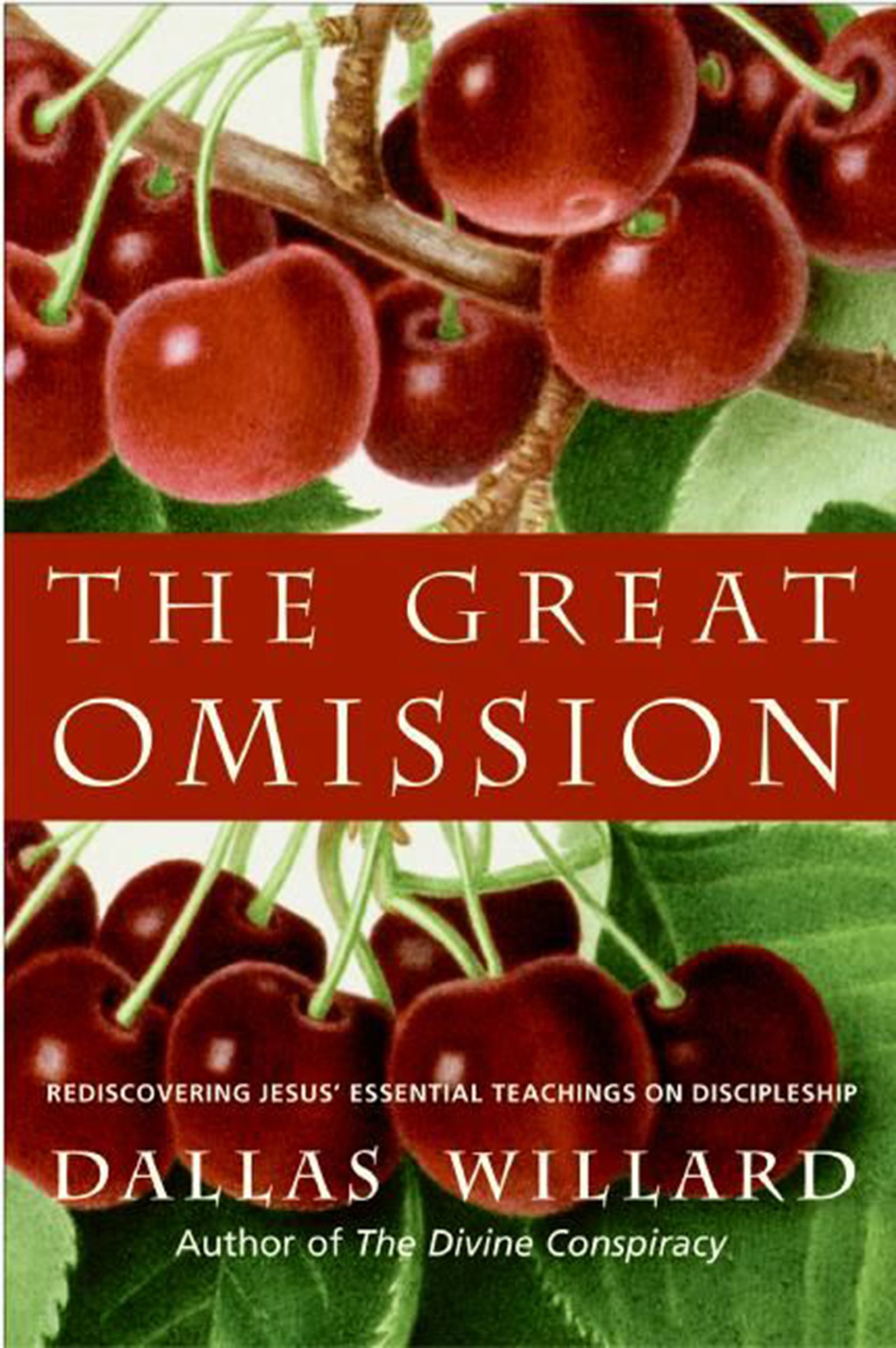
The Great Omission: Reclaiming Jesus’s Essential Teachings on Discipleship
About This Book
Dallas Willard argues that modern Christianity suffers from a Great Omission: while Jesus's Great Commission commanded the making of disciples—students, apprentices, practitioners—churches have instead settled for producing converts who profess belief without ever deciding to follow Christ. The result is what Willard calls the Great Disparity: a wide gap between the abundant life promised in Jesus and the actual day-to-day behavior of those who claim his name.
The book's central claim is that discipleship is not optional, nor is it primarily about obedience through effort. Rather, obedience takes care of itself when we apprentice ourselves to Jesus and learn to live in the Kingdom of the Heavens. "His school is always in session." Willard insists that grace is opposed not to effort but to earning—spiritual formation requires active, intelligent pursuit, not passive waiting.
Much of the book develops a practical model of transformation. Willard maps the whole person across five dimensions:
- spirit (will, heart)
- mind (thought and feeling)
- body
- social relations
- soul
Genuine change works through all of these, retraining the body's ingrained habits via spiritual disciplines such as solitude, silence, fasting, study, and Sabbath.
Willard also reframes Jesus as a master thinker and "logician," answers the four great questions of life (what is real, who is blessed, who is good, how to become good), and explores the dignity of the human soul, drawing on Teresa of Avila. Throughout, he calls Christians to stop being "vampire Christians" who want forgiveness but not Christ's character, and instead to establish "beachheads" for the Kingdom wherever they live—letting mission flow naturally from a transformed life.
Key Takeaways
- 1.The Great Omission is the failure to make disciples; through genuine discipleship, obedience takes care of itself and the snares of legalism fall away.
- 2.Discipleship is treated as optional in most Western churches, producing a Great Disparity between Jesus's promise of abundant life and Christians' actual lives.
- 3.Grace is opposed to earning, not to effort—spiritual growth requires active, intelligent pursuit, not passive waiting.
- 4.Transformation involves the whole person: spirit (will), mind, body, social relations, and soul—not just beliefs or feelings.
- 5.Spiritual disciplines like solitude, silence, fasting, study, and Sabbath retrain the body's ingrained habits so we can do by grace what we cannot do by direct effort.
- 6.Jesus is the greatest thinker of the human race, a master of logic who aims at inward change and insight rather than winning arguments.
- 7.The church is strongest not through buildings, money, or programs but through the quality of life Christ makes real in his disciples.
Top Highlights
in fact the primary mission field for the Great Commission today is made up of the churches in Europe and North America.
Highlighted by 3 people
We need to emphasize that the Great Omission from the Great Commission is not obedience to Christ, but discipleship, apprenticeship, to him.
Highlighted by 3 people · 1 left a note
So the greatest issue facing the world today,
Highlighted by 3 people
Most problems in contemporary churches can be explained by the fact that members have never decided to follow Christ.
Highlighted by 3 people
disciples of Jesus are people who do not just profess certain views as their own but apply their growing understanding of life in the Kingdom of the Heavens to every aspect of their life on earth.
Highlighted by 2 people
(his constant apprentices)
Highlighted by 2 people
The outward effect of this life in Christ is perpetual moral revolution, until the purpose of humanity on earth is completed.
Highlighted by 2 people
This vision of the meaning of
Highlighted by 2 people
The mission naturally flows from the life.
Highlighted by 2 people
eternal life, from which many profound and glorious effects flow, is interactive relationship with God and with his special Son, Jesus, within the abiding ambience of the Holy Spirit.
Highlighted by 2 people
AI Review
Across 6 readers' highlights, Willard's diagnosis of "discipleship as optional" resonated strongly, with broad consensus on his core thesis and practical formation model. A demanding but rewarding read for those serious about Christlikeness.
Pros
- +Sharp, memorable diagnosis of the Great Omission and Great Disparity
- +Reframes grace as opposed to earning, not effort—freeing readers from both legalism and passivity
- +Practical, whole-person model of spiritual formation across spirit, mind, body, soul, and relationships
- +Concrete guidance on disciplines like solitude, silence, fasting, and Sabbath
- +Fresh portrait of Jesus as thinker and master of logic
- +Highly quotable—readers flagged many lines as defining statements
Cons
- −Theologically dense and sometimes academic, especially the sections on the nature of the soul
- −Strong critique of Western evangelicalism may challenge or unsettle some readers
- −Assumes biblical literacy and prior Christian vocabulary
Glasp AI analysis based on highlights from 6 readers.
Who Should Read This
This book is for pastors, ministry leaders, and seminarians wrestling with why church programs fail to produce transformed lives, and for serious lay Christians who sense a gap between what they profess and how they live. Readers interested in spiritual formation, discipleship, and the disciplines (solitude, fasting, Sabbath) will find a practical framework. It rewards those willing to engage theologically dense material and assumes basic familiarity with the Gospels and Christian vocabulary.
Frequently Asked Questions
What is The Great Omission about?
Who is the book for?
What are the key lessons?
Is it worth reading?
What does Willard mean by a vampire Christian?
How does Willard say transformation actually happens?
What is the difference between grace and effort in this book?
How to Apply What You Read
- 1.Decide to follow Christ as an apprentice, not merely profess belief—rearrange your affairs to learn from him in every area of life.
- 2.Practice solitude and silence regularly, starting with an afternoon and building toward longer retreats, to make Sabbath rest possible.
- 3.Plan a deliberate course of spiritual disciplines (fasting, study, scripture memorization) targeted at the habits you most need transformed.
- 4.Reframe grace by acting energetically toward Christlikeness while releasing outcomes and your reputation into God's hands.
- 5.Keep the scenes and words of the Gospels before your mind daily through careful, repeated reading and meditation.
Discussion Questions
- Q1.In what ways have you experienced discipleship being treated as "optional" in your own church or faith community?
- Q2.Willard distinguishes between being a Christian and being a disciple—do you find that distinction valid, and where do you locate yourself?
- Q3.What does it mean that "grace is opposed to earning, not to effort," and how might that reshape how you approach spiritual growth?
- Q4.Which of the five dimensions of the self—spirit, mind, body, social relations, soul—do you most neglect in your own formation?
- Q5.Why do you think Sabbath is, as Willard says, "almost totally absent" from contemporary Christian life, and what would recovering it require of you?
- Q6.How does seeing Jesus as a thinker and "logician" change your view of him and of intellectual life?
- Q7.What would it look like for you to establish a "beachhead" for the Kingdom of God in your particular workplace or field?
Recommended Books



Revisit Your Highlights, Deepen Your Understanding
Import your Kindle highlights to review, organize, and share the ideas that matter most to you.
Get the free browser extension