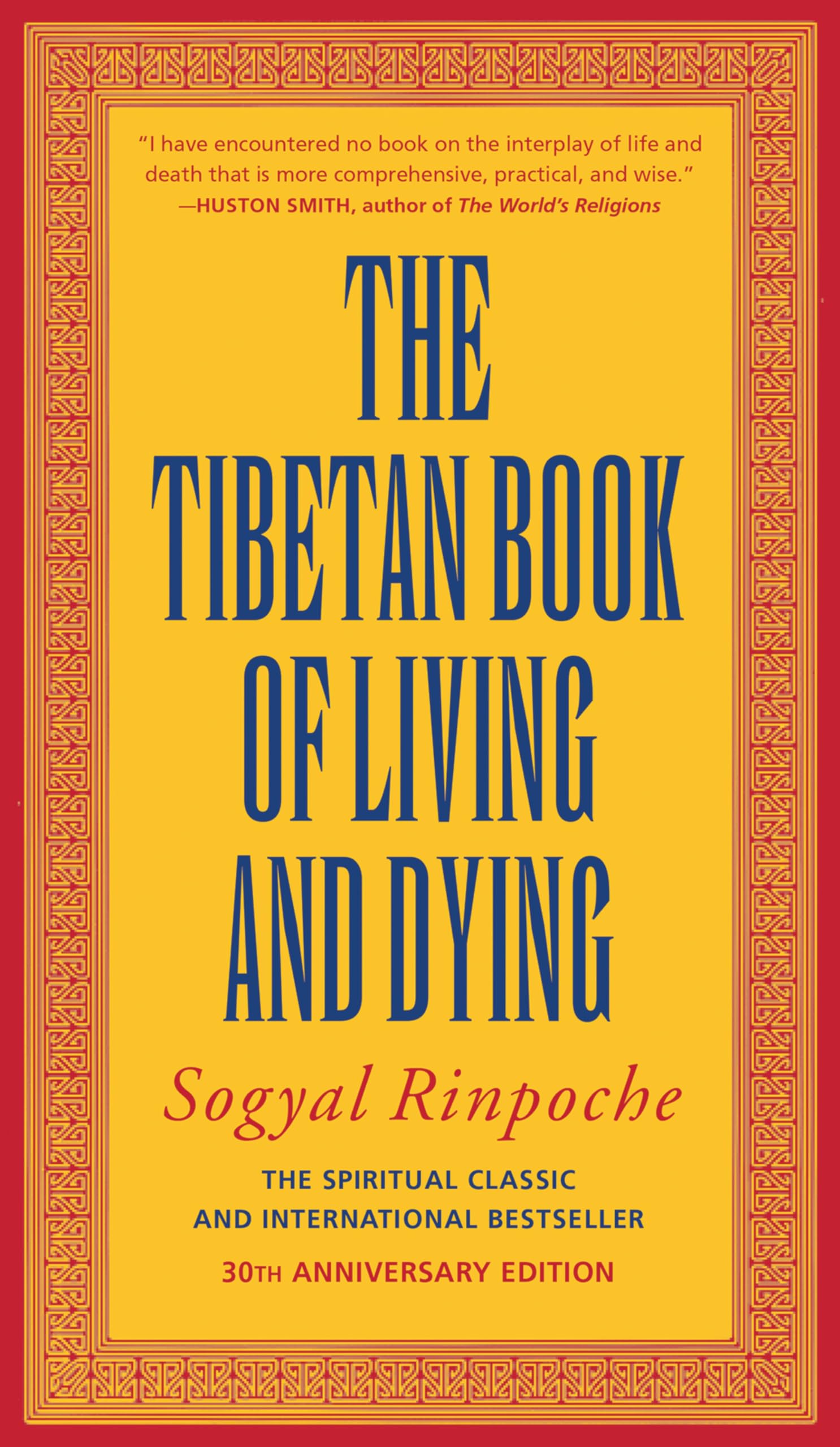
The Tibetan Book of Living and Dying: The Spiritual Classic & International Bestseller: 30th Anniversary Edition
About This Book
The Tibetan Book of Living and Dying by Sogyal Rinpoche presents Tibetan Buddhist wisdom on how to live fully and die consciously. Its central insight, drawn repeatedly across the highlights, is that life and death are in the mind, and nowhere else — the mind is the creator of both happiness and suffering, of what we call life and what we call death.
The book is built around several interlocking themes:
- Impermanence as our greatest teacher: "all things change, and all things are impermanent." Rather than denying death, the book urges us to befriend change and reflect on mortality even in moments of joy and well-being.
- The nature of mind (Rigpa): a primordial, pure awareness that is "cognizant and empty, naked and awake." Recognizing this through meditation in this lifetime is the key to liberation, including at the moment of death.
- The bardos: the intermediate states between life and death, where the Ground Luminosity or Clear Light manifests. Preparation happens "here and now" in the natural bardo of this life.
- Karma and compassion: our present circumstances mirror past actions, and the proper response is not fatalism but kindness, responsibility, and a "good heart."
- Meditation: essentialized as "bring your mind home, release, and relax," framed by Good in the Beginning, Middle, and End.
Sogyal Rinpoche weaves quotations from masters like Padmasambhava, Dudjom Rinpoche, and Nyoshul Khenpo with references to Einstein, Rilke, and modern life, arguing that our "ordinary" world is itself an extraordinary hallucination of samsara. The recurring message is practical and urgent: to die well, we must learn to live well, cultivating peace of mind and dissolving the false identity of ego.
Key Takeaways
- 1.Life and death are in the mind — the mind is the universal basis of all experience, creating both suffering and happiness.
- 2.Reflecting on impermanence and death is not morbid but liberating; it is paradoxically the only thing we can truly hold onto.
- 3.Recognizing the nature of mind (Rigpa) through practice in this lifetime is the essential preparation for liberation, even at the moment of death.
- 4.Karma means our present mirrors past actions — the wise response is responsibility and compassion, not fatalism or self-blame.
- 5.Our ego is a false, fearfully grasped identity; freedom comes from seeing through its false hopes and fears.
- 6.Meditation can be distilled to "bring your mind home, release, and relax," taming the restless ordinary mind.
- 7.To die well we must learn to live well — cultivating peace of mind and kindness now shapes our death and beyond.
AI Review
Based on Glasp readers' highlights, this is a profound and quotable spiritual classic whose teachings on impermanence and the nature of mind resonate deeply across passages.
Pros
- +Treats death not as morbid but as a doorway to living more fully
- +Rich with quotable wisdom from masters like Padmasambhava, Dudjom Rinpoche, and Nyoshul Khenpo
- +Makes the nature of mind (Rigpa) and the bardos accessible to Western readers
- +Practical guidance on meditation distilled to "bring your mind home, release, relax"
- +Balances metaphysics with everyday relevance — karma, compassion, and modern life
Cons
- −Devotional and traditional framing may challenge purely secular readers
- −Concepts like the bardos and reincarnation require openness to Buddhist cosmology
Glasp AI analysis based on highlights from 3 readers.
Who Should Read This
This book suits readers exploring mortality, meditation, or Buddhist philosophy — whether seekers facing illness and loss, caregivers and those supporting the dying, or anyone drawn to contemplative practice. It rewards those willing to sit with difficult questions about death and impermanence rather than avoid them. No prior knowledge of Tibetan Buddhism is required, though readers open to spiritual ideas and sustained reflection will gain most. Skeptics seeking purely secular self-help may find its devotional framing demanding.
Frequently Asked Questions
What is the book about?
Who is it for?
What are the key lessons?
Is it worth reading?
What does the book mean by the nature of mind?
What are the bardos?
How does the book describe meditation?
How to Apply What You Read
- 1.Reflect on impermanence and death in moments when you feel calm, happy, and inspired — not only in crisis.
- 2.Practice meditation daily using the three steps: bring your mind home, release, and relax.
- 3.Simplify your life, reducing compulsive activity so you can confront what truly matters.
- 4.Cultivate a good heart through deliberate acts of kindness and compassion toward all beings.
- 5.Notice how attachment, ego, and grasping create your suffering, and gently loosen their grip.
Discussion Questions
- Q1.What does it mean to say that "life and death are in the mind, and nowhere else"?
- Q2.Have you truly integrated impermanence into your daily life, or do you live as if things are permanent?
- Q3.How do you respond to suffering — as catastrophe and punishment, or as the fruition of karma to be met with wisdom?
- Q4.In what ways does modern life resemble the realms of gods, demigods, and hungry ghosts described in the book?
- Q5.What "familiar props" do you use to avoid being alone with yourself, and what might you discover without them?
- Q6.How might genuinely accepting your own death change the way you live right now?
- Q7.What is the difference between fatalism about karma and taking full responsibility for your actions?
Recommended Books








Revisit Your Highlights, Deepen Your Understanding
Import your Kindle highlights to review, organize, and share the ideas that matter most to you.
Get the free browser extension