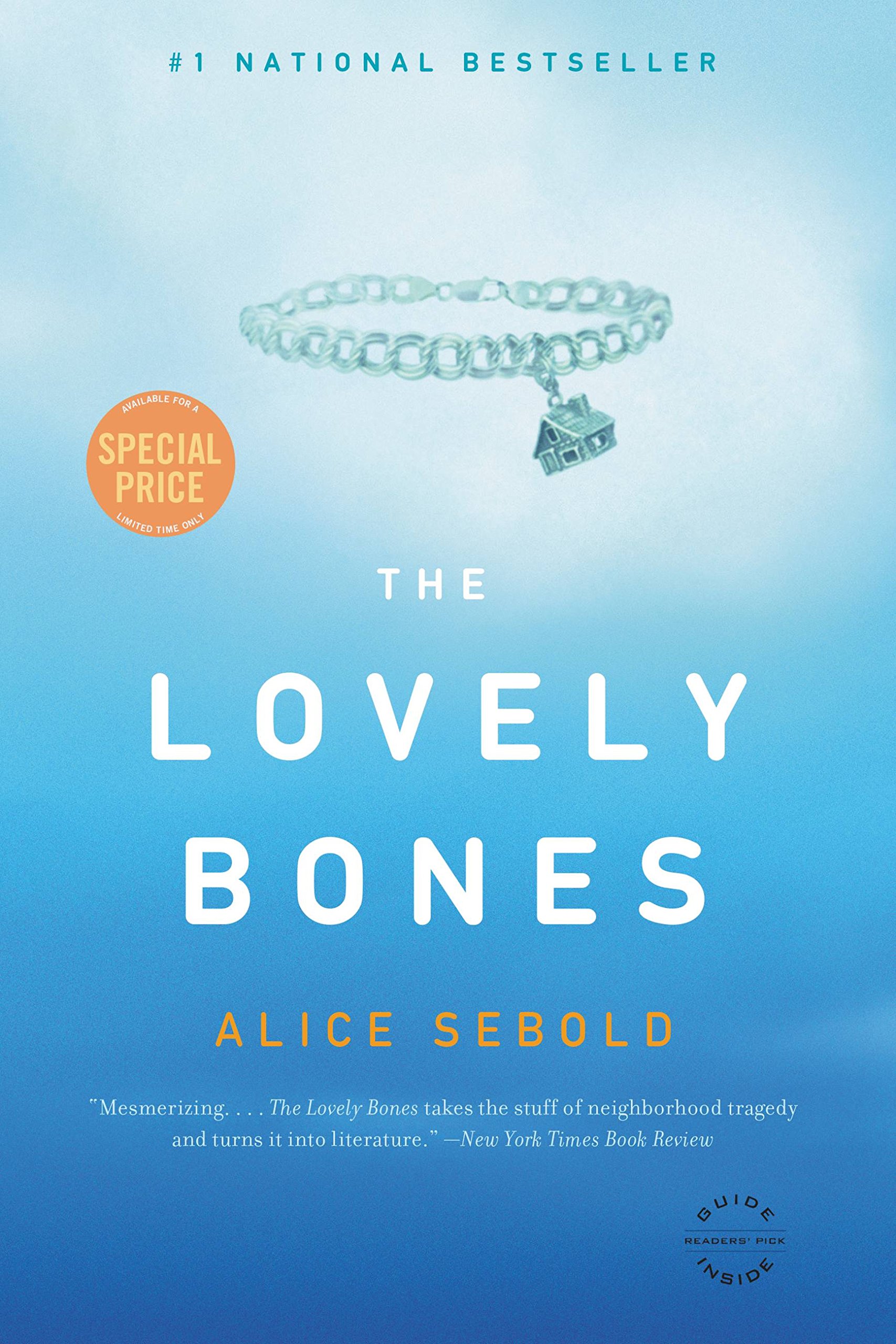
About This Book
The Lovely Bones opens with one of fiction's most arresting premises: "My name was Salmon, like the fish; first name, Susie. I was fourteen when I was murdered on December 6, 1973." Narrated from a personalized heaven by its murdered protagonist, Alice Sebold's novel watches the living continue without her.
The book braids two intertwined stories. The first is grief and its slow, uneven work on the Salmon family — a father crushed by guilt ("You were not there when your daughter needed you"), a mother whose eyes are "oceans" of loss and who ultimately flees, a sister who grows into the life Susie never will, and a little brother struggling to understand absence. The second is the quiet horror of Susie's killer, Mr. Harvey, whose ordinary suburban invisibility lets a murderer get away.
From her watching place, Susie narrates the "Inbetween" — the murky, blurred line between the living and the dead — as she learns the hardest lesson: how to hold the world without me in it. The title's central image emerges near the close: the "lovely bones" are not Susie's remains but the fragile, magnificent connections that grow around her absence, a body of relationships that slowly becomes whole.
Thematically, the novel explores:
- Grief as something that never lightens, only changes shape
- The gap between who parents are and who their children need them to be
- Letting go — of both the dead and the living — as an act of acceptance
Sebold's prose moves between tenderness and dread, insisting that horror on Earth "cannot be contained," while affirming that love, memory, and renewal endure. It is a meditation on mourning disguised as a murder story.
Key Takeaways
- 1.Grief does not lighten with time — as Susie's mother learns, it "would only go on to hurt in new and varied ways for the rest of her life."
- 2.The line between the living and the dead can be murky and blurred; the dead linger in air, mornings, and memory more than in photographs.
- 3.Parents and children often carry hidden selves — Susie's mother was "Abigail" before she was a mother, a self her daughter glimpsed only once.
- 4.Guilt is a corrosive weight; Susie's father is crushed by the sense that he wasn't there when his daughter needed him.
- 5.The "lovely bones" are the connections that grow around absence — fragile, costly, but often magnificent.
- 6.Healing requires learning when it's "all right to let go not only of the dead but of the living," an act of difficult acceptance.
- 7.Evil can hide in plain, ordinary suburban invisibility, allowing a murderer to get away despite a father's and sister's suspicions.
Top Highlights
violence, it is the getting away that you concentrate on. When you begin to go over the edge, life receding from you as a boat recedes inevitably from shore, you hold on to death tightly, like a rope that will transport you, and you swing out on it, hoping only to land away from where you are.
Highlighted by 2 people
He had had a moment of clarity about how life should be lived: not as a child or as a woman. They were the two worst things to be.
Highlighted by 2 people
AI Review
Based on Glasp's analysis of highlights from 3 readers, this is a resonant, emotionally powerful novel whose most-shared passages cluster around violence, maternal loss, and the fragile connections grief leaves behind.
Pros
- +Unforgettable premise with a murdered narrator observing from heaven
- +Lyrical, quotable prose — the "oceans" of a mother's eyes, the "lovely bones" of connection
- +A nuanced, unidealized portrait of a grieving family pulling apart and together
- +Emotionally honest treatment of guilt, absence, and learning to let go
Cons
- −Contains a disturbing depiction of a child's assault and murder that may be hard for some readers
- −The afterlife framing and some plot turns ask readers to accept a blurred line between living and dead
Glasp AI analysis based on highlights from 3 readers.
Who Should Read This
Readers drawn to literary fiction that fuses a crime premise with an intimate portrait of grief will find it rewarding. It suits those who appreciate lyrical, emotionally immersive prose and unconventional narration — including an afterlife narrator. Fans of family dramas about loss, mourning, and healing, and book clubs seeking rich discussion material, are ideal. Be aware it contains a depiction of the assault and murder of a child, so sensitive readers should approach with care.
Frequently Asked Questions
What is The Lovely Bones about?
Who is the narrator of the book?
What does the title mean?
Who should read this book?
What are the key lessons of the book?
Is The Lovely Bones worth reading?
Is the book disturbing or violent?
How to Apply What You Read
- 1.Reflect on how grief in your own life has changed shape rather than simply faded, and name the forms it has taken.
- 2.Consider the hidden selves of the people closest to you — the person your parent or partner was before their current role.
- 3.Notice the small, tenuous connections that form after a loss, and recognize them as something worth tending.
- 4.Discuss the book with others, since its themes of mourning and letting go open up honest conversation about absence and acceptance.
- 5.Honor a lost loved one by holding the world as it is now while still carrying their memory.
Discussion Questions
- Q1.Why do you think Sebold chose to narrate the story from Susie's heaven rather than from the living characters' perspectives?
- Q2.What does the image of the mother's eyes as "oceans" of loss reveal about the gap between who she is and the mother Susie wanted her to be?
- Q3.How does the novel portray guilt differently in Susie's father versus Detective Len Fenerman?
- Q4.What does it mean, in the book, that "the line between the living and the dead could be murky and blurred"?
- Q5.Is Susie's mother's flight from the family a failure, a survival, or both — and what does the book finally conclude about her legacy?
- Q6.What are the "lovely bones" the title refers to, and how do they reshape the meaning of Susie's death?
- Q7.When, according to the novel, is it "all right to let go not only of the dead but of the living," and do you agree?
Recommended Books

Revisit Your Highlights, Deepen Your Understanding
Import your Kindle highlights to review, organize, and share the ideas that matter most to you.
Get the free browser extension