Why Quotes Inspire Us: The Psychology of Powerful Words
Quotes are not just decorative text on posters. Cognitive science suggests they function as "compressed wisdom," packaging years of lived experience into a single retrievable sentence. When you read a quote that resonates, your brain doesn't just process language. It maps the words onto your own experiences, creating a moment of recognition that feels both personal and universal.
Psychologists have studied what makes certain phrases motivating. Research published in the Journal of Personality and Social Psychology found that exposure to achievement-related words (effort, persist, succeed) primed participants to work longer on challenging tasks. The effect was unconscious. People didn't realize the words had influenced their behavior, but their persistence increased measurably.
There's also a social dimension. Quotes carry the authority of their source. When Albert Einstein says something about curiosity, you pay attention partly because of what he accomplished. This is a well-documented cognitive bias called the "prestige effect," where we assign more weight to statements from high-status individuals. It's not necessarily rational, but it's powerful, and it explains why attributed quotes feel more impactful than anonymous ones.
The most effective quotes share three qualities: brevity, surprise, and emotional resonance. They say something you already half-knew but hadn't yet articulated. That flash of recognition is what makes a quote stick in memory long after the book or speech it came from has faded.
Quotes on Learning, Knowledge, and Curiosity
Learning is the foundation of every other form of growth. The thinkers below understood that curiosity is not a phase of childhood but a discipline of a lifetime.
"Live as if you were to die tomorrow. Learn as if you were to live forever." (Mahatma Gandhi)
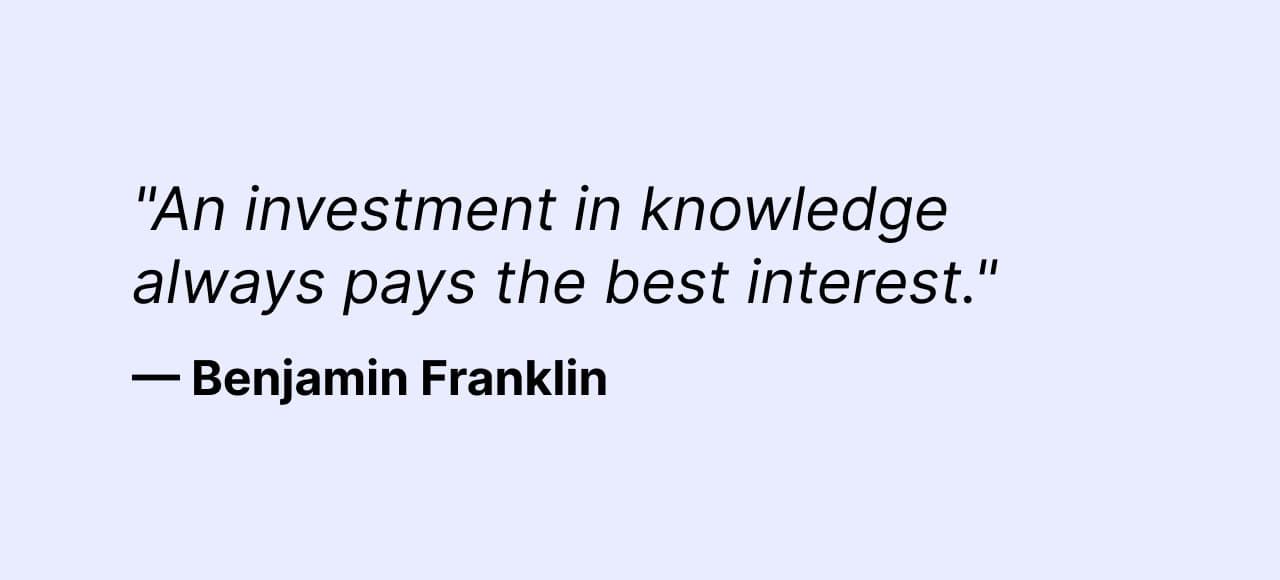
"An investment in knowledge always pays the best interest." (Benjamin Franklin)
"The important thing is not to stop questioning. Curiosity has its own reason for existence." (Albert Einstein)
"It is not that I'm so smart. But I stay with the questions much longer." (Albert Einstein)
"If you can't explain it to a six year old, you don't understand it yourself." (Albert Einstein)
"Never memorize something that you can look up." (Albert Einstein)
"No one learns as much about a subject as one who is forced to teach it." (Peter Drucker)
"The only TRUE wisdom is knowing that you know nothing." (Socrates)
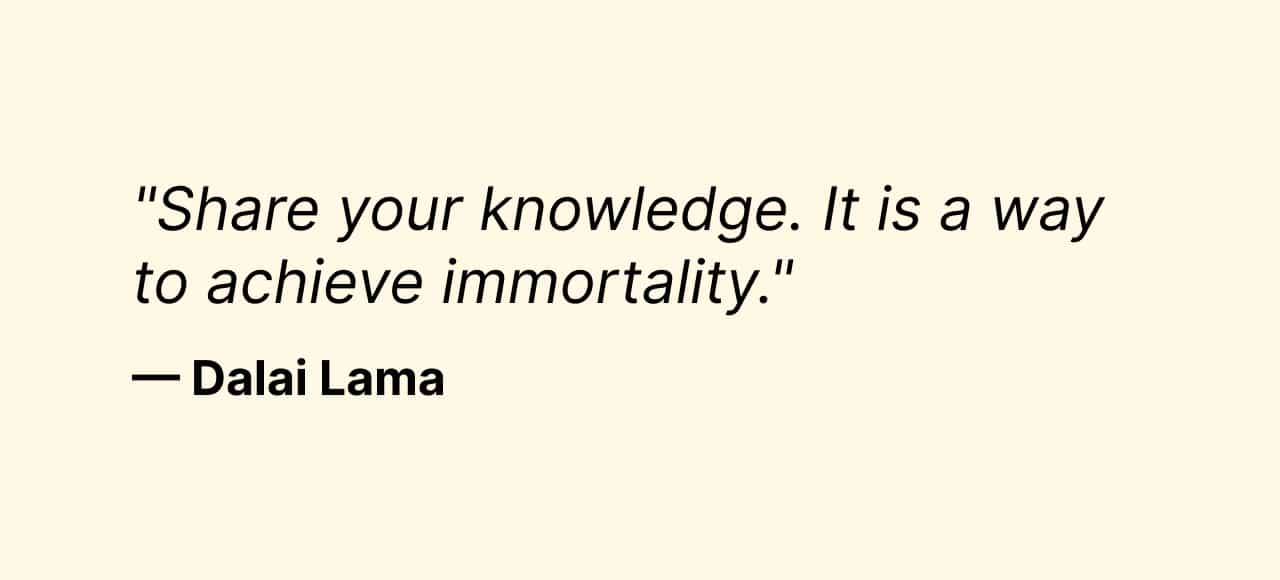
"Share your knowledge. It is a way to achieve immortality." (Dalai Lama)
"The pursuit of truth and beauty is a sphere of activity in which we are permitted to remain children all our lives." (Albert Einstein)
"If I had an hour to solve a problem I'd spend 55 minutes thinking about the problem and 5 minutes thinking about solutions." (Albert Einstein)
"One of the signs of a great society is the diligence with which it passes culture from one generation to the next." (Winston Churchill)
Einstein appears repeatedly in this section for good reason. His contributions to physics were extraordinary, but his reflections on how to think have arguably influenced even more people. His emphasis on sustained questioning over quick answers aligns with what modern learning science calls "productive struggle," the finding that wrestling with a problem before receiving the answer produces deeper encoding than passive instruction.
The Dalai Lama's quote about sharing knowledge points to something important: learning is not a solo activity. When you share what you've learned, you reinforce your own understanding while contributing to a collective knowledge base. Tools like Glasp's web highlighter make this process visible, letting you highlight passages and share them with a community of readers. For more on how sharing knowledge creates lasting impact, see our article on the greatest legacy for future generations.
Quotes on Perseverance, Resilience, and Hard Work
Talent gets attention. Persistence gets results. The quotes in this section come from people who understood that the path between starting and finishing is rarely straight.
"Our greatest weakness lies in giving up. The most certain way to succeed is always to try just one more time." (Thomas Edison)
"Genius is 1% inspiration, 99% perspiration." (Thomas Edison)
"There's a way to do it better. Find it." (Thomas Edison)
"Opportunity is often missed because it comes dressed in overalls and looks like work." (Thomas Edison)
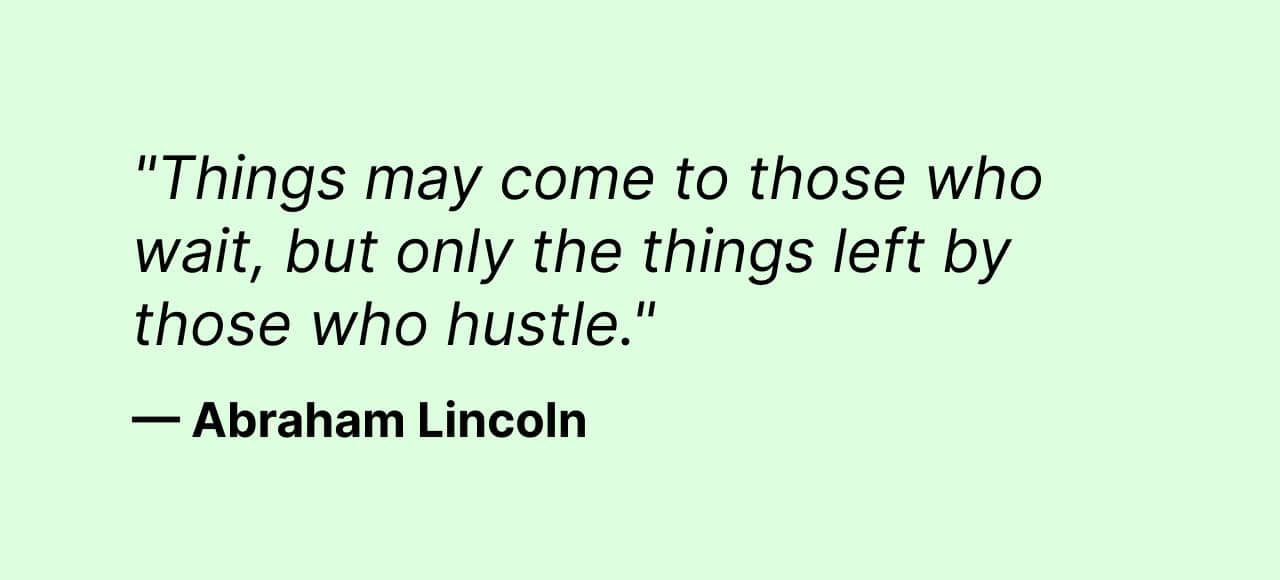
"Things may come to those who wait, but only the things left by those who hustle." (Abraham Lincoln)
"You never fail until you stop trying." (Albert Einstein)
"A person who never made a mistake never tried anything new." (Albert Einstein)
"Winners never quit and quitters never win." (Vince Lombardi)
"I've missed more than 9000 shots in my career. I've lost almost 300 games. 26 times I've been trusted to take the game winning shot and missed. I've failed over and over and over again in my life. And that is why I succeed." (Michael Jordan)
"You may be disappointed if you fail, but you are doomed if you don't try." (Beverly Sills)
"It does not matter how slowly you go as long as you do not stop." (Confucius)
"Genius is seldom recognized for what it is: a great capacity for hard work." (Henry Ford)
"When everything seems to be going against you, remember that the airplane takes off against the wind, not with it." (Henry Ford)
"I never dreamed about success. I worked for it." (Estee Lauder)
"Genius is 1% talent and 99% percent hard work." (Albert Einstein)
"Work as if you were to live a thousand years, play as if you were to die tomorrow." (Benjamin Franklin)
Michael Jordan's quote is worth pausing on. It's one of the most frequently cited quotes in sports, but its power comes from specificity. He doesn't say "I failed a lot." He gives exact numbers: 9,000 missed shots, 300 lost games, 26 blown game-winners. The specificity makes the failure concrete and the success that followed it more credible. When you save quotes like this, consider adding your own note about why it resonated. That annotation is what transforms a saved quote into a personal insight. With Glasp, you can highlight and annotate quotes as you encounter them online, building a personal library of wisdom over time.
Quotes on Leadership and Vision
Leadership is not about titles. It's about seeing what others don't yet see and creating conditions for them to see it too.
"A leader is one who knows the way, goes the way, and shows the way." (John C. Maxwell)
"The function of leadership is to produce more leaders, not more followers." (Ralph Nader)
"Vision without execution is just hallucination." (Henry Ford)
"The whole secret of a successful life is to find out what is one's destiny to do, and then do it." (Henry Ford)
"If you set your goals ridiculously high and it's a failure, you will fail above everyone else's success." (James Cameron)
"A change is brought about because ordinary people do extraordinary things." (Barack Obama)
"We don't ask you to believe in our ability to bring change, rather, we ask you to believe in yours." (Barack Obama)
"Dream big. Start small. But most of all, start." (Simon Sinek)
"The big lesson in life, baby, is never be scared of anyone or anything." (Frank Sinatra)
"The details are not the details. They make the product." (Charles Eames)
Henry Ford's line about vision and execution captures a tension every leader faces. Ideas are abundant. Execution is scarce. The quote works as a diagnostic: if you have a vision but no plan, you're hallucinating. If you have a plan but no vision, you're just busy. The best leaders hold both simultaneously.
Ralph Nader's quote reframes the entire purpose of leadership. In most organizations, leadership is measured by follower count: how many people report to you, how large your audience is. Nader flips this metric. The real measure is how many of your people go on to lead others. This is a multiplier mindset, and it applies equally to knowledge sharing. When you highlight and share insights publicly through tools like Glasp, you're not just collecting information for yourself. You're creating pathways for others to learn.
Quotes on Love, Kindness, and Compassion
Ambition without compassion is just competition. The voices in this section remind us that the quality of our relationships defines the quality of our lives.
"Every time you smile at someone, it is an action of love, a gift to that person, a beautiful thing." (Mother Teresa)
"Spread love everywhere you go. Let no one ever come to you without leaving happier." (Mother Teresa)
"It's not how much we give but how much love we put into giving." (Mother Teresa)

"Peace begins with a smile." (Mother Teresa)
"Not all of us can do great things. But we can do small things with great love." (Mother Teresa)
"I alone cannot change the world, but I can cast a stone across the waters to create many ripples." (Mother Teresa)
"If we have no peace, it is because we have forgotten that we belong to each other." (Mother Teresa)
"In spite of everything, I still believe that people are really good at heart." (Anne Frank)
"No one has ever become poor by giving." (Anne Frank)
"How wonderful it is that nobody need wait a single moment before starting to improve the world." (Anne Frank)
"Whoever is happy will make others happy." (Anne Frank)
"Those who have courage and faith shall never perish in misery." (Anne Frank)
"People will forget what you said, people will forget what you did, but people will never forget how you made them feel." (Maya Angelou)
"Love your enemies, for they tell you your faults." (Benjamin Franklin)
"The best thing to give to your enemy is forgiveness; to an opponent, tolerance; to a friend, your heart; to your child, a good example; to a father, deference; to your mother, conduct that will make her proud of you; to yourself, respect; to all others, charity." (Benjamin Franklin)
"The purpose of our lives is to be happy." (Dalai Lama)
"Love the life you live. Live the life you love." (Bob Marley)
"When you judge another, you do not define them; you define yourself." (Wayne Dyer)
Mother Teresa dominates this section because few people lived their philosophy as consistently as she did. Her quotes are not theoretical. They describe a daily practice of showing up for others, one smile, one act of giving at a time. The repetition of "small" in her quotes is deliberate. She understood that grand gestures are rare, but small kindnesses are available to everyone, every day.
Anne Frank's optimism, written while hiding from genocide, remains one of the most remarkable statements of faith in humanity ever recorded. Her words carry extra weight precisely because of the circumstances under which they were written. Context matters enormously with quotes, which is why remembering what you read about an author's life can deepen the impact of their words.
Quotes on Creativity and Innovation
Creativity is not a gift reserved for artists. It's a way of seeing connections that others miss, and it can be practiced.
"Creativity is just connecting things." (Steve Jobs)
"Simple can be harder than complex. You have to work hard to get your thinking clean to make it simple. But it's worth it in the end because once you get there, you can move mountains." (Steve Jobs)
"If you really look closely, most overnight successes took a long time." (Steve Jobs)
"Don't let the noise of others' opinions drown out your own inner voice." (Steve Jobs)
"Have the courage to follow your heart and intuition. They somehow already know what you truly want to become. Everything else is secondary." (Steve Jobs)
"Just because something doesn't do what you planned it to do doesn't mean it's useless." (Thomas Edison)
"If you can dream it, you can do it. Always remember that this whole thing was started with a dream and a mouse." (Walt Disney)
"Disneyland will never be completed. It will continue to grow as long as there is imagination left in the world." (Walt Disney)
"All our dreams can come true, if we have the courage to pursue them." (Walt Disney)
"Our greatest national resource is the minds of our children." (Walt Disney)
"The past can hurt. But the way I see it, you can either run from it, or learn from it." (Walt Disney)
"Think, Believe, Dream, and Dare." (Walt Disney)
"Either write something worth reading or do something worth writing." (Benjamin Franklin)
Steve Jobs's definition of creativity as "connecting things" is deceptively simple. What he meant is that creative people don't generate ideas from nothing. They draw from a broader range of experiences and find patterns between seemingly unrelated domains. This is why reading widely matters. The more diverse your inputs, the richer your creative output. Tools like YouTube Summary can help you quickly extract key ideas from talks and lectures across fields, feeding that cross-pollination process.
Walt Disney's quotes reveal a consistent theme: imagination as a renewable resource. His insistence that Disneyland would never be "completed" reflects a growth mindset applied to creative work. Nothing is ever finished; it's only at its current stage of evolution.
Quotes on Dreams, Courage, and Taking Action
Inspiration without action is entertainment. The quotes below push past the feeling of motivation toward the harder step of actually doing something.
"The future depends on what you do today." (Mahatma Gandhi)
"The future belongs to those who believe in the beauty of their dreams." (Eleanor Roosevelt)
"You become what you believe." (Oprah Winfrey)
"When you reach the end of your rope, tie a knot in it and hang on." (Franklin D. Roosevelt)
"When you have a dream, you've got to grab it and never let go." (Carol Burnett)
"There is only one thing that makes a dream impossible to achieve: the fear of failure." (Paulo Coelho)
"Remember that wherever your heart is, there you will find your treasure." (Paulo Coelho)
"Everyone seems to have a clear idea of how other people should lead their lives, but none about his or her own." (Paulo Coelho)
"Your eyes show the strength of your soul." (Paulo Coelho)
"If opportunity doesn't knock, build a door." (Milton Berle)
"The best way to predict your future is to create it." (Abraham Lincoln)
"I have learned over the years that when one's mind is made up, this diminishes fear." (Rosa Parks)
"You are never too old to set another goal or to dream a new dream." (Malala Yousafzai)
"If you push through that feeling of being scared, that feeling of taking a risk, really amazing things can happen." (Marissa Mayer)
"There is nothing impossible to they who will try." (Alexander the Great)
"The greatest glory in living lies not in never falling, but in rising every time we fall." (Nelson Mandela)
"You only live once, but if you do it right, once is enough." (Mae West)
"If people are doubting how far you can go, go so far that you can't hear them anymore." (Michelle Ruiz)
"Never bend your head. Always hold it high. Look the world straight in the eye." (Helen Keller)
"You can overcome anything, if and only if, you love something enough." (Lionel Messi)
Rosa Parks's quote is striking for its simplicity. Fear doesn't disappear through bravery. It diminishes through decision. Once you commit to a course of action, the anxiety about "should I or shouldn't I" evaporates. The fear of the unknown is replaced by the clarity of a chosen path. This psychological shift, from deliberation to commitment, is well documented in decision science. The hard part is not the action. It's the moment before it.
Paulo Coelho appears several times here because The Alchemist, from which most of these quotes originate, is essentially a 200-page argument for following your instincts despite external pressure. Whether or not you agree with his philosophy, the quotes work because they name a universal tension: the gap between what we want and what we're willing to risk to get it.
Quotes on Legacy, Impact, and Meaning
What will you leave behind? These quotes grapple with the question of how to live in a way that outlasts your own lifetime.
"Twenty years from now you will be more disappointed by the things that you didn't do than by the ones you did do. So, throw off the bowlines, sail away from safe harbor, catch the trade winds in your sails. Explore, Dream, Discover." (Mark Twain)
"Everything has beauty, but not everyone can see." (Confucius)
"Life is a long lesson in humility." (James M. Barrie)
"Life is made of ever so many partings welded together." (Charles Dickens)
"People should pursue what they're passionate about. That will make them happier than pretty much anything else." (Elon Musk)
"Though no one can go back and make a brand new start, anyone can start from now and make a brand new ending." (Carl Bard)
"The secret of success is to do the common thing uncommonly well." (John D. Rockefeller Jr.)
"Success usually comes to those who are too busy to be looking for it." (Henry David Thoreau)
"Many people die at twenty five and aren't buried until they are seventy five." (Benjamin Franklin)
"If you cannot do great things, do small things in a great way." (Napoleon Hill)
"Eat to live, don't live to eat." (Benjamin Franklin)
Benjamin Franklin's observation that most people "die at twenty five" is not about physical death. It's about the moment when curiosity stops, when routine replaces exploration, when you stop asking "what if?" and start saying "that's just how it is." The quote is a warning against intellectual complacency, and it's as relevant today as it was in the 18th century.
Mark Twain's "throw off the bowlines" passage has become one of the most shared quotes in the English language. Its power comes from the nautical metaphor: safe harbor feels secure, but a ship in harbor is not fulfilling its purpose. The quote doesn't just tell you to be brave. It gives you a concrete image of what leaving safety looks like. If the idea of legacy and long-term impact resonates with you, our article on the greatest legacy for future generations goes deeper into how sharing knowledge creates ripple effects across time.
How to Use Quotes for Personal Growth
Reading quotes is easy. Using them to actually change your behavior requires a system. Here are five practices that turn passive inspiration into active transformation.
1. Highlight and annotate, don't just save. When a quote resonates, don't just bookmark it. Write down why it resonated. What was happening in your life that made those words land? The annotation is where the personal growth happens. Glasp's web highlighter lets you highlight quotes on any webpage and add notes that capture your thinking in the moment.
2. Organize quotes by theme, not by source. Most people organize quotes chronologically or by author. But quotes become more useful when grouped by the challenge they address. When you're struggling with procrastination, you want quick access to quotes about perseverance. When you're dealing with conflict, you need the compassion section. Build your quote library around your life, not around someone else's bibliography.
3. Review quotes on a schedule. A quote you read once fades within days. A quote you revisit weekly becomes part of your mental vocabulary. Research on spaced repetition shows that periodic review dramatically improves retention. Set a weekly reminder to revisit your saved highlights and quotes.
4. Share quotes to deepen your understanding. Explaining why a quote matters to you forces you to articulate something that might otherwise remain vague. Social sharing also creates accountability. When you publicly highlight a quote about discipline, you're making a small public commitment to that value. On Glasp, your highlighted quotes become part of your public profile, creating a visible map of the ideas that shape your thinking.
5. Connect quotes to action. Pick one quote per week and treat it as an experiment. If you choose Gandhi's "The future depends on what you do today," spend that week making one concrete decision each morning that your future self will thank you for. The quote becomes a filter for daily choices rather than an abstract sentiment.
The difference between someone who reads inspirational quotes and someone who grows from them is not intelligence or discipline. It's the presence of a system. Collect, annotate, organize, review, and act. That cycle, repeated over months and years, is how words become wisdom. For more on building a knowledge system that supports this kind of growth, see our guide on building a second brain.
Frequently Asked Questions
Why do inspirational quotes motivate us?
Quotes motivate us because they compress complex experiences into memorable language. When you read a quote that resonates, your brain maps it onto your own situation, creating a moment of clarity. Research in psychology shows that exposure to achievement-related words can increase persistence on difficult tasks, even when the effect is unconscious. The authority of the quoted person also matters: we assign more weight to statements from people we admire.
How can I remember the quotes I read?
The most effective method is spaced repetition: reviewing quotes at increasing intervals rather than reading them once and forgetting them. Write down why each quote matters to you personally, as the act of annotation strengthens memory encoding. Tools like Glasp let you highlight and annotate quotes as you encounter them, creating a searchable personal library you can revisit on a schedule.
What is the best way to organize a quote collection?
Organize by theme rather than by author or date. Group quotes under headings like "perseverance," "creativity," "kindness," or "leadership" so you can find the right words when you need them most. This thematic approach makes your collection a practical tool rather than a static archive.
Can reading quotes actually change behavior?
Quotes alone rarely change behavior, but quotes paired with reflection and action can. The key is to move beyond passive reading. Choose one quote per week, write about why it resonates, and identify one specific action it suggests. Over time, this practice builds a habit of connecting words to behavior. Research on implementation intentions supports this approach: people who link an abstract goal to a concrete action are significantly more likely to follow through.
How many quotes should I save?
Quality matters more than quantity. A collection of 20 deeply annotated quotes that you review regularly will serve you better than 2,000 quotes saved without context. Focus on quotes that produce a genuine emotional response, not just ones that sound clever. If a quote doesn't change how you think about something, it's not worth saving.
What makes a quote "great" versus just clever?
Great quotes survive because they name something true that's hard to articulate. A clever quote might make you smile; a great quote changes how you see. The test is time: if a quote still hits differently six months after you first read it, it's great. If it felt profound in the moment but now seems obvious, it was clever. Most of the quotes in this article have survived decades or centuries of repetition and still carry weight.
Should I share my favorite quotes publicly?
Yes. Sharing quotes forces you to articulate why they matter, which deepens your own understanding. It also creates opportunities for connection, as others who resonate with the same words may share perspectives you hadn't considered. Platforms like Glasp are designed for exactly this kind of knowledge sharing, letting you build a public profile of the ideas that shape your thinking.
How do quotes relate to personal knowledge management?
Quotes are one of the most accessible entry points to personal knowledge management. They're short enough to save quickly, meaningful enough to revisit, and specific enough to organize by theme. A well-maintained quote collection functions as a personal reference library for life's recurring challenges. Combined with highlights from books, articles, and Kindle highlights, quotes become part of a broader system for capturing and applying the best ideas you encounter.