The Drunken Airplanes- The Bizarre World of Asymmetric Aircraft
TL;DR
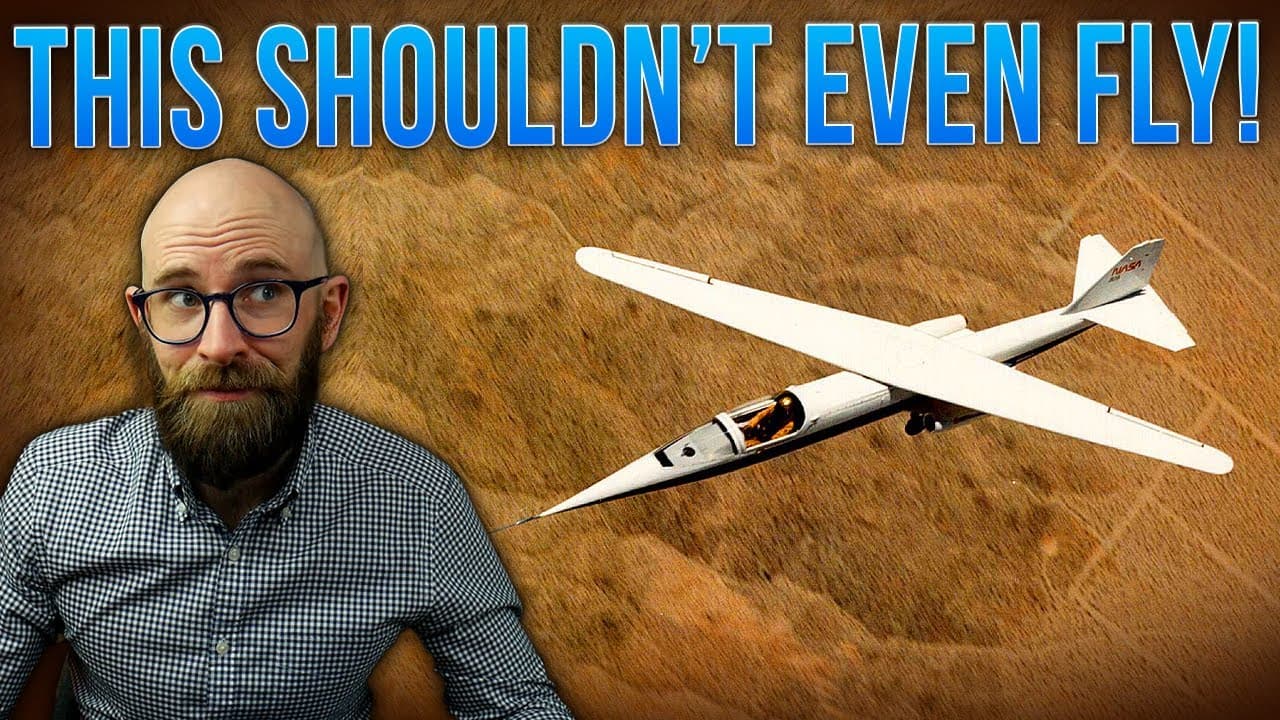
Throughout history, designers have created aircraft with asymmetric designs that defy traditional conventions, yet still manage to perform surprisingly well.
Transcript
hello there fellow coffee lovers today we're going to talk about let's coffee better with today's sponsor Trade coffee the iconic red trade bag it's a gateway to incredible coffee trade connects you to 450 coffees from Top Roasters all over the us so you can Brew better coffee right in the comfort of your own home now imagine waking up to a tantali... Read More
Key Insights
- 👍 Asymmetric aircraft challenge traditional notions of aircraft design and have proven to be capable of excellent performance.
- 🎨 The Gotha G6 and BV-141 were early examples of successful asymmetric aircraft that improved on traditional designs.
- 🫷 Richard Voigt and Burt Rutan continued to push the boundaries of asymmetry in aircraft design, showcasing innovative and functional concepts.
- 🦺 Although asymmetry may appear unconventional, it can offer solutions to specific challenges in aviation, such as improving safety and maneuverability.
Install to Summarize YouTube Videos and Get Transcripts
Explore YouTube Video Summarizer or Get YouTube Transcript Extractor
Questions & Answers
Q: What were the challenges faced by designers when creating asymmetric aircraft?
Designers faced the challenge of overcoming traditional conventions and preconceived notions of symmetry. They had to find ways to improve performance and address specific issues in aviation, such as reducing drag and improving maneuverability.
Q: How did the Gotha G6 bomber improve upon traditional designs?
The Gotha G6 bomber eliminated one of the engine cells and moved the engine and propeller to the front of the fuselage. The cockpit and gun positions were placed in a separate pod mounted on the wing. This unique configuration resulted in improved speed, range, and endurance.
Q: What was the purpose of the Burt Rutan-designed Boomerang aircraft?
The Boomerang was designed to address the poor safety record of light twin-engine aircraft. By placing one engine in the main fuselage and the other in a separate tail boom, the aircraft could maintain controlled flight in the event of engine failure or a stall.
Q: Did asymmetry impact the performance of asymmetric aircraft?
Surprisingly, the unconventional designs of asymmetric aircraft did not hinder their performance. In fact, many of these aircraft exhibited improved speed, range, and endurance compared to their conventional counterparts.
Summary & Key Takeaways
-
Asymmetric aircraft, although unusual in appearance, have been designed to improve performance and address specific challenges in aviation.
-
The Gotha G6, a German heavy bomber from 1918, was one of the first successful asymmetric aircraft. It featured an unconventional layout with engines and cockpit positioned at different locations.
-
The BV-141, an aircraft designed in 1938, had only one boom housing an engine, while a separate pod mounted on the wing housed the cockpit. Despite its unconventional configuration, it exhibited excellent performance.
-
Other aircraft, such as the P-series designed by Richard Voigt, and the Boomerang and Aries by Burt Rutan, also showcased innovative asymmetric designs.
Read in Other Languages (beta)
Share This Summary 📚
Summarize YouTube Videos and Get Video Transcripts with 1-Click
Try YouTube Summary with ChatGPT & Claude or YouTube Transcript Generator
Explore More Summaries from Today I Found Out 📚






Summarize YouTube Videos and Get Video Transcripts with 1-Click
Try YouTube Summary with ChatGPT & Claude or YouTube Transcript Generator