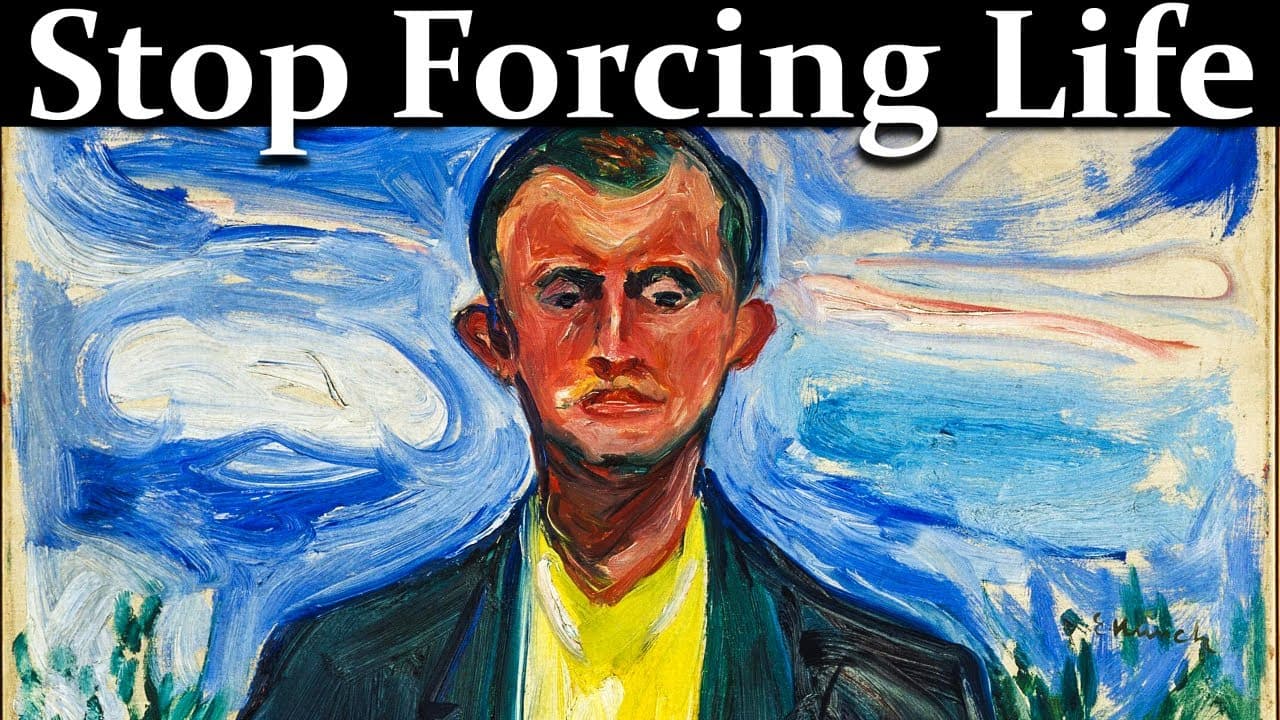
When You Stop Forcing Life, Everything Changes – Alan Watts
TL;DR
Alan Watts teaches surrendering to life's natural flow for true peace.
Transcript
have you ever noticed how tired you are tired of trying of insisting of fighting against everything against time against expectations against others against yourself Maybe you don't consciously realize it but there is a kind of silent weariness that comes precisely from the constant attempt to control life You pressure yourself all the time to be m... Read More
Key Insights
- Alan Watts emphasizes the exhaustion caused by constantly trying to control life, suggesting that true peace comes from letting go of this need for control.
- The concept of wu wei, translated as 'acting without forcing,' is central to Taoism and encourages living in harmony with the natural flow of life.
- Wu wei is not about passivity but about aligning actions with the natural order, much like a dancer moving with the music or a surfer riding a wave.
- Western culture's obsession with control and productivity creates a 'prison' of anxiety and disconnection from one's true self.
- Alan Watts served as a bridge between Eastern philosophies and Western audiences, challenging the latter's fear of losing control and advocating for a life of presence and spontaneity.
- The metaphor of a river is used to illustrate human suffering caused by resistance to life's natural flow, suggesting that surrendering leads to true freedom.
- Applying wu wei in modern life involves prioritizing quality over quantity, being present, and trusting life's cycles instead of forcing constant growth.
- True transformation occurs not through force but by allowing space for life to unfold naturally, aligning with the Tao for genuine freedom and fulfillment.
Install to Summarize YouTube Videos and Get Transcripts
Explore YouTube Video Summarizer or Get YouTube Transcript Extractor
Questions & Answers
Q: What is the central message of Alan Watts' philosophy in the video?
The central message of Alan Watts' philosophy in the video is the concept of wu wei, which means 'acting without forcing.' Watts emphasizes the importance of aligning with the natural flow of life rather than trying to control it. He argues that true peace and fulfillment come from surrendering to life's inherent rhythms and trusting the process, rather than forcing outcomes and living in constant tension.
Q: How does Western culture's approach to life differ from the principles of wu wei?
Western culture often emphasizes control, productivity, and relentless effort, creating a 'prison' of anxiety and disconnection from one's true self. In contrast, wu wei encourages living in harmony with the natural flow of life, acting with awareness and respect for the timing of things. This philosophical approach prioritizes presence, quality, and spontaneity over the constant pursuit of goals and control, which can lead to chronic stress and dissatisfaction.
Q: Why does Alan Watts use the metaphor of a river to explain human suffering?
Alan Watts uses the metaphor of a river to illustrate how human suffering often stems from resistance to life's natural flow. Just as struggling against a river's current leads to exhaustion and frustration, resisting reality creates tension and anxiety. By letting go and trusting the river's course, one can find peace and freedom. This metaphor highlights the futility of trying to control life and the liberation found in surrendering to its natural rhythms.
Q: What practical steps can one take to apply wu wei in modern life?
To apply wu wei in modern life, one can start by slowing down, breathing, and observing before reacting. It involves prioritizing quality over quantity, depth over haste, and listening to one's inner guidance. Practicing wu wei means trusting life's cycles, embracing uncertainty, and allowing space for things to unfold naturally. It requires letting go of rigid goals and routines, acting from a place of awareness and alignment with what truly matters in the present moment.
Q: How did Alan Watts bridge Eastern and Western philosophies?
Alan Watts served as a bridge between Eastern and Western philosophies by translating complex Eastern concepts like Taoism and Zen into terms that Western audiences could understand and relate to. He challenged Western certainties and the fear of losing control, advocating for a life of presence and spontaneity. Watts used stories and metaphors to convey the wisdom of Eastern traditions, encouraging Westerners to reconsider their beliefs about control and to embrace the natural flow of life.
Q: What is the role of uncertainty in the philosophy of wu wei?
Uncertainty plays a crucial role in the philosophy of wu wei, as it is seen as an essential part of life that should be embraced rather than feared. By accepting uncertainty, individuals can experience the magic, surprise, and spontaneity that make life worth living. Wu wei encourages trusting the natural flow of life and letting go of the need for control and guarantees. This acceptance of uncertainty allows for true freedom and alignment with life's inherent rhythms.
Q: What transformation occurs when one stops forcing life, according to Alan Watts?
According to Alan Watts, when one stops forcing life, a profound transformation occurs. By creating space for life to unfold naturally, new opportunities and insights can arise. This shift allows individuals to reconnect with their intuition, align with the Tao, and experience true freedom. Actions become natural extensions of reality, leading to a life of peace, fulfillment, and presence. This transformation is not about doing whatever one wants but being deeply aligned with life's natural flow.
Q: What challenges might one face when trying to live according to wu wei?
Living according to wu wei can be challenging due to ingrained cultural conditioning that values control, productivity, and relentless effort. The mind may resist embracing uncertainty and letting go of rigid goals. Old programming may pull individuals back into patterns of resistance and fear of falling behind. Practicing wu wei requires vigilance, courage, and a willingness to trust life's inherent rhythms, which can be difficult in a world that demands haste and constant achievement.
Summary & Key Takeaways
-
Alan Watts discusses the silent weariness that comes from trying to control life, proposing wu wei as a transformative principle for living in harmony with the natural flow. He encourages acting with awareness and respect for life's timing, rather than forcing outcomes.
-
The video explores how Western culture's emphasis on control leads to anxiety and disconnection, while wu wei offers a path to peace by aligning with life's inherent rhythm. Watts uses metaphors like the river to explain the futility of resistance and the liberation found in surrender.
-
Practicing wu wei requires a shift in perspective, embracing uncertainty, and trusting the natural cycles of life. Watts challenges viewers to recognize areas of resistance in their lives and encourages conscious surrender as a path to true freedom and transformation.
Read in Other Languages (beta)
Share This Summary 📚
Summarize YouTube Videos and Get Video Transcripts with 1-Click
Try YouTube Summary with ChatGPT & Claude or YouTube Transcript Generator
Explore More Summaries from Psyphoria 📚


Summarize YouTube Videos and Get Video Transcripts with 1-Click
Try YouTube Summary with ChatGPT & Claude or YouTube Transcript Generator