Open-ended mutual funds
TL;DR
Open-ended mutual funds allow investors to buy or sell shares at any time, with the net asset value (NAV) per share fluctuating based on the performance of the fund.
Transcript
Let's say Pete over here thinks that he's a pretty good investor. What he does is, he has an idea that says, "Look. I'm going to create a corporation "and I'm going to get a bunch of people to contribute "money to that corporation. "Then I'll manage that money "and maybe I'll take a little fee for myself "so that I can maybe hire some analysts "or ... Read More
Key Insights
- 🤗 Open-ended mutual funds allow investors to enter or exit the fund easily, providing flexibility and liquidity.
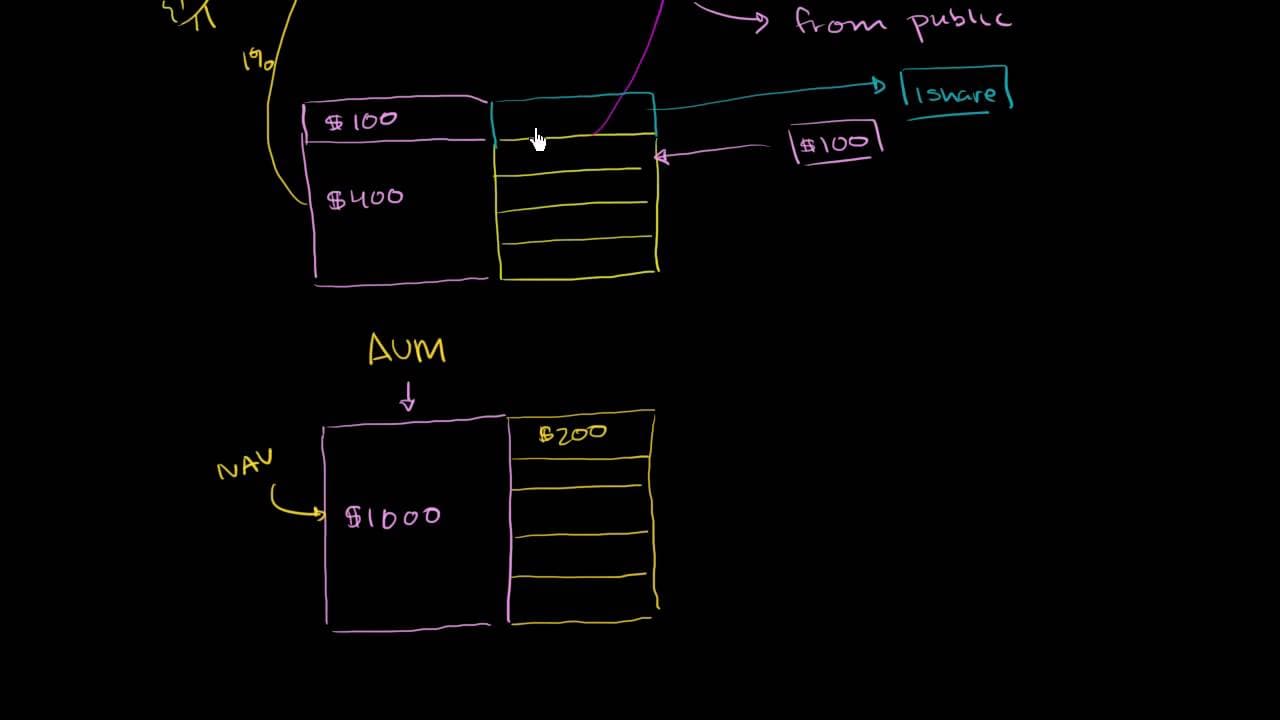
- ⚾ The NAV per share determines the value of an investor's contribution and changes based on the fund's performance.
- 🥹 Fund managers need to manage the constant buying and selling of shares and hold cash reserves to accommodate investors' requests for redemptions.
Install to Summarize YouTube Videos and Get Transcripts
Explore YouTube Video Summarizer or Get YouTube Transcript Extractor
Questions & Answers
Q: How does an individual set up an open-ended mutual fund?
To set up an open-ended mutual fund, an individual creates a corporation and registers it with the U.S. SEC, following the necessary guidelines and regulations.
Q: What is the net asset value (NAV) per share?
The NAV per share is the total net asset value of the fund divided by the number of shares outstanding. It represents the value of each individual share in the fund.
Q: Can investors buy or sell shares in an open-ended mutual fund at any time?
Yes, investors have the flexibility to buy or sell shares in an open-ended mutual fund at any time, with the NAV per share being adjusted accordingly.
Q: How does the fund manager earn income in an open-ended mutual fund?
The fund manager earns income through an annual fee, usually around 1% of the total assets under management, which is deducted from the fund's performance.
Summary & Key Takeaways
-
An individual sets up a corporation and registers it with the U.S. SEC to create an open-ended mutual fund.
-
Investors contribute money to the fund and receive shares in return, with the net asset value (NAV) per share determining the value of their investment.
-
The fund manager charges an annual fee based on a percentage of the total assets under management, typically around 1%.
Read in Other Languages (beta)
Share This Summary 📚
Summarize YouTube Videos and Get Video Transcripts with 1-Click
Try YouTube Summary with ChatGPT & Claude or YouTube Transcript Generator
Explore More Summaries from Khan Academy 📚



Summarize YouTube Videos and Get Video Transcripts with 1-Click
Try YouTube Summary with ChatGPT & Claude or YouTube Transcript Generator