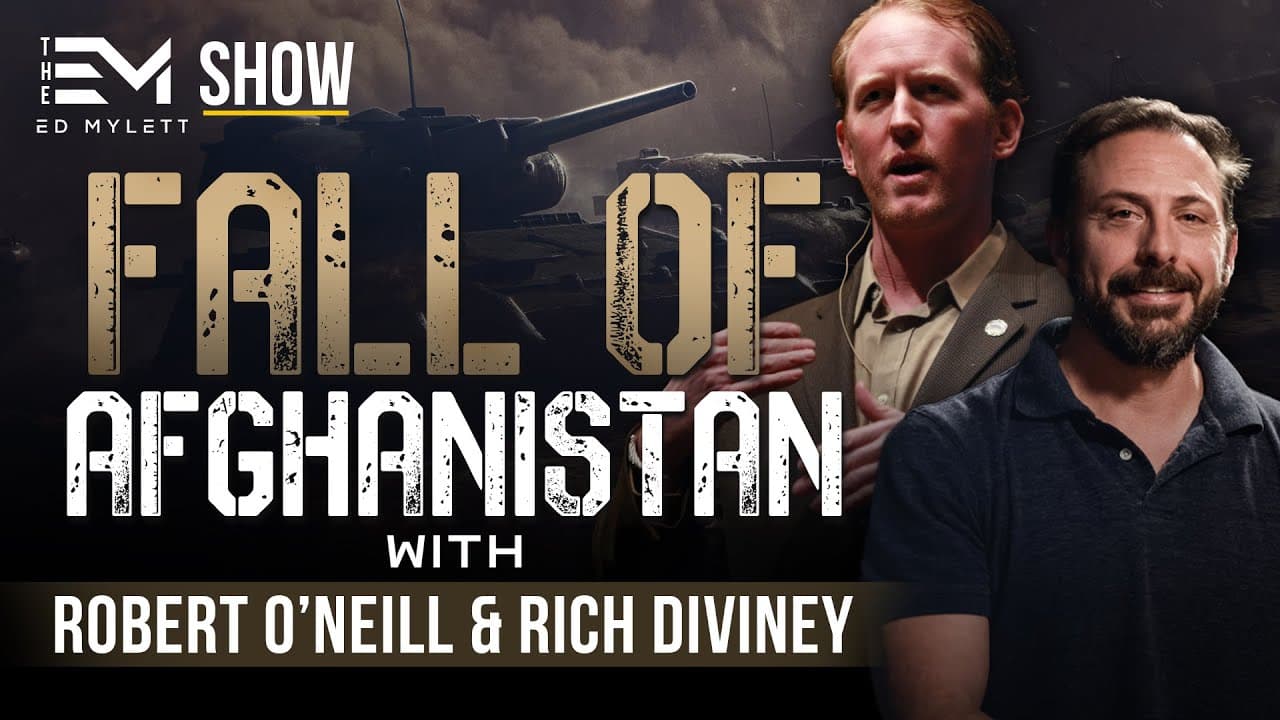
US Chaotic Pullout of Afghanistan: What Happened and What's Next? w/ Robert O'Neill and Rich Diviney
TL;DR
In this video, you will learn about the chaotic withdrawal of the US from Afghanistan and its implications. The discussion features insights from Robert O'Neill and Rich Diviney, both former Navy SEALs, who offer a deep dive into the political and military factors influencing the current situation. They explore the consequences of leaving equipment behind, the geopolitical shifts involving China and Russia, and the potential for increased terrorism threats. This comprehensive analysis provides a frank and unfiltered look at what happened and what might come next.
Transcript
they're not going to try to hijack planes again and jam them into buildings and have another 911 like we did 20 years ago um what they're going to be looking at now if you noticed on a lot of those c17 flights out not a lot of women and children on there but a whole bunch of fighting age males a lot a lot of military males and they're not dumb they... Read More
Key Insights
- The chaotic withdrawal from Afghanistan has left many unanswered questions, particularly regarding the equipment left behind and its potential use by the Taliban.
- Robert O'Neill and Rich Diviney emphasize the importance of understanding the chain of command and how political decisions have impacted military operations over the past 20 years.
- The discussion highlights the need for a unified long-term strategy in military operations, rather than relying solely on brute force.
- There is concern over the potential for increased terrorism threats due to the fall of Afghanistan and the open borders in the United States.
- The video explores the geopolitical implications of the withdrawal, particularly the roles of China and Russia in the region and how they might redefine their military and economic strategies.
- Rich Diviney and Robert O'Neill stress the importance of empathy and understanding in addressing global conflicts and preventing future wars.
- The conversation touches on the evolution of warfare, suggesting that future conflicts may be more cyber and technologically driven rather than traditional combat.
- Both speakers express optimism about the younger generation and their ability to adapt and evolve, ensuring the continued safety and security of the nation.
Install to Summarize YouTube Videos and Get Transcripts
Explore YouTube Video Summarizer or Get YouTube Transcript Extractor
Questions & Answers
Q: Why was the US withdrawal from Afghanistan considered chaotic?
The US withdrawal from Afghanistan was considered chaotic due to the abrupt nature of the evacuation and the lack of coordination with allied forces. The decision to leave was made unilaterally, leaving behind military equipment and creating a power vacuum that could be exploited by the Taliban and other groups. This lack of planning and foresight led to a messy and dangerous situation for those on the ground.
Q: What are the potential consequences of leaving military equipment in Afghanistan?
Leaving military equipment in Afghanistan poses several risks, including the possibility of it being used by the Taliban or falling into the hands of other hostile groups. This equipment could be used to strengthen their military capabilities or be sold to other countries interested in US technology. Additionally, it raises concerns about the security of the region and the potential for increased terrorism threats.
Q: How did the chain of command impact the withdrawal from Afghanistan?
The chain of command played a significant role in the withdrawal, as decisions were made based on political considerations rather than military strategy. This led to a lack of coordination and communication between different levels of command, resulting in a poorly executed evacuation. The emphasis on political objectives over military advice contributed to the chaotic nature of the withdrawal.
Q: What role do China and Russia play in the current geopolitical landscape following the US withdrawal?
China and Russia are likely to redefine their roles as military and economic powers in the region following the US withdrawal. They may seek to fill the power vacuum left by the US and establish stronger ties with the Taliban and other regional actors. This shift could impact global politics and influence future conflicts, as these countries assert their influence in the Middle East and beyond.
Q: How might the nature of warfare evolve in the future?
The nature of warfare is expected to evolve towards more cyber and technologically driven conflicts, rather than traditional combat. This shift will require a focus on developing new strategies and capabilities to address threats in the digital realm. The military will need to adapt to these changes and ensure that its personnel are equipped with the skills and knowledge to navigate this new landscape.
Q: What is the importance of empathy in addressing global conflicts?
Empathy is crucial in addressing global conflicts, as it allows for a better understanding of different perspectives and motivations. By fostering empathy, countries can work towards peaceful resolutions and prevent future wars. It also helps in building stronger relationships between nations and promoting cooperation on global issues, ultimately contributing to a more stable and secure world.
Q: Why do O'Neill and Diviney remain optimistic about the younger generation?
O'Neill and Diviney remain optimistic about the younger generation because they see them as adaptable and capable of evolving to meet new challenges. They believe that the youth have the potential to bring fresh perspectives and innovative solutions to global issues, ensuring the continued safety and security of the nation. This optimism is rooted in their belief in the resilience and ingenuity of the next generation.
Q: What message do O'Neill and Diviney have for veterans and those currently serving?
O'Neill and Diviney emphasize that the efforts of veterans and those currently serving were not in vain. They highlight the importance of recognizing the sacrifices made and the impact of their service on global security. They encourage veterans to support each other and stay connected, reinforcing the message that their contributions have made a significant difference in the world.
Summary & Key Takeaways
-
The video features Robert O'Neill and Rich Diviney discussing the US withdrawal from Afghanistan and its implications. They critique the handling of the evacuation, the decision-making processes, and the geopolitical shifts involving China and Russia. They also address concerns over increased terrorism threats and the future of military strategy.
-
O'Neill and Diviney provide insights into the challenges faced by the military, emphasizing the need for a unified long-term strategy and the importance of empathy in global politics. They also discuss the potential consequences of leaving military equipment behind and the evolving nature of warfare.
-
The speakers express optimism about the younger generation and their ability to adapt to new challenges. They highlight the importance of understanding and cooperation in addressing global conflicts and ensuring the continued safety and security of the nation.
Read in Other Languages (beta)
Share This Summary 📚
Summarize YouTube Videos and Get Video Transcripts with 1-Click
Try YouTube Summary with ChatGPT & Claude or YouTube Transcript Generator
Explore More Summaries from Ed Mylett 📚






Summarize YouTube Videos and Get Video Transcripts with 1-Click
Try YouTube Summary with ChatGPT & Claude or YouTube Transcript Generator