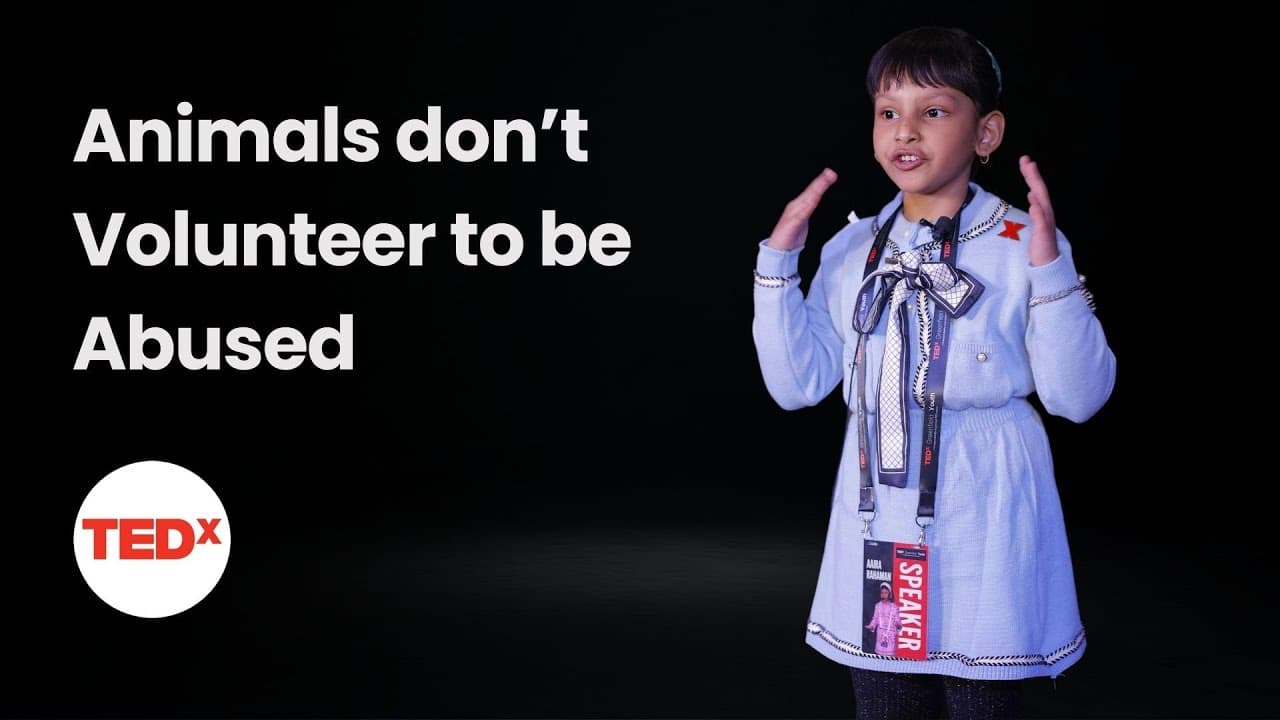
Animals don't Volunteer to be Abused | Aaira Rahaman | TEDxGreenfield Youth
TL;DR
A 6-year-old advocates against animal cruelty and promotes kindness.
Transcript
hi everyone my name is AA ran and I am 6 years old like most kids of my age I make friends easily even with those who don't speak the same language as me some of my best friends are animals and today I want to introduce you to them meet Snowflake and her family Oru and meow they are not just animals to me they are my friends they have taught me how... Read More
Key Insights
- 😚 Close bonds with animals can teach children critical values such as kindness and empathy.
- 🤨 Over 100 million animals are subjected to experiments globally, raising serious ethical concerns.
- 💨 Animals share similar pain receptors and experiences with humans, indicating they feel suffering in relatable ways.
- 🦺 The narrative challenges societal norms regarding the necessity of animal testing for product safety.
- 👍 Alternatives to animal testing exist, proving that animal suffering isn't essential for scientific progress.
- 🫒 The message advocates for a collective commitment to kindness toward all living beings, not limited to just humans.
- 🗯️ Encouraging children to advocate for animal rights can foster a more compassionate future society.
Install to Summarize YouTube Videos and Get Transcripts
Explore YouTube Video Summarizer or Get YouTube Transcript Extractor
Questions & Answers
Q: What inspired AA Ran to speak about animal cruelty?
AA Ran was inspired by their close relationships with animals, which taught them important life lessons about kindness and enjoyment. This personal connection ignited their curiosity about animal welfare, leading them to research the realities of animal testing, which they found heartbreaking and unjust.
Q: How do animals feel pain, according to the content?
The content explains that animals experience pain similarly to humans because their nerve functions operate in comparable ways. This means they can feel fear, stress, and relief, prompting the narrator to question the ethical implications of inflicting pain on animals for human benefit.
Q: What alternatives to animal testing does AA Ran mention?
AA Ran mentions alternatives such as using computers, human cell cultures, or artificial skin for testing products instead of relying on animals. This suggests that there are viable methods to ensure product safety without harming animals, advocating for the adoption of these humane practices.
Q: What actions does AA Ran encourage others to take?
The child encourages others to choose cruelty-free products by looking for a bunny logo on packaging, to support shelters and farms that care for animals, and to commit to saying no to actions that promote animal cruelty. This call to action emphasizes individual choices impacting animal welfare.
Summary & Key Takeaways
-
A 6-year-old child shares their friendship with animals, highlighting how they learn important values like kindness and enjoyment of life through these relationships.
-
The child expresses sorrow over the cruel treatment of over 100 million animals used in experiments, questioning the morality of such actions.
-
They outline alternatives to animal testing, encouraging others to choose cruelty-free products and support animal welfare initiatives, promoting a pledge for kindness towards all living beings.
Read in Other Languages (beta)
Share This Summary 📚
Summarize YouTube Videos and Get Video Transcripts with 1-Click
Try YouTube Summary with ChatGPT & Claude or YouTube Transcript Generator
Explore More Summaries from TEDx Talks 📚
Summarize YouTube Videos and Get Video Transcripts with 1-Click
Try YouTube Summary with ChatGPT & Claude or YouTube Transcript Generator