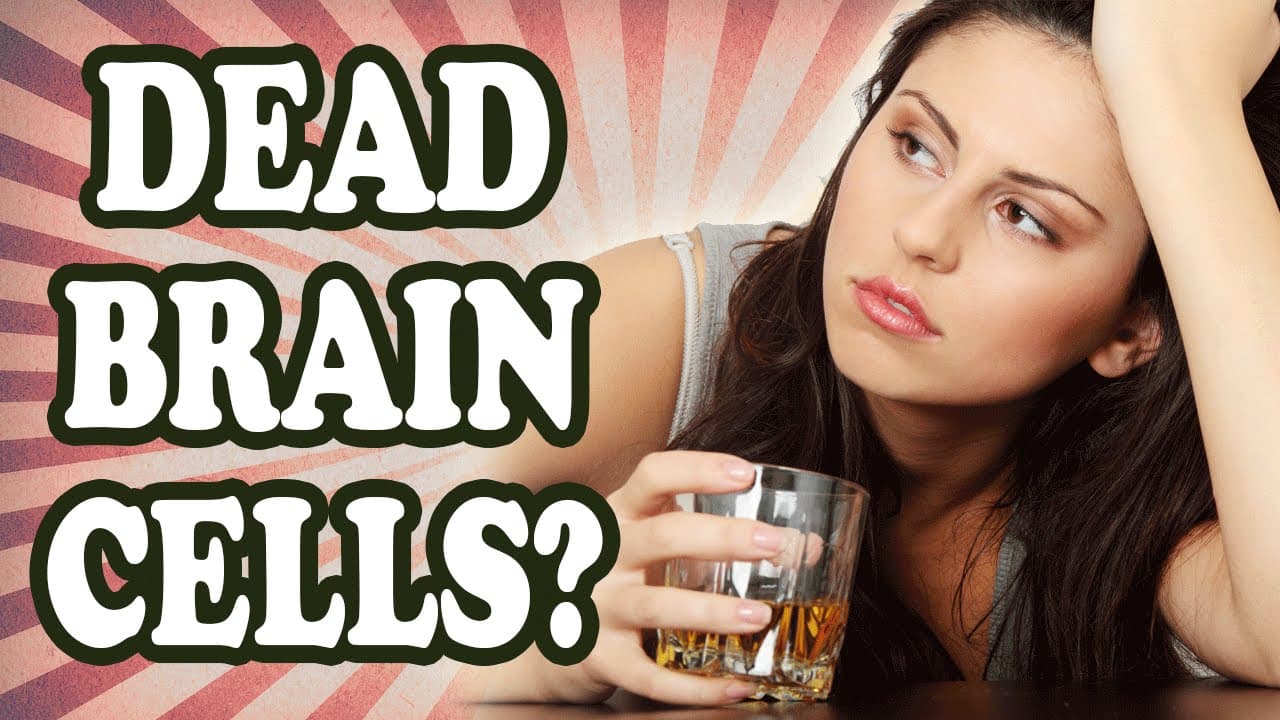
Does Drinking Alcohol Really Kill Brain Cells?
TL;DR
Alcohol consumption in moderate amounts does not directly kill brain cells, but it can inhibit the communication between neurons. However, moderate drinking has been shown to have positive effects on cognitive health as people age.
Transcript
Now, to qualify that title, pure alcohol will absolutely kill brain cells and many other types of cells, which is why it is used as a disinfectant. However, recent research has shown that the quantity of alcohol you could possibly take in, without killing yourself, does not introduce enough alcohol into your bloodstream to kill brain cells. This wa... Read More
Key Insights
- 🤕 Alcohol consumed in moderation has positive effects on cognitive health and can protect against mental impairment in old age.
- 🧠 Excessive alcohol consumption inhibits communication between brain cells by damaging dendrites.
- ✋ The brain can recover and restore communication abilities when excessive alcohol consumption is stopped.
- 🥺 Excessive drinking can lead to Wernicke-Korsakoff syndrome due to vitamin B1 deficiency.
- 🧠 High doses of alcohol inhibit the growth of new brain cells, but research suggests that brain cell production increases once alcohol consumption ceases.
- 🥺 Excessive alcohol consumption over a long period of time can lead to various neurological problems.
- 🧠 Alcohol-related damage to the brain is not permanent, but some effects may persist even after quitting.
Install to Summarize YouTube Videos and Get Transcripts
Explore YouTube Video Summarizer or Get YouTube Transcript Extractor
Questions & Answers
Q: Does alcohol kill brain cells?
No, alcohol consumption in safe quantities does not kill brain cells. Studies have shown no significant difference in neuron density or number between non-alcoholics and alcoholics.
Q: Can moderate drinking benefit cognitive health?
Yes, moderate alcohol consumption has been associated with a lower risk of cognitive impairment in old age. People who regularly drink moderate amounts of alcohol have a reduced chance of mental impairment compared to those who don't drink or drink excessively.
Q: What are the negative effects of excessive alcohol consumption on the brain?
Excessive drinking inhibits the communication between brain cells by damaging dendrites. It can also lead to Wernicke-Korsakoff syndrome, characterized by confusion, memory problems, and even coma or death due to a vitamin B1 deficiency.
Q: Can the brain recover from alcohol-related damage?
Yes, quitting excessive alcohol consumption allows the brain to repair most damage to dendrites and restore communication between brain cells. However, some effects, such as Wernicke-Korsakoff syndrome, may persist even after quitting.
Summary & Key Takeaways
-
Contrary to popular belief, consuming alcohol in limited quantities does not kill brain cells, as proven by a study comparing non-alcoholics and alcoholics.
-
Moderate alcohol consumption has been found to protect against cognitive impairment in old age, as demonstrated by a study at the Catholic University of the Sacred Heart.
-
Excessive drinking inhibits the communication between brain cells by damaging dendrites, but the brain can recover and restore communication abilities when alcohol consumption stops.
Read in Other Languages (beta)
Share This Summary 📚
Summarize YouTube Videos and Get Video Transcripts with 1-Click
Try YouTube Summary with ChatGPT & Claude or YouTube Transcript Generator
Explore More Summaries from Today I Found Out 📚






Summarize YouTube Videos and Get Video Transcripts with 1-Click
Try YouTube Summary with ChatGPT & Claude or YouTube Transcript Generator