Stems | Biology
TL;DR
Stems, vital plant organs, support growth & function, consisting of various cell types & structures for transportation & protection.
Transcript
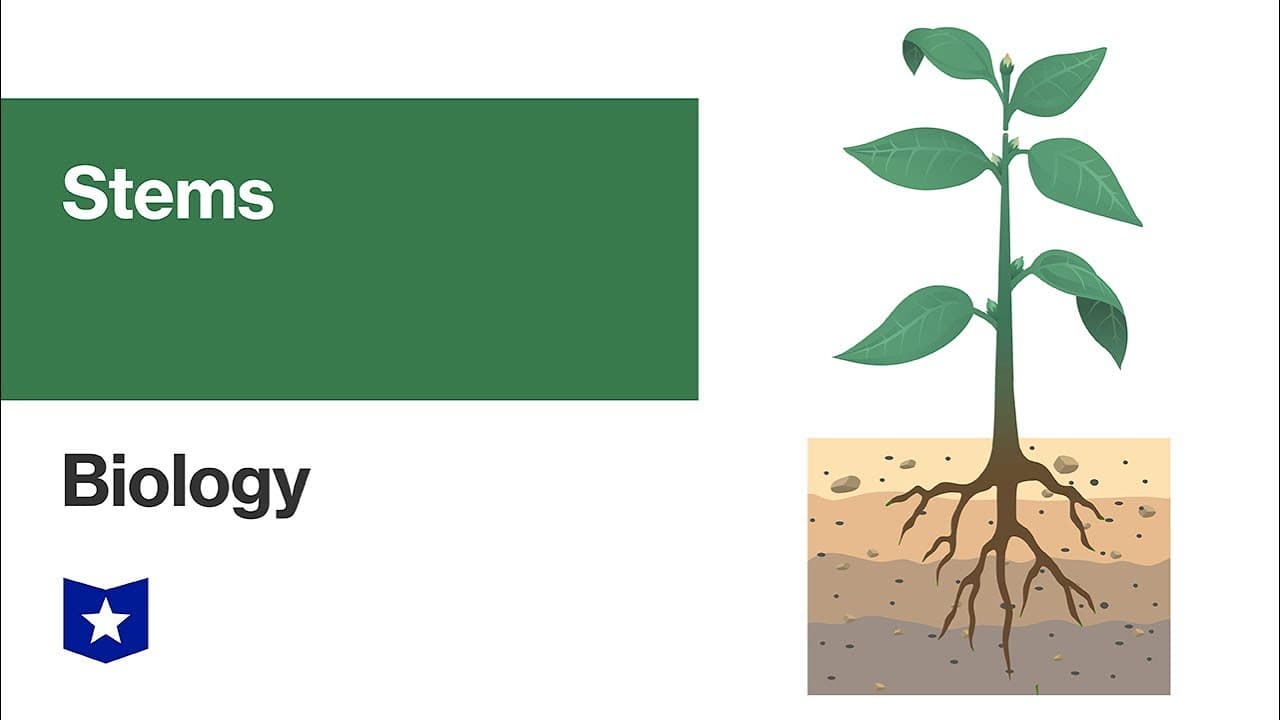
clubs like animals have organs composed of different tissue types the three basic plant organs are roots stems and leaves let's take a closer look at a stem the stem is an organ consisting of an alternating system of nodes the points were leaves are attached and Internode's the stem segments between the nodes even the slanderous clawed stem is a co... Read More
Key Insights
- 🌱 Stems are vital plant organs supporting growth and function.
- 🌱 Plant stems consist of various tissue types and structures for transport and protection.
- ❓ Herbaceous and woody stems have different growth patterns and structures.
- 🛟 Epidermis and cortex layers in stems serve protective and transport functions.
- 🫢 Stomata enable gas exchange in leaves, crucial for plant respiration.
- 🌱 Bark and trichomes provide additional protection for plant stems.
- 💦 Stems, with vascular tissues and cells, form a complex system for water and nutrient transportation.
Install to Summarize YouTube Videos and Get Transcripts
Explore YouTube Video Summarizer or Get YouTube Transcript Extractor
Questions & Answers
Q: What are the main functions of plant stems?
Plant stems support the plant, transport water and nutrients, and provide a structure for growth, including leaves and flowers. They also store nutrients and play a role in photosynthesis.
Q: How do herbaceous stems differ from woody stems?
Herbaceous stems, like those of dandelions, are not thick and do not add much girth over time. In contrast, woody stems, as seen in cypresses, grow thicker each year, forming age rings.
Q: What is the role of the epidermis and cortex in a plant stem?
The epidermis, akin to skin, has a protective cuticle to prevent water loss and infections. The cortex transports materials and stores carbohydrates in the stem.
Q: How do trichomes contribute to plant protection?
Trichomes are hair-like structures on the stem that deter herbivores, reduce evaporation, reflect sunlight, and may contain toxins for defense, such as in stinging nettles.
Summary & Key Takeaways
-
Stems are crucial plant organs with nodes for leaf attachment and internodes between them.
-
They have multiple layers and cells with specific functions for growth, support, and transportation.
-
Stems vary in structure between herbaceous and woody plants but serve essential roles in all plant growth.
Read in Other Languages (beta)
Share This Summary 📚
Summarize YouTube Videos and Get Video Transcripts with 1-Click
Try YouTube Summary with ChatGPT & Claude or YouTube Transcript Generator
Explore More Summaries from Course Hero 📚




Summarize YouTube Videos and Get Video Transcripts with 1-Click
Try YouTube Summary with ChatGPT & Claude or YouTube Transcript Generator