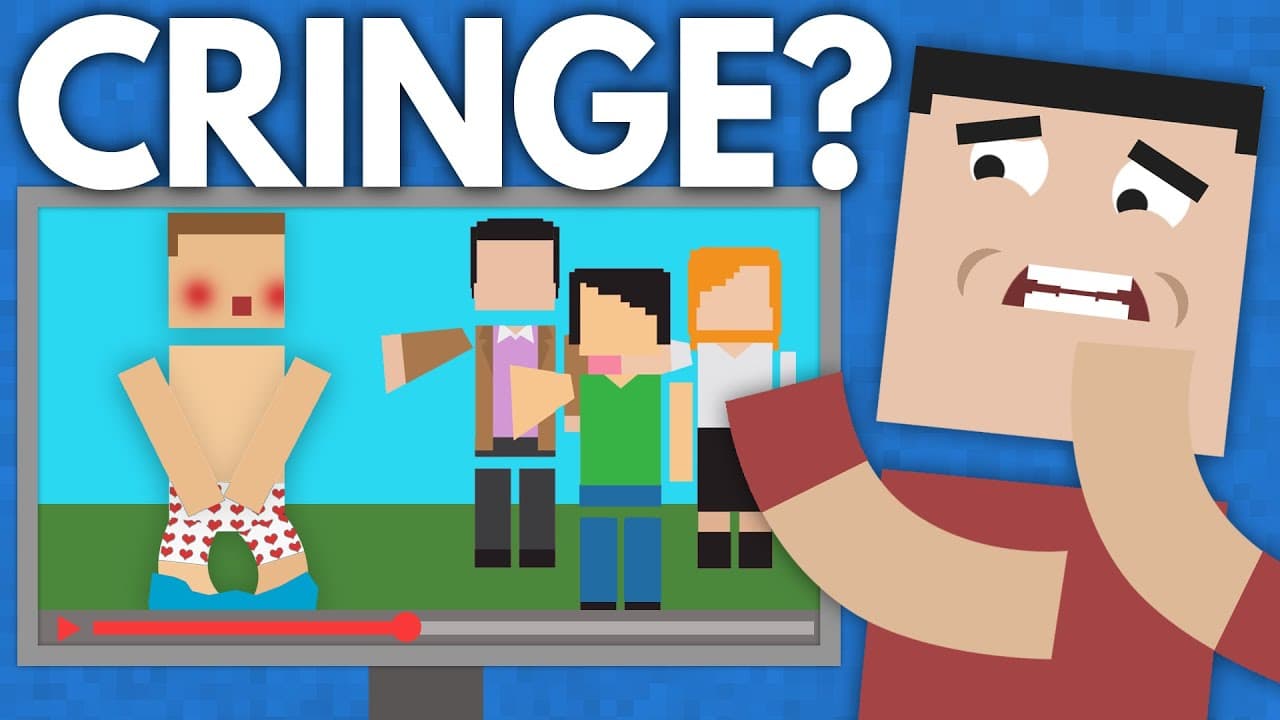
Why Do We Cringe?
TL;DR
People cringe due to empathy, social norms, and self-awareness, showing care and compassion.
Transcript
Hey there! Welcome to Life Noggin! You know that inward shiver you get when you witness something embarrassing? It happens on youtube a lot. Circlia: It especially happens when you make a bad pun on Life Noggin! Blocko: Okay! Haha very good! Triangle Bob: and when you talk to Circlia. Blocko: alright, well we should get to the- Triangle Bob: or whe... Read More
Key Insights
- 🤳 Cringing results from empathy and the clash between one's perceived self and reality.
- 🤳 Social norms and self-awareness contribute to cringing responses.
- 🧠 Studies show brain activity in regions related to empathy during cringing moments.
- 🖐️ Empathy plays a crucial role in feeling vicarious embarrassment.
- 😨 People cringe as a sign of caring and being compassionate towards others.
- 🧠 Witnessing embarrassing moments triggers brain regions associated with empathy and social pain.
- 💭 Friends' embarrassing situations activate more brain regions related to self-related thoughts, like concern for social image.
Install to Summarize YouTube Videos and Get Transcripts
Explore YouTube Video Summarizer or Get YouTube Transcript Extractor
Questions & Answers
Q: Why do people cringe when witnessing someone else's embarrassment?
People cringe due to empathy, imagining themselves in the embarrassing situation and feeling vicarious embarrassment.
Q: How does social norms and self-awareness contribute to cringing reactions?
Violating social norms or realizing uncomfortable truths about oneself can trigger cringing responses as it clashes with how one presents themselves to the world.
Q: What role does empathy play in cringing?
Empathy is essential for cringing as it allows individuals to relate to others' feelings, showing care and compassion for their embarrassing moments.
Q: What brain regions are activated during cringing, according to studies?
The anterior cingulate cortex and left anterior insula, associated with empathy and social pain, are activated when witnessing embarrassing scenarios.
Summary & Key Takeaways
-
Cringing occurs when witnessing embarrassment in others due to empathy.
-
Social norms and self-awareness contribute to cringing reactions.
-
Studies show brain activity related to empathy during cringing situations.
Read in Other Languages (beta)
Share This Summary 📚
Summarize YouTube Videos and Get Video Transcripts with 1-Click
Try YouTube Summary with ChatGPT & Claude or YouTube Transcript Generator
Explore More Summaries from Life Noggin 📚





Summarize YouTube Videos and Get Video Transcripts with 1-Click
Try YouTube Summary with ChatGPT & Claude or YouTube Transcript Generator