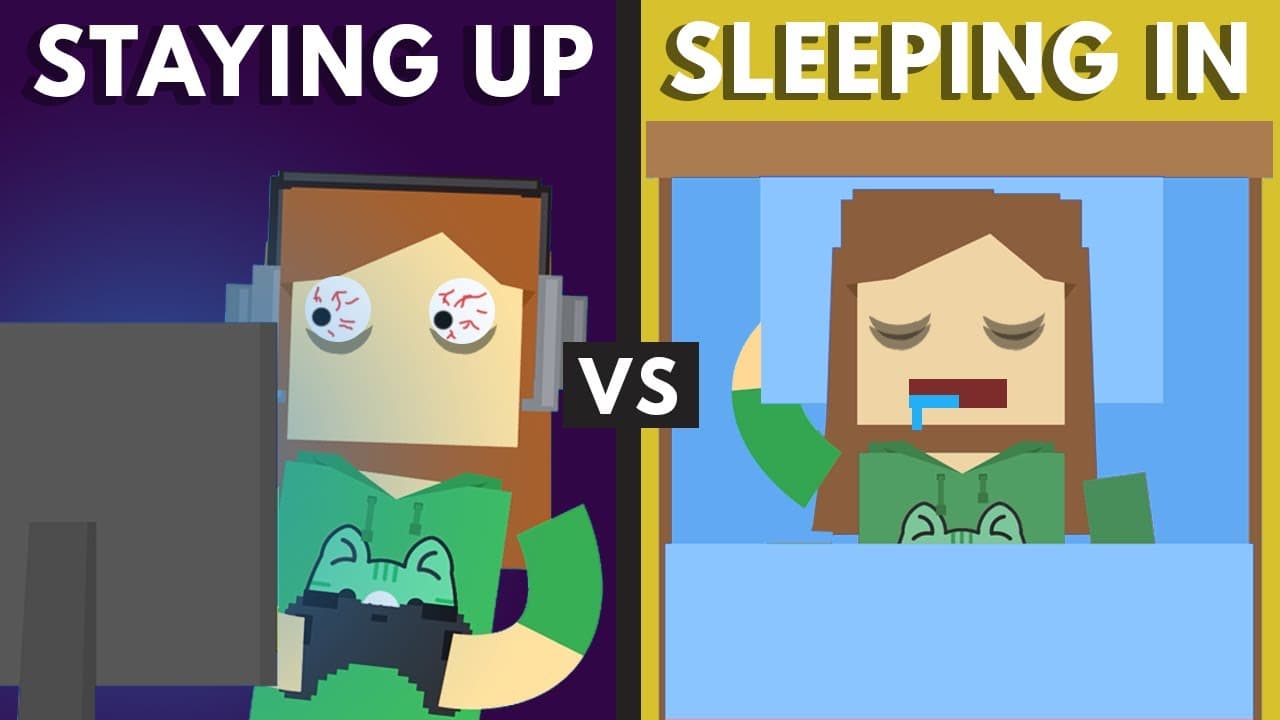
Staying Up vs Sleeping In - Which Is Worse? ft. Juniper
TL;DR
Oversleeping and sleep deprivation can lead to serious health issues and increase the risk of death.
Transcript
- [Blocko] Hey there, welcome to Life Noggin. I'd be willing to bet that we're all guilty of staying up late and sleeping in, at least once, or in my case many, many times. I'm sure you know that getting a good night's sleep is good for you and staying up all hours of the night isn't, but oversleeping is also associated with health problems. To hel... Read More
Key Insights
- 🥰 Sleep deprivation and oversleeping can both lead to serious health problems like heart disease and type two diabetes.
- 😪 Hormone regulation, particularly insulin release, is disrupted by inadequate sleep, affecting metabolism.
- ⌛ The recommended hours of sleep vary by age group, with teenagers and young adults needing around 9 hours a day.
- 😪 Studies have shown that individuals who consistently miss the optimal sleep duration are at higher risk for developing various health conditions.
- ✳️ Oversleeping has been associated with coronary artery disease, angina, and an increased risk of type two diabetes.
- 😪 Lack of sleep can impact mortality rates, with both excessive and insufficient sleep linked to higher chances of death.
- 😪 Finding a balance in sleep duration can significantly reduce the risk of mortality and improve overall health outcomes.
Install to Summarize YouTube Videos and Get Transcripts
Explore YouTube Video Summarizer or Get YouTube Transcript Extractor
Questions & Answers
Q: How does oversleeping compare to sleep deprivation in terms of health risks?
Both oversleeping and sleep deprivation have been linked to health issues such as heart disease, diabetes, and increased risk of death. Oversleeping can lead to coronary artery disease and angina, while lack of sleep raises the chances of a stroke and heart attack.
Q: What are the recommended hours of sleep for different age groups?
According to the National Sleep Foundation, newborns need 17 hours of sleep, adults require 7 hours, and teenagers and young adults should aim for around 9 hours of sleep per day. Individual variations exist, but meeting these guidelines is crucial for health.
Q: How does lack of sleep impact hormone regulation and metabolism?
Insufficient sleep disrupts hormone release, affecting processes like hunger and weight control. Less insulin is released after meals, impairing sugar absorption and energy regulation. This imbalance can contribute to weight gain, diabetes, and other metabolic issues.
Q: What are the consequences of not getting enough sleep or oversleeping in terms of mortality risk?
Studies have linked both insufficient and excessive sleep to higher mortality rates. People sleeping less than 7 hours or more than 8 hours per night face an increased risk of death compared to those with a balanced sleep duration. Prioritizing adequate sleep is essential for longevity and well-being.
Summary & Key Takeaways
-
Staying up late or oversleeping can lead to health problems like heart disease and diabetes.
-
Lack of sleep affects hormone regulation and can increase the risk of stroke and heart attacks.
-
Getting the right amount of sleep is crucial for overall well-being and reducing the risk of health complications.
Read in Other Languages (beta)
Share This Summary 📚
Summarize YouTube Videos and Get Video Transcripts with 1-Click
Try YouTube Summary with ChatGPT & Claude or YouTube Transcript Generator
Explore More Summaries from Life Noggin 📚






Summarize YouTube Videos and Get Video Transcripts with 1-Click
Try YouTube Summary with ChatGPT & Claude or YouTube Transcript Generator