Activation and inhibition of signal transduction pathways | AP Biology | Khan Academy
TL;DR
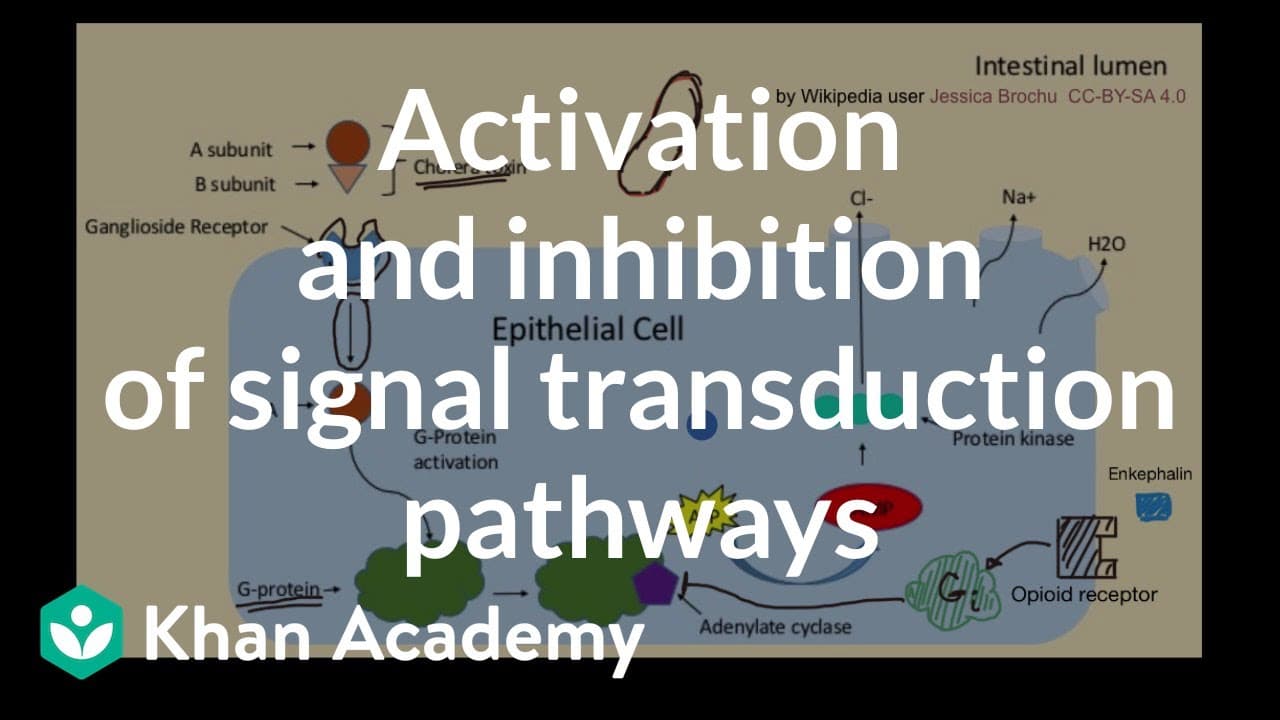
Cholera toxin interacts with receptors on epithelial cells, activating a signal transduction pathway that leads to the release of ions and causes diarrhea.
Transcript
- [Narrator] What we have depicted here is a signal transduction pathway that gets started with the cholera toxin. And we've talked about signal transduction pathways in other videos, but it's really this idea that you would have molecules outside of the cell that would interact with receptors on the surface of the cell that would then create a who... Read More
Key Insights
- 🥺 Signal transduction pathways involve the interaction of molecules outside the cell with receptors on the cell's surface, leading to a chain reaction of events within the cell.
- 📡 The cholera toxin interacts with ganglioside receptors on epithelial cells to activate a signal transduction pathway that results in diarrhea.
- ❓ Mutations in receptors or molecules involved in the pathway can affect the severity of diarrhea symptoms.
Install to Summarize YouTube Videos and Get Transcripts
Explore YouTube Video Summarizer or Get YouTube Transcript Extractor
Questions & Answers
Q: What happens if an epithelial cell has a mutation that affects its interaction with the cholera toxin?
If an epithelial cell has a mutated ganglioside receptor that cannot efficiently interact with the cholera toxin, the activation of the signal transduction pathway would be less efficient, resulting in milder diarrhea symptoms.
Q: Can the cholera toxin signal transduction pathway be disrupted?
Yes, molecules like enkephalin can inhibit the cholera toxin signal transduction pathway by activating an opioid receptor that inhibits one of the steps in the pathway. This inhibition can result in reduced diarrhea symptoms.
Q: What would happen if there is a mutation in the opioid receptor that affects its binding to enkephalin?
If the opioid receptor has a mutation that reduces its ability to bind to enkephalin, enkephalin will be less effective at inhibiting the signal transduction pathway. As a result, the regular cholera toxin pathway would occur, leading to diarrhea.
Q: What do the arrows and lines with flat heads in the signal transduction pathway represent?
Arrows represent activation or the promotion of the next step in the pathway, while lines with flat heads indicate inhibition of a particular process in the pathway.
Summary & Key Takeaways
-
Cholera bacteria releases the cholera toxin in the intestines, which interacts with ganglioside receptors on epithelial cells to start a signal transduction pathway.
-
The cholera toxin activates G-proteins, leading to adenylate cyclase, cyclic AMP, and protein kinase involvement.
-
The end result of the pathway is the release of ions from epithelial cells, causing water to leave the cell and resulting in diarrhea.
Read in Other Languages (beta)
Share This Summary 📚
Summarize YouTube Videos and Get Video Transcripts with 1-Click
Try YouTube Summary with ChatGPT & Claude or YouTube Transcript Generator
Explore More Summaries from Khan Academy 📚



Summarize YouTube Videos and Get Video Transcripts with 1-Click
Try YouTube Summary with ChatGPT & Claude or YouTube Transcript Generator