Fake Trees (Weird Tech)
TL;DR
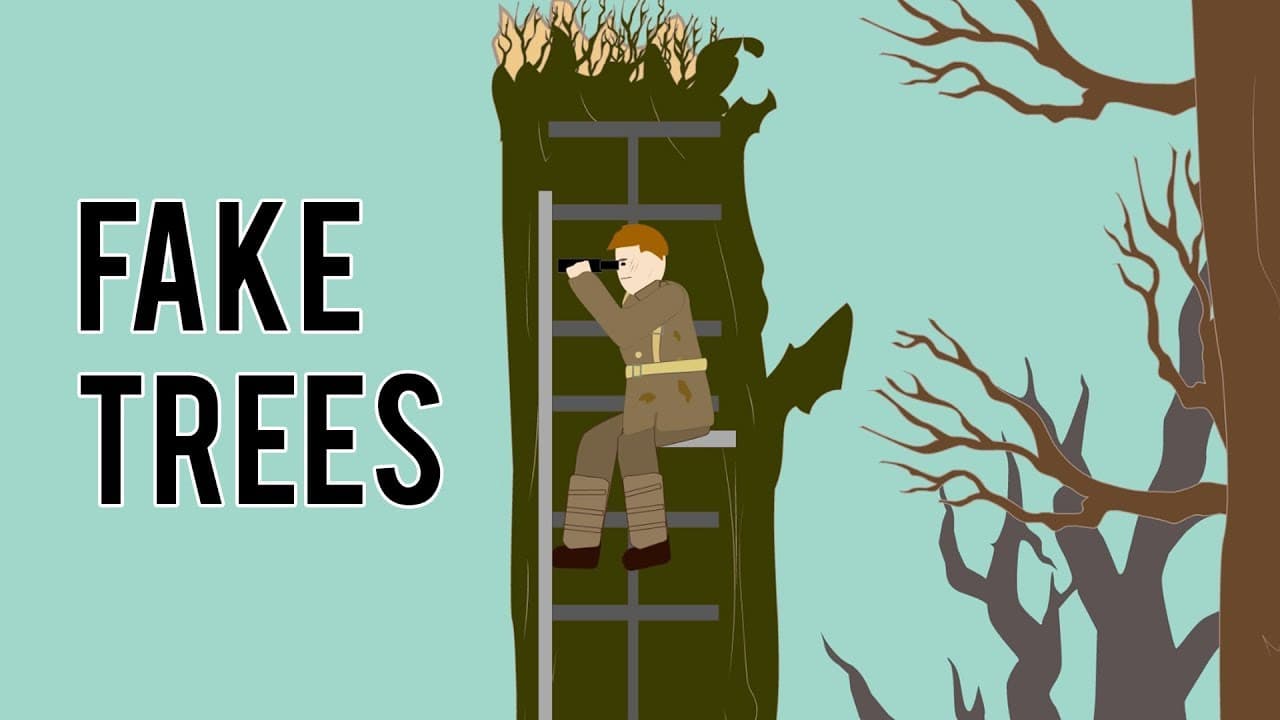
Engineers in World War One created fake trees to serve as observation posts and sniper nests, providing valuable camouflage on the battlefield.
Transcript
fake trees weird tech world war one during the First World War engineers were constructing new ways of concealment with some creative results one such form of camouflage were fake trees that were used as observation posts or as sniper nests the first fake tree was invented by French painter lucien victor deer on disc ebola and his chemical or artis... Read More
Key Insights
- 🌲 Fake trees were developed during World War One as a means of camouflage and concealment on the battlefield.
- 🌳 French painter Lucien-Victor Guirand de Scevola invented the first fake tree, which was used as an observation post for artillery spotting.
- 🌲 British painter Solomon Joseph Solomon improved upon the concept, creating observation post trees known as Opie trees.
- 🧘 Opie trees were made of steel cylinders covered in natural bark and provided excellent observation and firing positions.
- 🌲 Installation of fake trees was a dangerous task, with several casualties reported.
- 🌲 The Germans also developed their own version of fake trees, known as bombe bhakta or tree observers.
- 🕵️ Fake trees were highly effective in observing enemy positions and were difficult to detect.
Install to Summarize YouTube Videos and Get Transcripts
Explore YouTube Video Summarizer or Get YouTube Transcript Extractor
Questions & Answers
Q: Who first invented fake trees in World War One?
French painter Lucien-Victor Guirand de Scevola invented the first fake tree for use as an observation post for artillery spotting during the Second Battle of Artois.
Q: How did the British improve upon the concept of fake trees?
British painter Solomon Joseph Solomon created observation post trees, known as "Opie trees," using steel cylinder sections covered in natural bark for better concealment and realism.
Q: What materials were used to cover the fake trees?
Solomon Joseph Solomon used willow barks from King George's estate at Windsor Castle to cover the Opie trees and make them appear more like real trees.
Q: How were fake trees installed on the battlefield?
Engineers would cut down a real tree, dig out a hole where the roots were, and position the fake tree in its place. Installation had to be completed overnight to avoid alerting the enemy.
Summary & Key Takeaways
-
French painter Lucien-Victor Guirand de Scevola invented the first fake tree, using iron lookout posts camouflaged with tree bark and natural materials.
-
British painter Solomon Joseph Solomon improved upon the concept by creating observation post trees made of steel cylinders covered in natural bark.
-
Fake trees were successful in observing enemy positions and providing firing positions for snipers, but installation was dangerous and had to be done under cover of darkness.
Read in Other Languages (beta)
Share This Summary 📚
Summarize YouTube Videos and Get Video Transcripts with 1-Click
Try YouTube Summary with ChatGPT & Claude or YouTube Transcript Generator
Explore More Summaries from Simple History 📚




Summarize YouTube Videos and Get Video Transcripts with 1-Click
Try YouTube Summary with ChatGPT & Claude or YouTube Transcript Generator