Playing around making a vanilla js websocket game
TL;DR
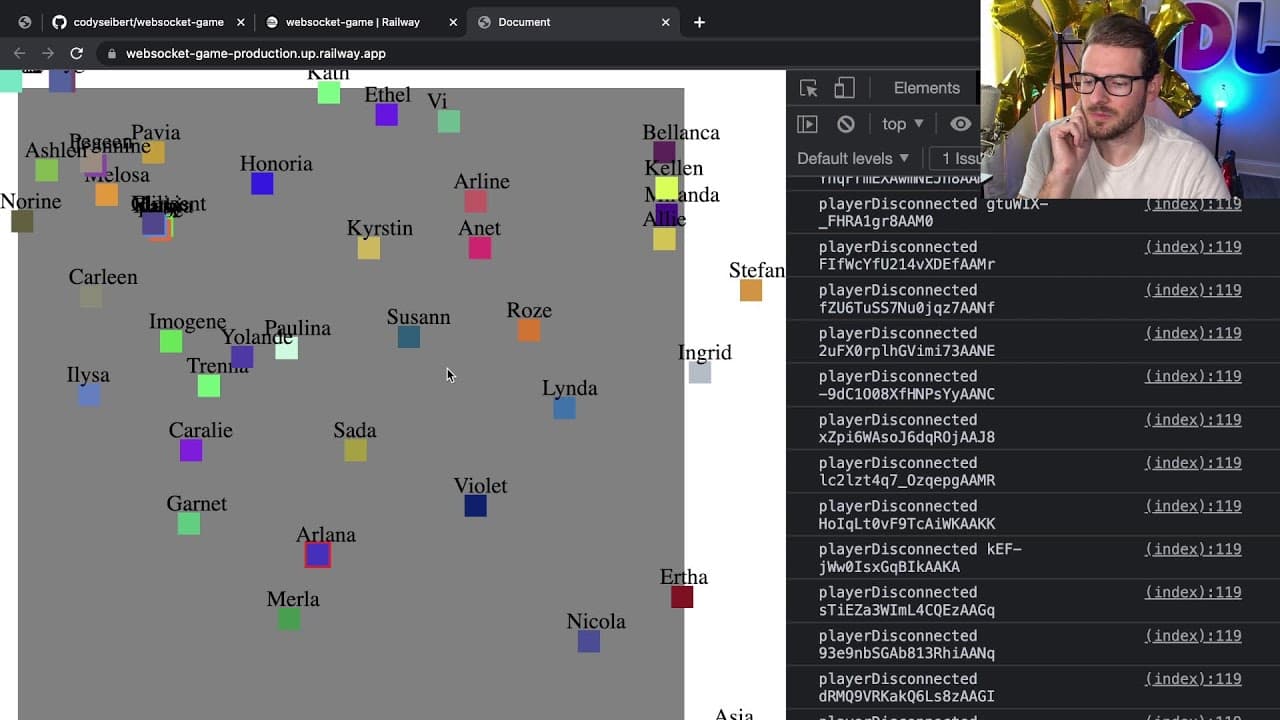
A live stream focused on building a WebSockets game using Express and Socket.IO.
Transcript
foreign foreign good morning everyone how's it going hmm I wanted to change it up a little bit I know I've been doing like a lot of uh T3 react stuff on my my streams but I actually wanted to just try playing around with web sockets for a little bit just to change it up sometimes it's cool to try new things and just like take a break from your norm... Read More
Key Insights
- 👾 WebSockets provide a robust framework for building real-time interactive applications, perfect for gaming scenarios.
- 🥺 Audience interaction during live coding can enhance engagement and lead to collaborative problem-solving.
- 👨💻 Proper error handling and debugging are vital in a dynamic coding environment to maintain progress and learning.
- 👾 Keeping code organized and clear is essential, especially in fast-paced development situations like live streams.
- 👤 Features can be iteratively added based on user feedback, indicating a flexible development approach.
- 💄 Understanding the differences between Socket.IO and other frameworks can help in making informed choices for project architecture.
- 👤 Performance optimization may become necessary as user engagement increases, highlighting the importance of scalability in web applications.
Install to Summarize YouTube Videos and Get Transcripts
Explore YouTube Video Summarizer or Get YouTube Transcript Extractor
Questions & Answers
Q: What is the purpose of using WebSockets in this project?
WebSockets allow for real-time, two-way communication between the server and clients, making it ideal for multiplayer games. This technology enables low-latency interactions, allowing players to send and receive messages instantly without refreshing the page.
Q: How does the host handle user connectivity and disconnection?
The host uses the Socket.IO library, which handles user connections through events like 'connection' and 'disconnect'. When a user connects, their socket ID is stored, and when they disconnect, that ID is used to update the player list and remove their representation from the game.
Q: Can viewers suggest features during the stream?
Yes, the host actively encourages viewer participation by asking for suggestions on game mechanics and features, which are integrated into the game in real time, fostering an interactive development experience.
Q: What challenges does the host face while coding live?
The host encounters various coding challenges, including syntax errors, logical bugs, and performance issues. They demonstrate problem-solving by debugging code, seeking assistance from viewers, and adapting their approach on the fly.
Q: How does the host plan to improve the game after the initial implementation?
The host expresses intentions to refine the game's mechanics, including movement controls, the user interface, and potentially adding more features like authentication to prevent abuse. They also consider feedback from viewers to enhance the overall gaming experience.
Summary & Key Takeaways
-
The live stream showcases the process of creating a WebSockets game using Express and Socket.IO, focusing on real-time interaction.
-
The host encourages audience participation by allowing viewers to interact with the game during its development, making it a collaborative experience.
-
Throughout the stream, the host addresses technical challenges and incorporates audience suggestions for features and improvements.
Read in Other Languages (beta)
Share This Summary 📚
Summarize YouTube Videos and Get Video Transcripts with 1-Click
Try YouTube Summary with ChatGPT & Claude or YouTube Transcript Generator
Explore More Summaries from Web Dev Cody 📚

Summarize YouTube Videos and Get Video Transcripts with 1-Click
Try YouTube Summary with ChatGPT & Claude or YouTube Transcript Generator