Now I’m trying Hono with HTMX
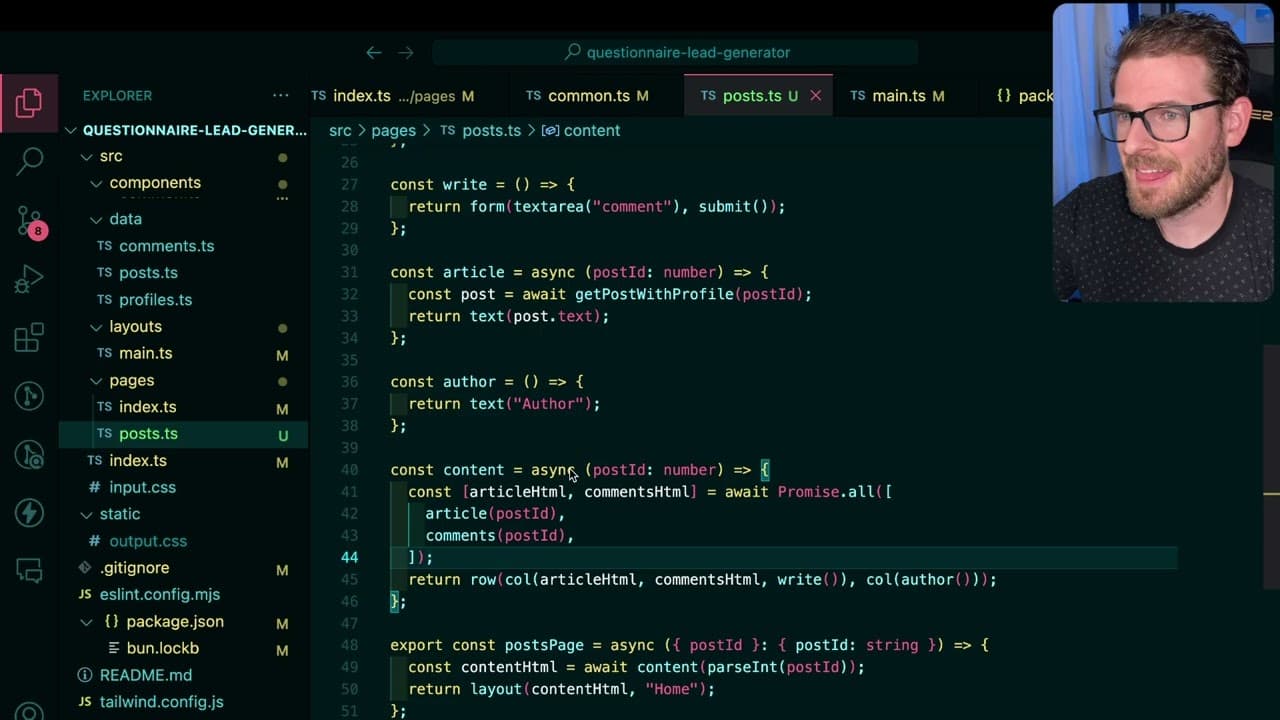
TL;DR
Experimenting with Hano as a fast alternative to Express for web applications.
Transcript
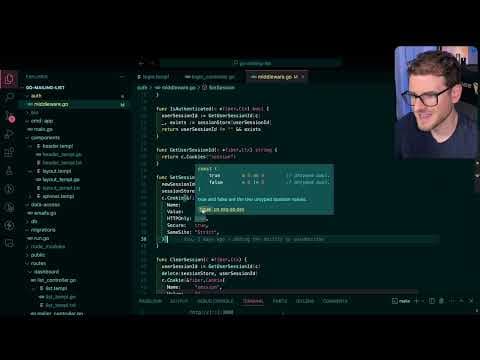
so in my last video I tried to learn a little bit about the goth stack and that's go htx and Temple overall it worked pretty good I just I'm just not a fan of how Rose go is I like to write my bugs and I like to my bugs so that's why I went back to typescript and the ecosystem that I know best and we are going to be using Hano in this video where b... Read More
Key Insights
- 👻 Hano is positioned as a fast, lightweight alternative to Express in web development, allowing for efficient endpoint management.
- 😄 The creator’s preference for familiarity and ease of bug management led them to migrate from Go to TypeScript, streamlining the development workflow.
- 💯 Simplifying the web application setup enhances readability and maintains focus on core functionalities, providing a straightforward coding experience without external complexities.
- 👻 Dynamic rendering using HTMX allows for seamless updates to the web page after form submissions, illustrating modern approaches to user interaction.
- 🈸 Future integrations and enhancements through database connections are considered essential for improving application robustness and scalability.
- 🛟 The exploration of alternative frameworks serves as a reminder of the importance of continuous learning and adaptation in software development.
- 🕸️ The creator shares their experience and learning curve, advocating for experimentation and creativity in developing web applications.
Install to Summarize YouTube Videos and Get Transcripts
Explore YouTube Video Summarizer or Get YouTube Transcript Extractor
Questions & Answers
Q: Why did the creator switch from Go to TypeScript and Hano?
The creator wasn't comfortable with the Go ecosystem, particularly with how Rose handled bugs. They preferred working with TypeScript, which they were more familiar with, indicating a stronger preference for a language where they could effectively manage their development process.
Q: How does Hano compare to Express in terms of functionality?
Hano is described as very similar to Express in terms of defining endpoints and handling requests (GET, POST, etc.). However, its appeal lies in its faster performance and lightweight characteristics, making it a potentially better option for developers looking for efficiency without sacrificing too much functionality.
Q: What does the project's setup involve in terms of building the web application?
The project utilizes a Tailwind CLI command to watch and compile styles, running alongside the Hano server. The creator demonstrates defining routes and rendering pages using basic JavaScript functions instead of JSX, showing a preference for direct HTML manipulation.
Q: How is the form submission handled within the application?
The form submission utilizes HTMX for asynchronous requests. When a user submits a comment, Hano processes the request, dynamically updates the page without full reloads, and provides immediate feedback to the user, enhancing the overall user experience.
Q: What are the main takeaways regarding the application’s architecture?
The architecture allows for separated concerns with routing, templating, and dynamic content generation. Although the code may become complex, it emphasizes a simple structure that can be expanded upon, particularly with potential future database integrations or deployments.
Q: What future enhancements does the creator consider for the application?
The creator mentions plans to implement a database connection using tools like Drizzle or Prisma for data management. They also express interest in making the application live reload capable to improve development efficiency when saving changes.
Q: Is there a specific use-case for the Hano framework that the creator is targeting?
The creator aims to use Hano for building a simple questionnaire site for a friend. They believe Hano's lightweight nature will be beneficial in reducing hosting costs and resource consumption compared to other frameworks like Next.js.
Q: What did the creator hope viewers would take away from this video?
The creator acknowledged the video might seem less structured but aimed to encourage viewers to explore new frameworks and approaches in web development, emphasizing that experimenting with different technologies can lead to better understanding and improved coding practices.
Summary & Key Takeaways
-
The video details the creator's transition from using Go with Rose to Typescript and Hano for web development due to familiarity and preference for bug handling.
-
It explains setting up a project using Hano, highlighting its simplicity compared to Express, including route management and templating without JSX, focusing on speed and responsiveness.
-
The creator demonstrates building functionalities like form submission and rendering comments dynamically, showcasing the use of HTMX with a lightweight application, all while considering future improvements like database integration.
Read in Other Languages (beta)
Share This Summary 📚
Summarize YouTube Videos and Get Video Transcripts with 1-Click
Try YouTube Summary with ChatGPT & Claude or YouTube Transcript Generator
Explore More Summaries from Web Dev Cody 📚

Summarize YouTube Videos and Get Video Transcripts with 1-Click
Try YouTube Summary with ChatGPT & Claude or YouTube Transcript Generator