How Do Sensory Rooms Benefit Students with Autism?
TL;DR
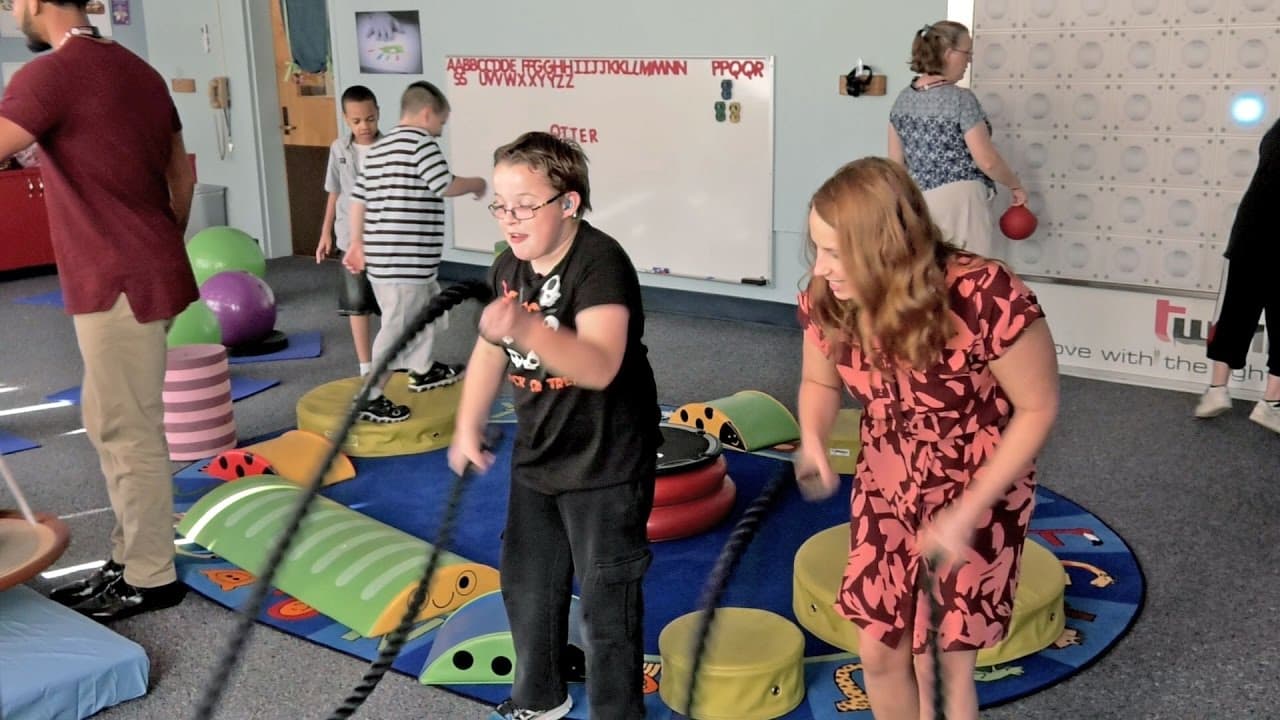
Sensory rooms enhance focus and learning for students with autism by addressing their sensory needs, leading to improved retention of information. These spaces help reduce negative behaviors and increase time on task, making students more prepared to learn. Design elements such as calming activities, crash pads, and sensory tools are tailored to support diverse needs.
Transcript
Cheryl: Research shows that if the student's in the right mindset and they get their sensory needs met, they're going to be much better learners. So after the sensory room, they're able to focus more, they're able to learn easier, and they retain more information, I find. >>Heather: Hands to your heart space. Take a deep breath in. [ inhales, exh... Read More
Key Insights
- 💁 Sensory rooms enhance student focus, learning, and information retention.
- 🧑🎓 Design elements in the sensory room cater to students' diverse sensory needs.
- 🤵 Sensory rooms contribute to reducing negative behaviors and increasing time on task.
- 🧑🎓 Schools like Hanover cater to students with various educational plans.
- 🧑🎓 Sensory rooms offer a holistic approach to student wellness and learning.
- 🍳 Sensory breaks and therapy contribute to creating a conducive learning environment.
- 🤵 Sensory room design includes yoga, breathing exercises, and calming activities.
Install to Summarize YouTube Videos and Get Transcripts
Explore YouTube Video Summarizer or Get YouTube Transcript Extractor
Questions & Answers
Q: How does the sensory room benefit students with autism?
The sensory room helps students with autism self-regulate their emotions, focus better, and retain more information, creating a conducive learning environment. It also provides a safe space for students to calm down and release emotions.
Q: What impact does the sensory room have on students' behavior?
The sensory room has shown to decrease negative behaviors, increase time on task, and improve students' ability to sit still, focus, and follow instructions, creating a more peaceful and productive classroom environment.
Q: How is the sensory room designed to cater to various sensory needs?
The sensory room includes different stations like crash pads, light walls, balance paths, slam balls, and squishing activities, which cater to students' sensory needs for calming, input, coordination, and vestibular stimulation, ensuring a holistic sensory experience.
Q: How does the sensory room contribute to the overall school environment?
The sensory room is not just for specific programs but serves all students in the school, providing a space for breaks, physical therapy, and emotional regulation, ultimately enhancing the school's learning environment and fostering student well-being.
Summary & Key Takeaways
-
Sensory rooms help students focus, learn easier, and retain information.
-
Hanover School has programs for students with vision, language difficulties, and autism.
-
Sensory room design includes yoga, crash pads, light walls to cater to various sensory needs.
Read in Other Languages (beta)
Share This Summary 📚
Summarize YouTube Videos and Get Video Transcripts with 1-Click
Try YouTube Summary with ChatGPT & Claude or YouTube Transcript Generator
Explore More Summaries from Edutopia 📚





Summarize YouTube Videos and Get Video Transcripts with 1-Click
Try YouTube Summary with ChatGPT & Claude or YouTube Transcript Generator