What Are Geometric Sequences and Series?
TL;DR
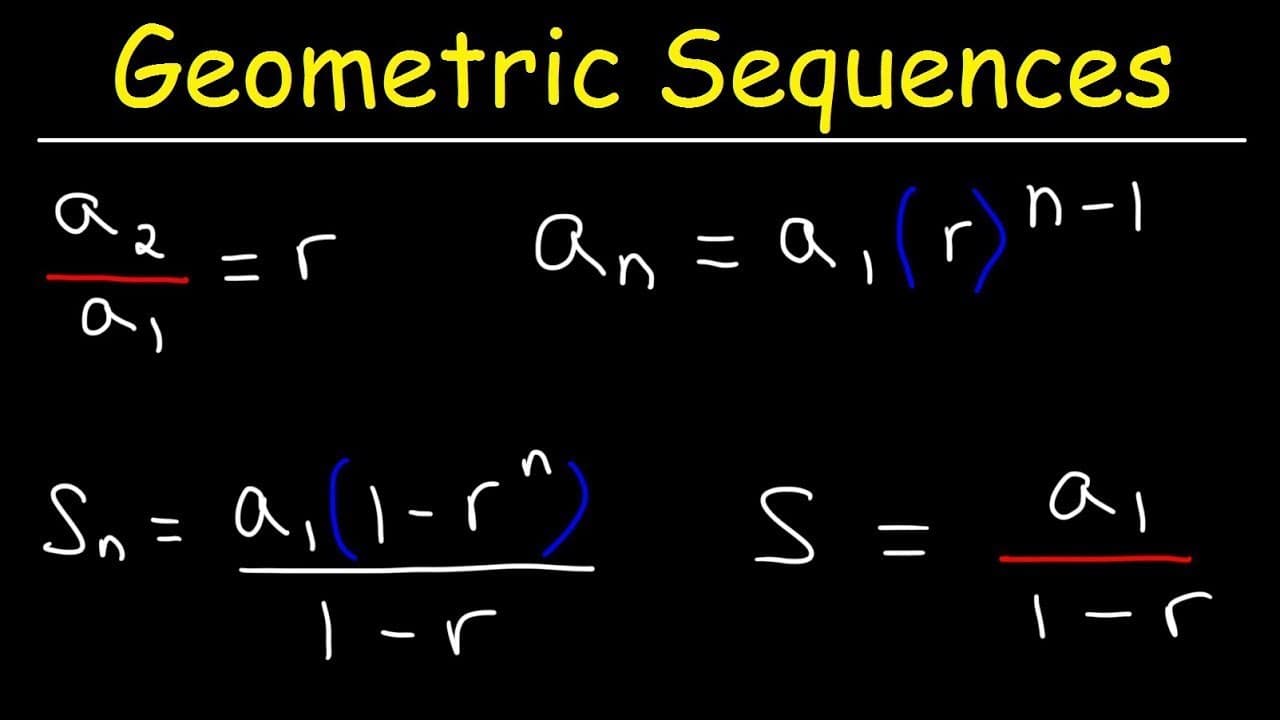
Geometric sequences are defined by a common ratio between terms, whereas geometric series are the sum of the terms in a geometric sequence. The nth term can be calculated using the formula a_n = a_1 * r^(n-1), and the sum of a finite geometric series is given by S_n = a_1 * (1 - r^n) / (1 - r). An infinite geometric series converges only if the absolute value of the common ratio is less than 1.
Transcript
in this video we're going to focus on geometric sequences and series so first let's discuss the difference between a geometric sequence and a geometric series what do you think the difference is here's an example of a geometric sequence the numbers 3 6 12 24 48 and so forth a geometric sequence is different from an arithmetic sequence such as this ... Read More
Key Insights
- 🥳 Geometric sequences have a common ratio, while arithmetic sequences have a common difference.
- 🍉 Geometric series are the sum of the terms in a geometric sequence.
- 💳 The formula to calculate the nth term of a geometric sequence or series is a sub n = a sub 1 * r^(n-1).
- 💳 The formula to calculate the sum of a finite geometric series is S sub n = a sub 1 * (1 - r^n) / (1 - r).
- 🥳 The sum of an infinite geometric series can only be calculated if the absolute value of the common ratio is less than 1.
- #️⃣ The arithmetic mean is the average of two numbers, while the geometric mean is the square root of the product of two numbers.
- 🖕 The arithmetic mean can be used to find the middle term in an arithmetic sequence, while the geometric mean can be used to find the middle term in a geometric sequence.
- 🥳 Equations can be written to relate terms within a geometric sequence by multiplying by powers of the common ratio.
Install to Summarize YouTube Videos and Get Transcripts
Explore YouTube Video Summarizer or Get YouTube Transcript Extractor
Questions & Answers
Q: What is the difference between a geometric sequence and an arithmetic sequence?
A geometric sequence has a common ratio between terms, while an arithmetic sequence has a common difference.
Q: How do you calculate the value of a term in a geometric sequence?
You can use the formula a sub n = a sub 1 * r^(n-1), where a sub n is the nth term, a sub 1 is the first term, r is the common ratio, and n is the position of the term.
Q: What is a geometric series?
A geometric series is the sum of the numbers in a geometric sequence.
Q: How do you calculate the sum of a finite geometric series?
You can use the formula S sub n = a sub 1 * (1 - r^n) / (1 - r), where S sub n is the sum of the first n terms, a sub 1 is the first term, r is the common ratio, and n is the number of terms.
Summary & Key Takeaways
-
Geometric sequences have a common ratio, while arithmetic sequences have a common difference.
-
A geometric series is the sum of the numbers in a geometric sequence.
-
The formula to calculate the nth term of a geometric sequence or series is a sub n = a sub 1 * r^(n-1).
Read in Other Languages (beta)
Share This Summary 📚
Summarize YouTube Videos and Get Video Transcripts with 1-Click
Try YouTube Summary with ChatGPT & Claude or YouTube Transcript Generator
Explore More Summaries from The Organic Chemistry Tutor 📚



Summarize YouTube Videos and Get Video Transcripts with 1-Click
Try YouTube Summary with ChatGPT & Claude or YouTube Transcript Generator