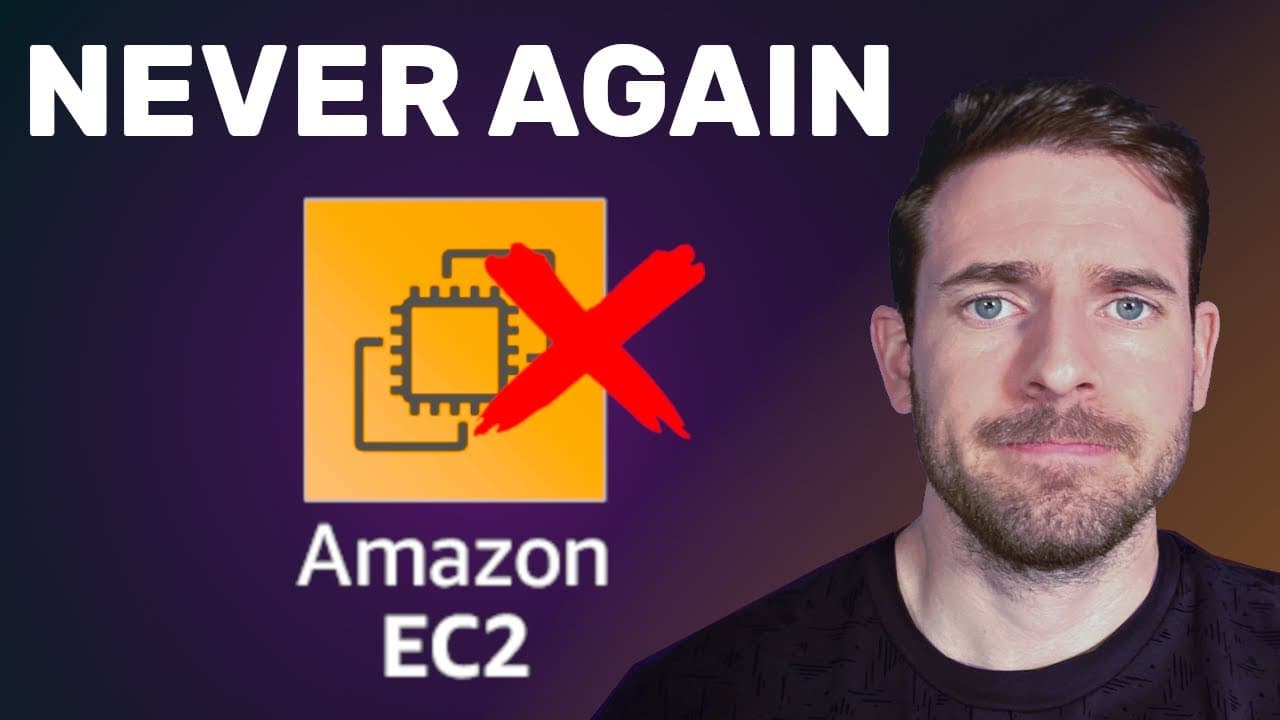
Why I’ll never deploy to a VM again
TL;DR
The speaker critiques hosting on VMs due to complexities and inefficiencies in deployment and management.
Transcript
so I made a video kind of talking about why I don't like hosting stuff on VMS and vpss and I don't think a lot of people really understand my perspective of where I'm coming from and and why I think there's a lot of extra overhead trying to run your stuff on a VM first of all how do you get your stff deployed to a VM how do you do feature releases ... Read More
Key Insights
- 👻 Hosting on VMs incurs significant overhead, including deployment and orchestration complexities.
- 🔨 Effective management of microservices often requires extensive knowledge of orchestration tools and CI/CD systems, which may not always yield efficient results.
- 🤩 The transition from traditional deployment methods to serverless architectures represents a key advancement in how software is developed and deployed.
- 🔨 Tools like Puppet necessitate a pull mechanism for management which can complicate setup and operational efficiency.
- ❓ Jenkins, while widely used, can be a cumbersome solution for CI/CD due to its intricate setup and maintenance requirements.
- 🍉 The speaker's experience with microservices highlights potential pitfalls in implementing overly complex architectures without consideration of long-term maintainability.
- 🐕🦺 A discovery service allows seamless communication between services, helping to reduce downtime and streamline interactions in microservice architectures.
Install to Summarize YouTube Videos and Get Transcripts
Explore YouTube Video Summarizer or Get YouTube Transcript Extractor
Questions & Answers
Q: What are the main challenges of using VMs for hosting?
The main challenges of using VMs for hosting include managing deployment, ensuring upsides during updates, and mitigating downtime. Tools like Puppet require substantial setup and scripting. Additionally, maintaining proper orchestration for a multi-service architecture adds complexity, leading to inefficient resource management and increased chances of errors during deployment.
Q: How does orchestration management work with VMs?
Orchestration management in VMs can follow two main mechanisms: push and pull. In a pull mechanism, like Puppet, VMs check in with a master server for updates. In contrast, in push mechanisms such as Chef, changes are sent from a central server to the VMs. Understanding these systems is crucial, as each demands different setup and ongoing maintenance efforts, leading to potential time sinks.
Q: What personal experience did the speaker share regarding microservices?
The speaker recounted a project involving microservices and micro UIs, where various services were interconnected. They illustrated how the team struggled with orchestration and deployment using outdated methods, highlighting the overwhelming complexity and work involved in managing dependencies and updates among multiple services and UIs in that architecture.
Q: Why does the speaker dislike using Jenkins for CI/CD?
The speaker expresses frustration with Jenkins, describing it as burdensome and complicated compared to modern CI/CD tools. It requires manual setup and maintenance, including establishing a Jenkins master and agents, creating build pipelines, and managing deployments. This contrasts sharply with newer systems that offer more straightforward and automated workflows.
Q: How has deployment management evolved over the years?
Deployment management has significantly evolved from manually orchestrating VMs and using tools like Puppet and Jenkins to more seamless solutions such as serverless architectures and automated deployment platforms. Modern tools allow developers to connect their code repositories directly to hosting services, reducing overhead, improving efficiency, and minimizing the risk of errors during deployment.
Q: What is the importance of having a discovery service like Consul?
A discovery service like Consul is crucial for connecting microservices by enabling them to register their locations and versions dynamically. This allows other services to query the discovery service for the current IP address and other relevant metadata, facilitating communication and integration among services in a distributed system, thus enhancing overall system reliability.
Summary & Key Takeaways
-
The video discusses the challenges of managing virtual machines (VMs) for hosting and the overhead involved in deployment, updates, and maintenance.
-
The speaker shares a personal experience related to managing microservices and the difficulties faced using tools like Puppet and Jenkins for orchestration and deployment.
-
Emphasizing the evolution of cloud services, the speaker concludes that modern alternatives like serverless computing and automated deployment pipelines significantly reduce complexities compared to managing VMs.
Read in Other Languages (beta)
Share This Summary 📚
Summarize YouTube Videos and Get Video Transcripts with 1-Click
Try YouTube Summary with ChatGPT & Claude or YouTube Transcript Generator
Explore More Summaries from Web Dev Cody 📚
Summarize YouTube Videos and Get Video Transcripts with 1-Click
Try YouTube Summary with ChatGPT & Claude or YouTube Transcript Generator