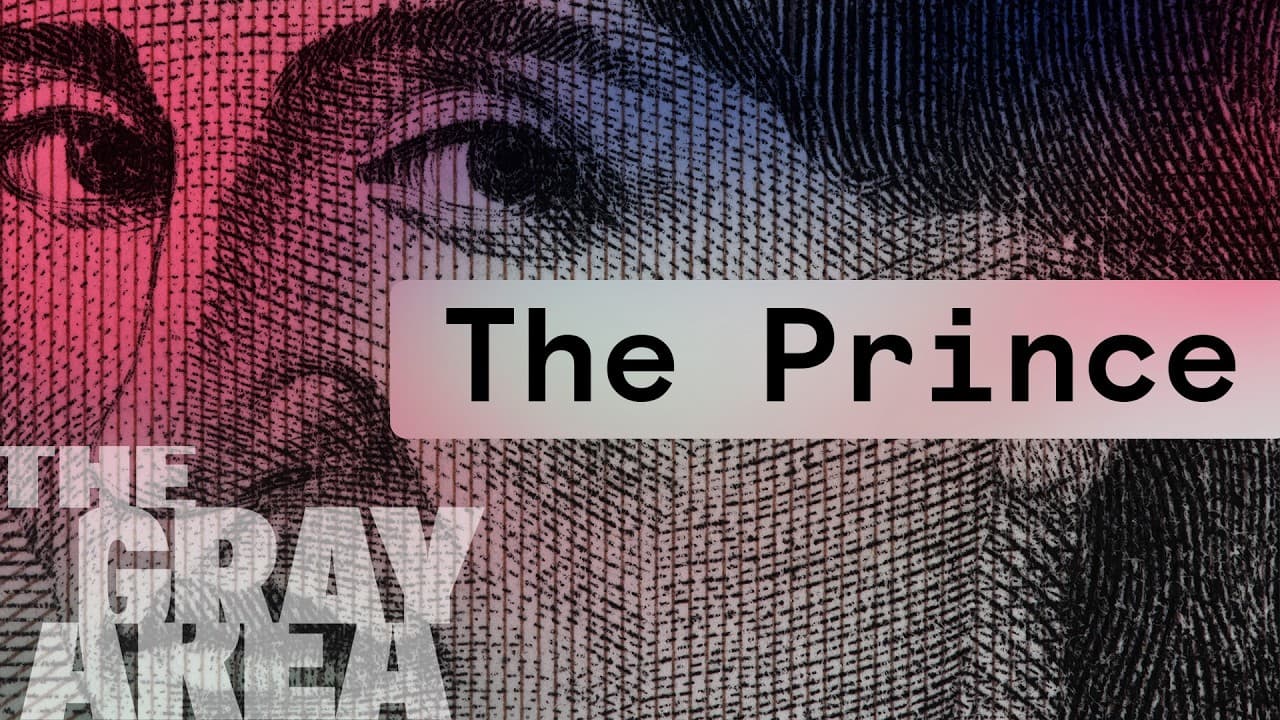
You're using "Machiavellian" wrong | The Gray Area
TL;DR
Machiavelli's work is more nuanced and satirical than commonly perceived.
Transcript
hey this is Sean host of The Gray Area for the show this week I talked to Erica Benner she's a political philosopher and the author of a great book called Be Like the Fox we talk about the infamous philosopher Mackie and why he's both incredibly influential and incredibly misunderstood hope you enjoy it erica Benner welcome to the show hi Sean than... Read More
Key Insights
- Machiavelli is often misunderstood as purely advocating for ruthless political tactics, but his work contains satire and deeper philosophical insights.
- His writings, particularly 'The Prince', are frequently misinterpreted as a handbook for tyrants, whereas Machiavelli also wrote extensively on republican ideals.
- Machiavelli emphasized the importance of understanding human nature and using historical examples to guide political decision-making.
- He believed in a pragmatic approach to politics, where morality is grounded in human nature rather than abstract ideals.
- Machiavelli's concept of being 'like the fox' refers to recognizing and avoiding traps, rather than being cunning and deceitful.
- His works highlight the fragility of laws and the importance of shared power in maintaining a stable republic.
- Machiavelli's ideas remain relevant today, offering insights into political dynamics such as the dangers of polarization and the misuse of power.
- He viewed democracy as turbulent but necessary, requiring continuous effort and vigilance to maintain balance and prevent corruption.
Install to Summarize YouTube Videos and Get Transcripts
Explore YouTube Video Summarizer or Get YouTube Transcript Extractor
Questions & Answers
Q: What is the common misconception about Machiavelli's work?
The common misconception is that Machiavelli solely advocated for ruthless political tactics and manipulation, as epitomized by the term 'Machiavellian.' However, his work, particularly 'The Prince,' is often satirical and intended to expose the vulnerabilities and flaws of tyrannical rulers. Machiavelli was a proponent of republican ideals and believed in the importance of understanding human nature and history to guide political decision-making.
Q: How does Erica Benner interpret Machiavelli's 'The Prince'?
Erica Benner interprets 'The Prince' as a satirical work that critiques tyrannical rule rather than endorsing it. She argues that Machiavelli used satire and irony to expose the flaws and vulnerabilities of tyrants, encouraging readers to think critically about power and morality. Benner emphasizes that Machiavelli's true political philosophy was more aligned with republican ideals and the importance of shared power.
Q: What does Machiavelli mean by 'being like the fox'?
In Machiavelli's context, 'being like the fox' refers to the ability to recognize and avoid traps and deceptions, rather than being cunning and deceitful. He advises rulers to be perceptive and aware of potential threats, using wisdom and foresight to navigate political challenges. This concept emphasizes the importance of understanding and anticipating the actions of others in the political arena.
Q: Why does Machiavelli emphasize the importance of historical examples in politics?
Machiavelli emphasizes the importance of historical examples because he believes that history provides valuable lessons and insights into human behavior and political dynamics. By studying past events and leaders, political actors can learn from previous successes and failures, applying these lessons to contemporary situations. This approach allows for a pragmatic and informed understanding of politics, grounded in real-world experiences rather than abstract theories.
Q: How does Machiavelli view the relationship between morality and politics?
Machiavelli views the relationship between morality and politics as complex and interdependent. He criticizes the notion of idealized morality imposed by religious authorities, advocating instead for a morality grounded in human nature and practical realities. Machiavelli believes that political leaders must navigate ethical dilemmas pragmatically, balancing moral considerations with the demands of governance to achieve stability and the common good.
Q: What insights does Machiavelli offer on the stability of republics?
Machiavelli offers insights on the stability of republics by emphasizing the importance of shared power, rule of law, and institutional checks and balances. He argues that republics require continuous effort to maintain balance and prevent corruption, acknowledging the inherent turbulence and conflict in democratic systems. Machiavelli stresses that leaders must be vigilant and adaptable, using historical lessons to guide their actions and preserve the republic.
Q: How does Machiavelli's work remain relevant in contemporary politics?
Machiavelli's work remains relevant in contemporary politics by providing insights into human nature, power dynamics, and the challenges of governance. His ideas on the fragility of laws, the importance of shared power, and the dangers of polarization continue to resonate in modern political discourse. Machiavelli's emphasis on pragmatism and historical awareness offers valuable guidance for navigating complex political landscapes and addressing current issues.
Q: What is Machiavelli's perspective on political polarization and partisanship?
Machiavelli views political polarization and partisanship as significant threats to the stability of republics. He warns that deep divisions can erode trust and escalate conflict, ultimately undermining the effectiveness of democratic institutions. Machiavelli emphasizes the need for vigilance and proactive measures to address partisanship early, advocating for open dialogue and institutional reforms to prevent divisions from becoming insurmountable obstacles to governance.
Summary & Key Takeaways
-
Machiavelli is often seen as a proponent of ruthless politics, but his work contains significant satire and philosophical depth. Erica Benner argues that Machiavelli's writings are misinterpreted and that he was more of a republican thinker than commonly believed.
-
In 'The Prince', Machiavelli's advice to rulers is often misunderstood as endorsing tyranny, when in fact he was highlighting the vulnerabilities of tyrants and the importance of republican ideals. His work encourages readers to think critically about power and morality.
-
Machiavelli's legacy is complex, as his writings have been both criticized and admired for their insights into human nature and political strategy. His ideas about democracy, power, and morality continue to resonate in contemporary political discourse.
Read in Other Languages (beta)
Share This Summary 📚
Summarize YouTube Videos and Get Video Transcripts with 1-Click
Try YouTube Summary with ChatGPT & Claude or YouTube Transcript Generator
Explore More Summaries from Vox 📚


Summarize YouTube Videos and Get Video Transcripts with 1-Click
Try YouTube Summary with ChatGPT & Claude or YouTube Transcript Generator