Paris climate talks: The evolving text
TL;DR
Ongoing climate agreement discussions focus on transparency and country accountability regarding emissions reporting.
Transcript
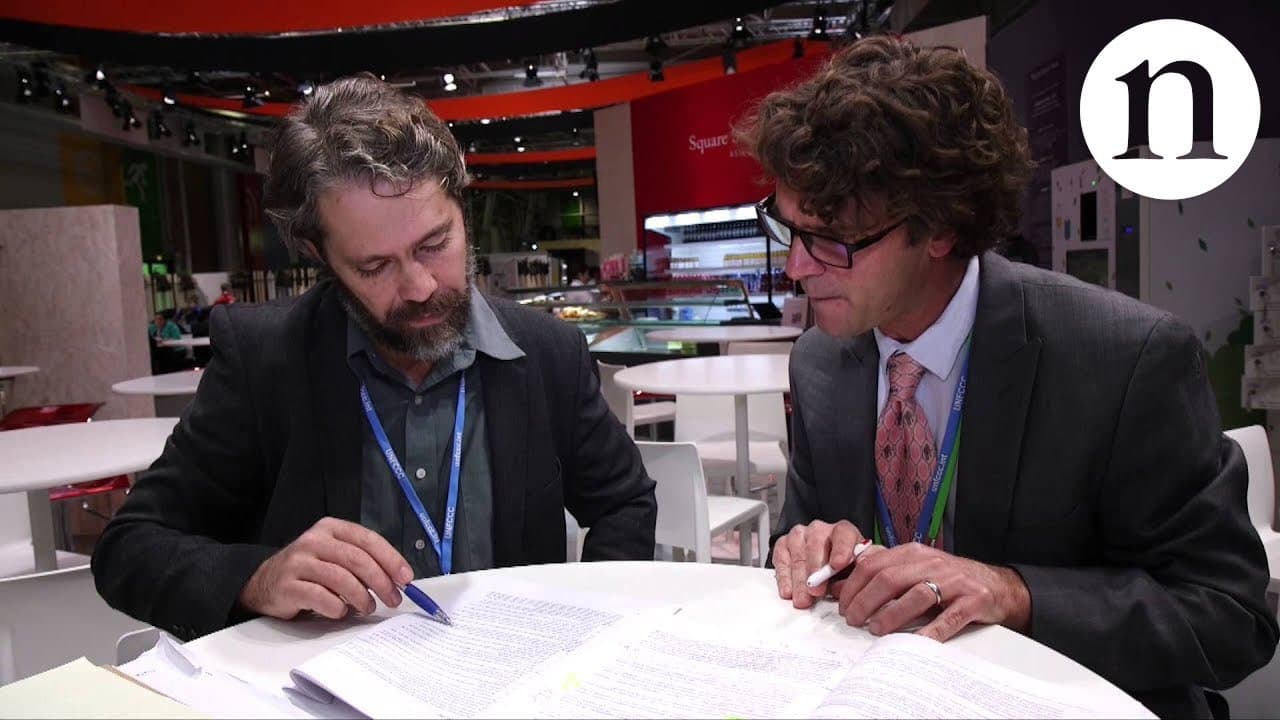
the climate agreement that's being discussed here in Paris is split in two key sections like finance mitigation and adaptation one of the areas is called transparency and that's an area in which jon niles from the University of California San Diego has a special interest what a lot of the public hears about when you simplify this agreement is at on... Read More
Key Insights
- 🌐 The Paris climate agreement discussions are crucial for establishing global standards on emissions accountability and transparency.
- 🍉 Ongoing debates are evident in the language of the agreement, with critical terms impacting nations' commitments.
- 📡 The presence of brackets signals unresolved issues, underscoring the complexities inherent in multinational negotiations.
- ❓ Progress has been made in reducing unnecessary options, which may facilitate clearer agreements and compliance.
- ❓ Language choices within the agreement are not mere semantics; they have significant implications for enforcement and trust.
- 🌍 Trust among nations is paramount; feelings of distrust can result in disengagement and undermine collective efforts.
- 🥺 The negotiation process is iterative, with compromises leading to a constantly evolving text being negotiated in real time.
Install to Summarize YouTube Videos and Get Transcripts
Explore YouTube Video Summarizer or Get YouTube Transcript Extractor
Questions & Answers
Q: What is the primary focus of the ongoing negotiations mentioned in the content?
The primary focus is on transparency in reporting greenhouse gas emissions and how countries can be held accountable for their commitments within the Paris climate agreement framework. Experts like Jon Niles are crucial in unpacking the complexities of the negotiations, especially concerning the language and obligations of the participating nations.
Q: How does the presence of brackets in the negotiating text affect the agreements?
Brackets indicate unresolved disagreements among countries regarding specific commitments and language in the agreement. They show options under debate—until these brackets are removed, the text remains open to negotiation, affecting the clarity and reliability of the final commitments made by nations regarding greenhouse gas emissions reporting.
Q: What changes were observed in the text of the negotiations over time?
Over the course of the negotiations, progress has been noted in reducing the number of options and brackets, with complete articles being cleaned up, resulting in a shorter and clearer document. For instance, prior versions had broader options, whereas the most recent versions have come to more definitive agreements on key points, highlighting a concerted effort to simplify the text.
Q: Why is the use of specific verbs like "shall" or "should" significant in the agreement?
The choice between the verbs "shall" and "should" directly impacts the obligations imposed on the countries involved. "Shall" implies a binding requirement to report information, suggesting a stronger commitment than "should," which may be seen as a recommendation. This language nuance is crucial for establishing accountability within the agreement.
Q: How do the bracketed options and language choices affect countries' trust in the process?
The intricate negotiations involving bracketed options can lead to feelings of distrust among countries, especially if they feel their perspectives aren't adequately represented. If a nation perceives a lack of trust within these discussions, they may exit the negotiations, threatening the overall progress and integrity of the agreement.
Q: What has been the overall sentiment among observers regarding the negotiations?
Many observers express cautious optimism about the progress in negotiations, noting a reduction in complexity and the number of brackets. However, there remains a desire for greater clarity, emphasizing that continued efforts are necessary to ensure that the final document is coherent and manageable for decision-makers.
Q: What are the implications of having fewer brackets and options in the negotiating text?
Fewer brackets and options suggest that some complex disagreements have been resolved, leading to clearer commitments and actionable items for countries. This simplification is essential, as it allows negotiators and ministers to focus on the most critical issues without getting bogged down by excessive options, making the process more efficient.
Q: How has the length of the negotiation document changed, and what does this signify?
The document has been shortened from 48 pages to 29 pages, indicating progress in reaching consensus on various issues. This reduction signifies an effort to streamline the negotiations and makes it easier for higher-level officials to navigate the text, increasing the likelihood of successful agreement and implementation.
Summary & Key Takeaways
-
The Paris climate agreement negotiations are divided into key sections, including finance, mitigation, adaptation, and a significant focus on transparency in emissions reporting, led by experts like Jon Niles.
-
The complexity of the negotiations is evident as delegations debate the language used for international commitments, including whether countries "shall" or "should" report their emissions, with bracketed text indicating ongoing disagreements.
-
Despite progress in resolving some issues and reducing the number of brackets and options, many observers express concerns about the remaining complexities as the negotiations approach critical phases involving higher-level ministers.
Read in Other Languages (beta)
Share This Summary 📚
Summarize YouTube Videos and Get Video Transcripts with 1-Click
Try YouTube Summary with ChatGPT & Claude or YouTube Transcript Generator
Explore More Summaries from nature video 📚





Summarize YouTube Videos and Get Video Transcripts with 1-Click
Try YouTube Summary with ChatGPT & Claude or YouTube Transcript Generator