Will human civilization destroy itself? | Dan Carlin and Lex Fridman
TL;DR
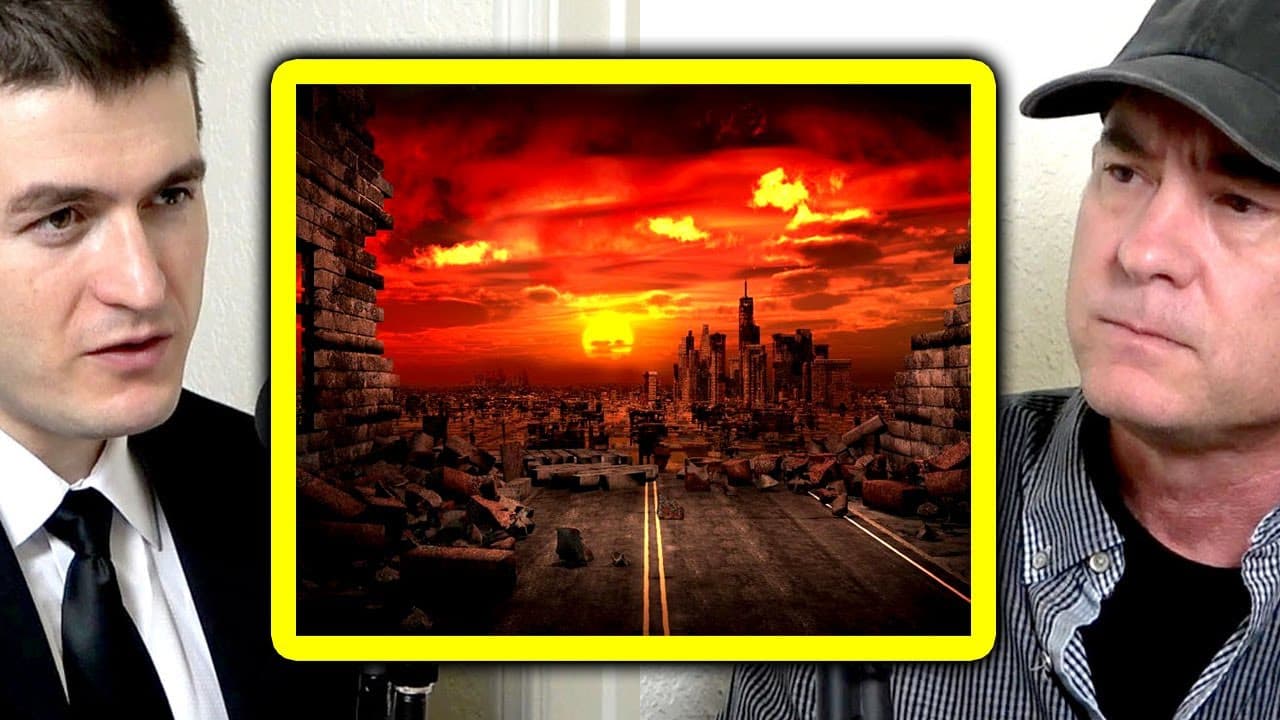
Human civilization faces the risk of self-destruction, which could either result from recognizable threats like nuclear war, societal breakdown, pandemics, nanotechnology, or artificial intelligence, or from unforeseen factors. When acting collectively, humanity tends to devolve to the lowest common denominator, making optimistic outcomes less likely.
Transcript
can ask a dark question as opposed to the other things we've been talking about well there's there's always a thread a hopeful message i think it'll be a hopeful message on this one too you may have the wrong guest um if you were to bet money on the way that human civilization destroys itself or it collapses in some way that is where the result wou... Read More
Key Insights
- 🫱 Nuclear war and societal breakdown are recognized as potential threats to human existence, but the ability to collectively address these threats is hindered by varying self-interests and the difficulty of achieving unanimous agreement.
- 🧑🚒 Environmental degradation, specifically through climate change and neglecting the planet, is considered an insidious threat due to its slow and gradual nature, defying humans' fight-or-flight response mechanisms.
- 👾 The power of charismatic leaders emerges as a potential game-changer, with the capacity to inspire positive change and collaboration or perpetuate harmful ideologies.
- 🤳 The balance between love and kindness versus hatred and self-interest is debated, with differing opinions on whether collective human evolution leans towards human flourishing or self-destructive tendencies.
Install to Summarize YouTube Videos and Get Transcripts
Explore YouTube Video Summarizer or Get YouTube Transcript Extractor
Questions & Answers
Q: What are some potential threats to human civilization that could result in self-destruction?
Potential threats include nuclear weapons, societal breakdown, pandemics, nanotechnology, artificial intelligence, and unforeseen factors. Each of these could lead to a collapse unrecognizable as progress.
Q: How does collective action impact humanity's ability to address existential threats?
Collective action tends to devolve humans to the lowest common denominator, making it challenging to achieve the necessary global consensus and sacrifice for addressing threats like climate change or protecting the planet.
Q: Can charismatic leaders save humanity from self-destruction?
Charismatic leaders can inspire positive change and collaboration. However, the emergence of charismatic leaders proposing harmful or divisive solutions is also a possibility, highlighting the risks associated with relying solely on individual leadership.
Q: What role does self-interest play in the potential for human self-destruction?
Self-interest, whether enlightened or selfish, can heavily influence individual and collective actions. Balancing personal or national self-interest with the greater good poses a challenge in effectively tackling existential threats.
Summary & Key Takeaways
-
The speaker ponders the ways in which human civilization may lead to self-destruction, considering potential factors such as nuclear weapons, societal breakdown, pandemics, nanotechnology, and artificial intelligence.
-
The speaker reflects on the responsibility of collective action and the difficulty of achieving unanimous agreement given varying national interests and the need for intergovernmental collaboration.
-
The need for charismatic leaders to inspire positive change and the potential dangers if charismatic leaders propose harmful solutions are discussed.
Read in Other Languages (beta)
Share This Summary 📚
Summarize YouTube Videos and Get Video Transcripts with 1-Click
Try YouTube Summary with ChatGPT & Claude or YouTube Transcript Generator
Explore More Summaries from Lex Clips 📚






Summarize YouTube Videos and Get Video Transcripts with 1-Click
Try YouTube Summary with ChatGPT & Claude or YouTube Transcript Generator