Stalin: Absolute power corrupts | Norman Naimark and Lex Fridman
TL;DR
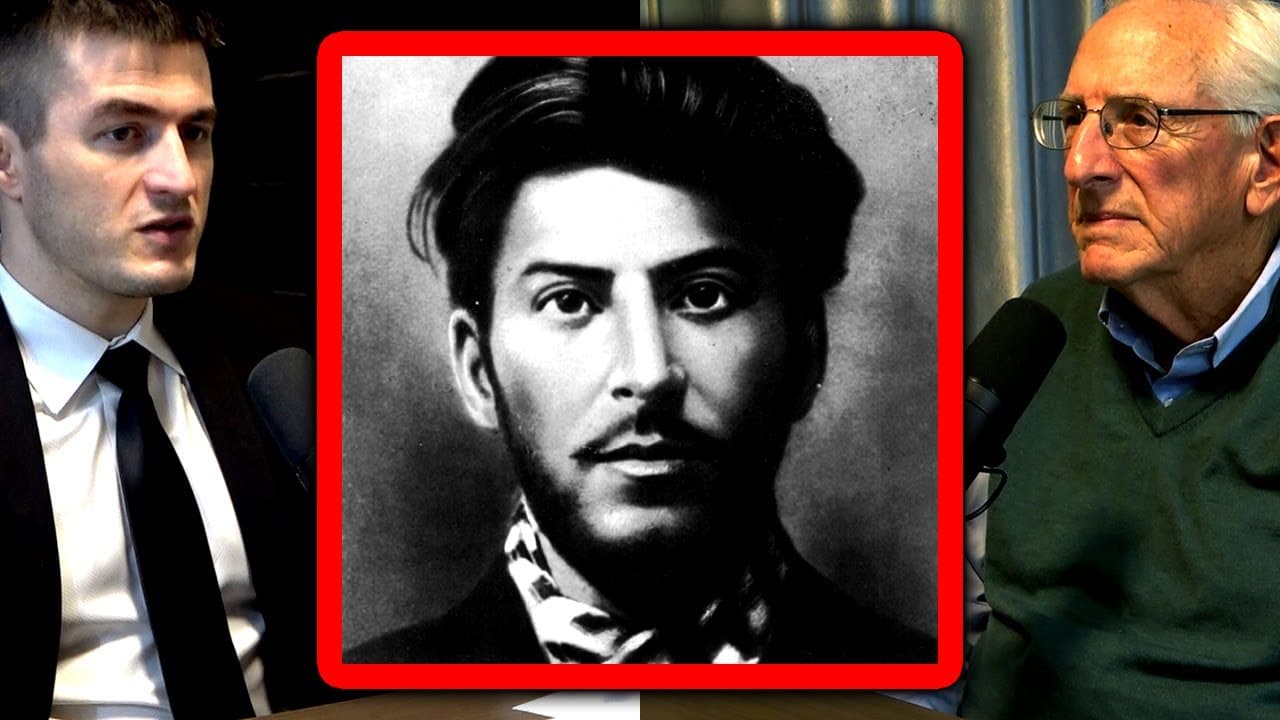
Stalin's absolute power revealed his true nature as a manipulative leader, leading to mass killings and the creation of a new system in the Soviet Union.
Transcript
if we look at this paranoid delusional system stalin was in power for 30 years he is many argue one of the most powerful men in history did in his case absolute power corrupt him or did it reveal the true nature of the man and maybe just in in your sense as we kind of build around this genocide of the early 1930s this paranoid delusional system did... Read More
Key Insights
- ❓ Stalin's childhood was not particularly traumatic, suggesting that his future actions were not predetermined by his upbringing.
- 💆 The growth of the Soviet system and Stalin's own development within it contributed to the mass killings and terror that occurred.
- 🎮 Stalin's manipulation skills and ability to control people played a significant role in his rise to power and perpetration of mass killings.
- 😥 The 1930s marked a turning point where Stalin's actions became increasingly murderous and the Soviet Union descended into a state of terror.
- ❓ The slippery slope metaphor doesn't accurately capture the sudden leap and revolution that occurred under Stalin's leadership.
- 😮 There is an argument that Stalin's rise to power was not the natural progression from Leninism, but rather a major deviation from it.
- 🤪 Stalin's actions went beyond Leninism and Marxism and created a system that was distinctively his own.
Install to Summarize YouTube Videos and Get Transcripts
Explore YouTube Video Summarizer or Get YouTube Transcript Extractor
Questions & Answers
Q: Was Stalin's murderous nature always inherent in him, or did power corrupt him?
Without his position and power, Stalin wouldn't have been able to carry out mass killings. The growth of the Soviet system and his own development within it played a significant role.
Q: Did the murder of a single person open the door for Stalin to become a mass murderer?
While it's difficult to say if a single murder was the catalyst, Stalin's consolidation of power and the elimination of political rivals allowed him to pursue a path of mass killings.
Q: How easy is it for human nature to go on the slippery slope that ends in genocide?
While Stalin's rise to power was influenced by political contingencies, the 1930s marked a turning point where bad things became more likely. The slippery slope metaphor doesn't capture the sudden leap and revolution that occurred.
Q: Was Stalin the natural successor to Lenin, or was he completely different?
There is an ongoing debate about the continuity between Lenin and Stalin. While Stalin's actions had some connection to Leninism, he took it to a whole new level by creating a new system and engaging in mass killings.
Summary & Key Takeaways
-
Stalin's power grew within the Soviet system, leading to mass killings in the 1930s.
-
The growth of the paranoid and delusional system in the Soviet Union contributed to the genocide.
-
Stalin manipulated people and used his position to control their behavior and create a system of terror.
Read in Other Languages (beta)
Share This Summary 📚
Summarize YouTube Videos and Get Video Transcripts with 1-Click
Try YouTube Summary with ChatGPT & Claude or YouTube Transcript Generator
Explore More Summaries from Lex Clips 📚


Summarize YouTube Videos and Get Video Transcripts with 1-Click
Try YouTube Summary with ChatGPT & Claude or YouTube Transcript Generator