Should we create a solar shade to cool the earth? | Danny Hillis
TL;DR
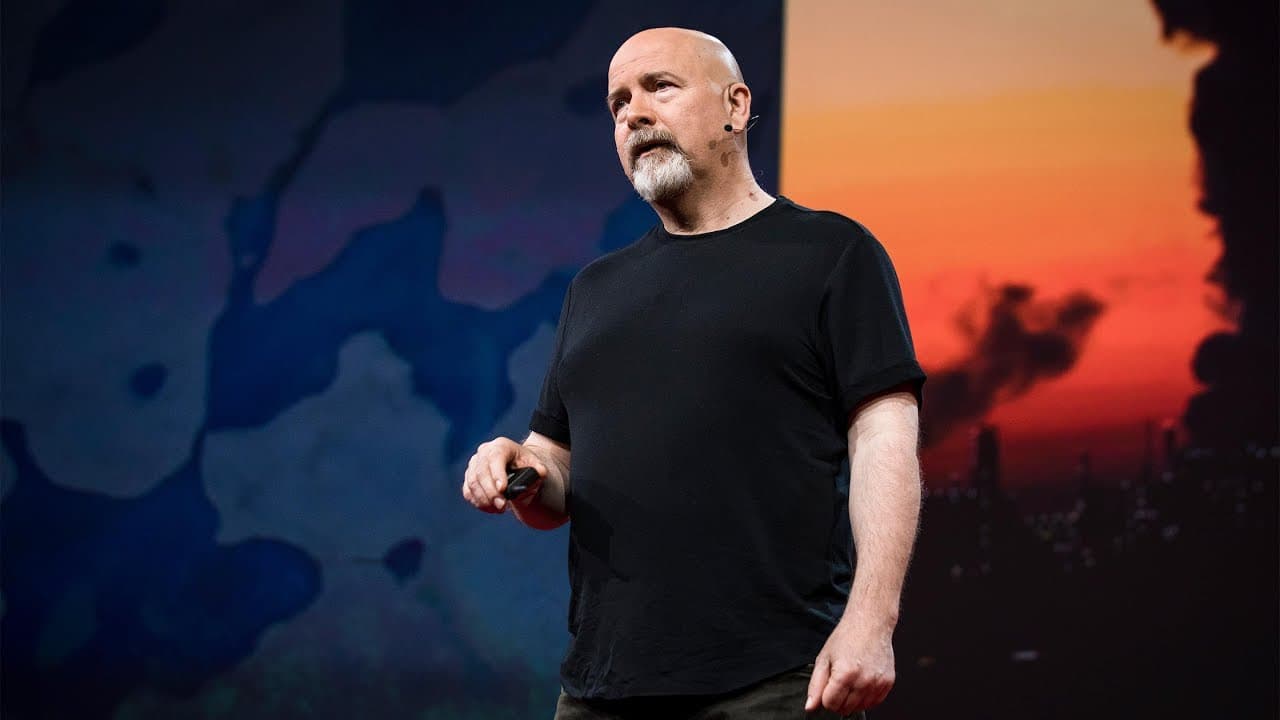
In this TED Talk, Danny Hillis discusses the concept of solar geoengineering and addresses the misconceptions and concerns surrounding it.
Transcript
[A provocation from Danny Hillis:] [It's time to start talking about engineering our climate] What if there was a way to build a thermostat that allowed you to turn down the temperature of the earth anytime you wanted? Now, you would think if somebody had a plausible idea about how to do that, everybody would be very excited about it, and there wou... Read More
Key Insights
- 🌍 Solar geoengineering, or finding ways to cool the earth by reflecting more sunlight back into space, has been a concept for decades.
- ☁️ Clouds are one method of solar geoengineering, as they can help cool the earth by blocking sunlight.
- 🚢 Passing ships and jet engines already inadvertently create clouds, resulting in a slight reduction in global warming of about one degree.
- 💡 Many ideas have been proposed for solar geoengineering, including building giant parasols in space, fizzing bubble waters in the ocean, and using chalk to reflect sunlight in the stratosphere.
- 📐 A back-of-the-envelope calculation suggests that around 10 teragrams of chalk per year would be needed to undo the temperature effects of CO2 emissions, which is relatively little.
- 🌍 Concerns about solar geoengineering primarily stem from fears that it may discourage efforts to reduce reliance on fossil fuels.
- 🤝 It is important to strike a balance between creativity and caution when considering climate solutions, and research is needed to better understand the science behind solar geoengineering.
- 💪 While our problems are substantial, the speaker remains optimistic about our ability to address them effectively.
Install to Summarize YouTube Videos and Get Transcripts
Explore YouTube Video Summarizer or Get YouTube Transcript Extractor
Questions & Answers
Q: What is the basic idea behind solar geoengineering and how long have ideas about it been around?
The basic idea of solar geoengineering is to cool the Earth by reflecting more sunlight back into space. Ideas about how to do this have been around for decades.
Q: How are clouds involved in solar geoengineering?
Clouds play a significant role in solar geoengineering as they are a great way to cool the Earth by reflecting sunlight. Low-lying clouds can help reduce global warming by creating a cooler environment.
Q: What are some examples of how humans are already unintentionally altering the Earth's clouds?
Humans are already unintentionally altering the Earth's clouds through various activities. For example, passing ships create clouds, which in turn help reduce global warming by about a degree. Jet engines also produce contrails, which are artificial water clouds.
Q: What is one plausible idea for solar geoengineering that has been recently published?
One plausible idea for solar geoengineering that has been recently published by David Keith at Harvard is to use chalk to reflect sunlight in the stratosphere. Chalk, being a common and safe mineral, could be dissolved in rainwater after a couple of years, making it a viable option.
Q: Why is there a lack of support and controversy surrounding the idea of solar geoengineering?
There is lack of support and controversy surrounding solar geoengineering for several reasons. Some people believe that discussing such solutions may deter efforts to transition away from fossil fuels. Additionally, the idea of intentionally altering the entire Earth's climate raises ethical and environmental concerns. However, more research and understanding of the science behind geoengineering is needed to inform our decision-making process.
Summary & Key Takeaways
-
Solar geoengineering is a concept that aims to cool the earth by reflecting more sunlight back into space, using methods such as creating artificial clouds or putting dust in the stratosphere.
-
One plausible idea is to use chalk, as it is safe and dissolves in rainwater, requiring only a small amount to undo the effects of CO2 on temperature.
-
There is debate and opposition surrounding solar geoengineering, with concerns about reliance on fossil fuels and interfering with the earth, but research is necessary to understand the science behind it.
Read in Other Languages (beta)
Share This Summary 📚
Summarize YouTube Videos and Get Video Transcripts with 1-Click
Try YouTube Summary with ChatGPT & Claude or YouTube Transcript Generator
Explore More Summaries from TED 📚





Summarize YouTube Videos and Get Video Transcripts with 1-Click
Try YouTube Summary with ChatGPT & Claude or YouTube Transcript Generator