Earth's changing climate | Earth and society | Middle school Earth and space science | Khan Academy
TL;DR
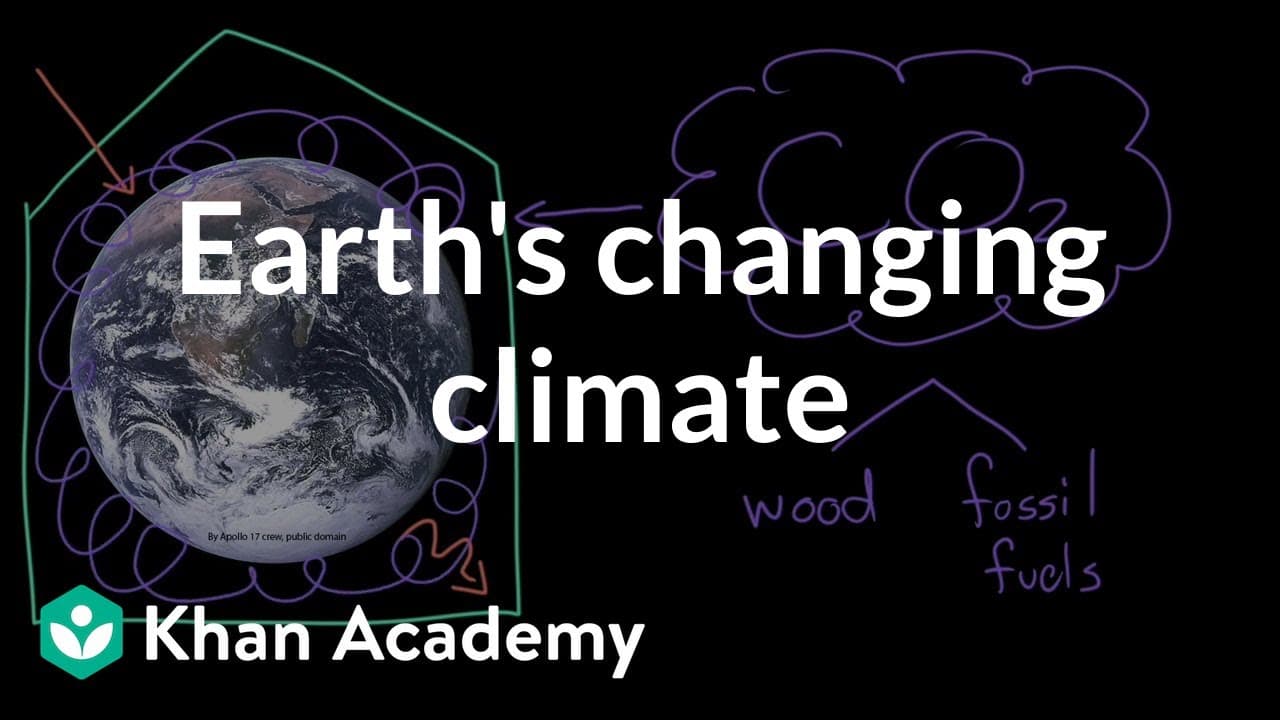
Human activities, such as burning fossil fuels, have led to a significant increase in greenhouse gases like carbon dioxide, causing climate change and its effects on the planet.
Transcript
- [Narrator] Have you ever tried to imagine what the world was like in the distant past? Maybe you'd like to explore the age of the dinosaurs when the earth was much hotter than it was today. Perhaps you'd prefer when temperatures dropped too much colder than today. You could track a mammoth alongside our early ancestors who evolved around the end ... Read More
Key Insights
- 😋 Scientists estimate ancient climate trends using evidence such as ice cores, tree rings, and natural phenomena.
- 😅 The global average temperature has been steadily increasing since the 1950s, with colder years still hotter than in the past.
- 🫢 The rise in greenhouse gases, particularly carbon dioxide from human activities, has caused the excess heat to be trapped in the atmosphere, leading to climate change.
- 💱 Climate change has resulted in changes in weather patterns, rising sea levels, and more frequent natural disasters.
- 🫢 Adapting to climate change is crucial for communities, and scientists are developing technologies to reduce greenhouse gas emissions.
- 💱 Both individual sustainable habits and broader institutional changes are necessary to reduce CO2 emissions.
- 👥 It is essential to engage in community groups and initiatives to shape a sustainable future.
Install to Summarize YouTube Videos and Get Transcripts
Explore YouTube Video Summarizer or Get YouTube Transcript Extractor
Questions & Answers
Q: How do scientists estimate ancient climate trends?
Scientists use various methods such as ice cores, tree rings, and other natural phenomena to gather evidence and estimate temperature trends in the distant past.
Q: What caused the sudden increase in global temperatures from the 1950s onwards?
The concentration of greenhouse gases in the Earth's atmosphere, primarily carbon dioxide, began to rise significantly due to human activities like burning fossil fuels, leading to the unprecedented increase in global temperatures.
Q: How does the greenhouse effect work?
The greenhouse effect is the process whereby greenhouse gases trap heat from the sun in the Earth's atmosphere, similar to how a greenhouse allows sunlight to pass through but prevents the heat from leaving. This effect keeps our planet warm and habitable.
Q: What are the consequences of climate change?
Climate change has led to rising sea levels, changes in weather patterns, and an increase in natural disasters like storms, fires, and droughts. It also poses risks to communities, their homes, livelihoods, and access to food and water.
Summary & Key Takeaways
-
Scientists have used evidence from ice cores, tree rings, and other natural phenomena to estimate ancient climate trends and compare them to present-day temperatures.
-
From the 1950s onwards, global temperatures have been steadily increasing, with colder years still hotter than average temperatures of the past.
-
The rise in greenhouse gases, particularly carbon dioxide, due to human activities, has trapped excess heat in the atmosphere, leading to climate change.
Read in Other Languages (beta)
Share This Summary 📚
Summarize YouTube Videos and Get Video Transcripts with 1-Click
Try YouTube Summary with ChatGPT & Claude or YouTube Transcript Generator
Explore More Summaries from Khan Academy 📚



Summarize YouTube Videos and Get Video Transcripts with 1-Click
Try YouTube Summary with ChatGPT & Claude or YouTube Transcript Generator