What Role Does Insulin Play in Obesity and Weight Loss?
TL;DR
High insulin levels from refined carbohydrate intake may trigger fat cells to become anabolic, causing increased hunger and decreased energy expenditure. Traditional calorie-restricted diets often fail because they overlook this insulin response which can lead to overeating. A more effective approach may involve reducing carbohydrate intake rather than simply cutting calories.
Transcript
I'm a little bit too old for speed-dating so when Steve invited me to give a speed lecture I decided to agree so as not to miss the next great new thing so diving right into the topic of interest the first law of thermodynamics as you know says that energy can neither be created nor destroyed when apply to living systems we have the familiar equati... Read More
Key Insights
- 👨 The equation of calorie intake - expenditure = calories stored in body fat applies to weight gain and loss.
- 👨 Conventional weight loss strategies often fail due to the overlooking of insulin's role in fat cell activity.
- 😘 High insulin levels, triggered by consuming refined carbohydrates, may lead to increased hunger and lower energy expenditure.
- 😘 The brain perceives low energy availability when fat cells become anabolic, leading to increased hunger and overeating.
- 😋 Refined carbohydrates may hijack the brain's reward system, potentially leading to food addiction.
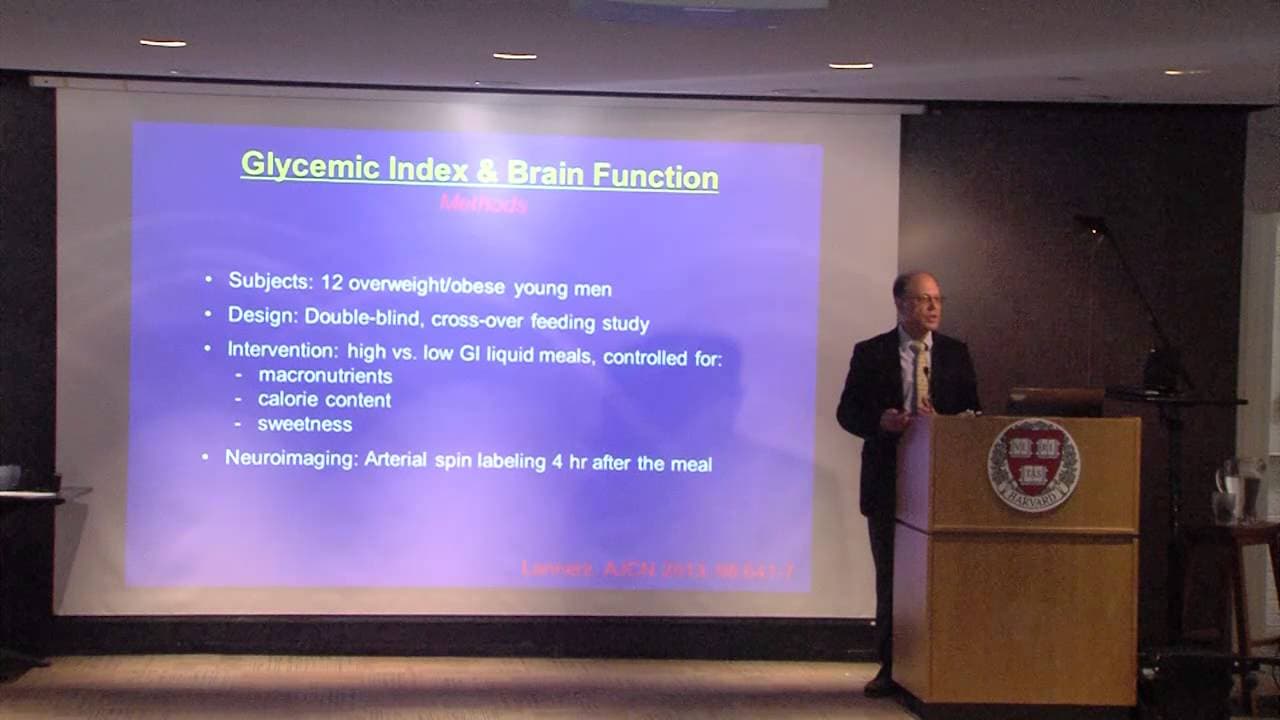
- ✋ Consuming carbohydrates with a higher glycemic index results in a larger spike in blood sugar and insulin secretion.
- 🌸 Restricting calories on a low-fat diet leads to a significant decline in metabolic rate, making weight loss challenging.
Install to Summarize YouTube Videos and Get Transcripts
Explore YouTube Video Summarizer or Get YouTube Transcript Extractor
Questions & Answers
Q: Why have conventional weight loss strategies of eating less and exercising more been ineffective?
Conventional weight loss strategies fail because they overlook the role of insulin in triggering fat cells to become anabolic. This leads to increased hunger and reduced energy expenditure, making it difficult to maintain a calorie deficit.
Q: How does consuming refined carbohydrates affect insulin levels?
Consuming refined carbohydrates causes a rapid increase in blood sugar levels, leading to a spike in insulin secretion. These high insulin levels contribute to the storage of excess calories as body fat and increase hunger.
Q: Can reducing carbohydrate intake help in weight loss?
Yes, reducing carbohydrate intake, especially refined carbohydrates, can help in weight loss by reducing insulin levels and lowering the anabolic drive of fat cells. This can lead to reduced hunger, increased energy expenditure, and improved weight control.
Q: Are all carbohydrates responsible for triggering fat cells to become anabolic?
Not all carbohydrates have the same effect on insulin levels. Refined carbohydrates, such as those found in processed foods, have a higher glycemic index and can cause a larger spike in insulin secretion compared to unprocessed, whole carbohydrates.
Summary & Key Takeaways
-
The first law of thermodynamics states that energy cannot be created or destroyed, applying to calorie intake, expenditure, and calories stored as body fat.
-
Conventional weight loss strategies of eating less and moving more have been ineffective, with only a small percentage of overweight or obese adults reporting successful weight loss.
-
High insulin levels, stimulated by consuming refined carbohydrates, may be the key factor in triggering fat cells to become anabolic, leading to increased hunger, overeating, and reduced energy expenditure.
Read in Other Languages (beta)
Share This Summary 📚
Summarize YouTube Videos and Get Video Transcripts with 1-Click
Try YouTube Summary with ChatGPT & Claude or YouTube Transcript Generator
Explore More Summaries from Harvard University 📚






Summarize YouTube Videos and Get Video Transcripts with 1-Click
Try YouTube Summary with ChatGPT & Claude or YouTube Transcript Generator