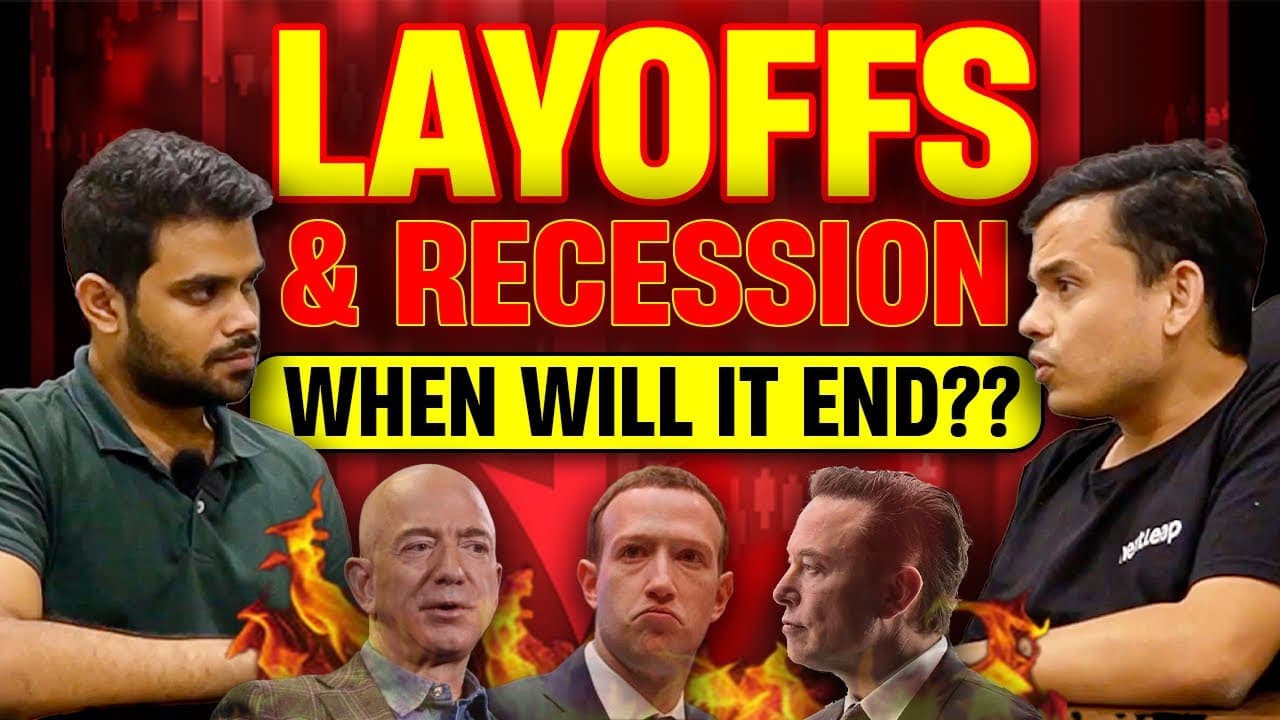
Mass Layoffs | When will Recession END | Honest talk with Ex Director of Engineering Flipkart
TL;DR
Companies are laying off workers due to economic recession and inflation.
Transcript
What is this recession? And why do companies fire? Like any other bad time, after every bad phase comes the good phase. Alright! What is the reason of the current scenario? Why did the company hire so much when they had to fire people? Its peak has arrived, will it return to normal or the peak hasn't arrived? Will these companies be hiring again? J... Read More
Key Insights
- ❓ Recessions are cyclical, often following periods of rapid economic growth and inflated hiring.
- ⛓️ Current inflationary pressures and supply chain disruptions are major contributors to the ongoing recession.
- 😀 Upskilling and self-improvement are vital for individuals facing job loss during economic downturns.
- ❓ Layoffs often signify broader economic corrections rather than individual performance issues.
- 👨🎨 Historical recessions reveal that recovery often follows an initial period of pain characterized by layoffs and economic adjustment.
- ↩️ Companies adjust their hiring practices in response to economic conditions, typically resuming hiring as stability returns.
- 🖐️ Employee performance during interviews plays a crucial role in securing new positions post-layoff.
Install to Summarize YouTube Videos and Get Transcripts
Explore YouTube Video Summarizer or Get YouTube Transcript Extractor
Questions & Answers
Q: What are the primary reasons for the current economic recession?
The current recession stems from several factors, including high inflation rates driven by external events such as the Ukraine-Russia war. This has led to increased costs and affected supply chains, which, in turn, erodes purchasing power. Companies experience decreased revenues, resulting in layoffs and hiring freezes as they aim to rationalize expenditures and stabilize finances.
Q: How does the current recession compare to previous recessions like those in 2003 and 2008?
Each recession has unique causes, but a common pattern is rapid hiring followed by abrupt cuts as companies readjust to economic realities. The 2003 Dotcom Bust and the 2008 Subprime Mortgage Crisis were preceded by periods of intense growth that led to inflated valuations, similar to today's situation. Historical events suggest that after an initial period of pain, an economic recovery typically follows.
Q: If someone is laid off during this recession, how should they utilize their time?
Individuals who have been laid off should focus on self-improvement and upskilling. Engaging in professional development activities, such as learning new technologies, practicing coding interviews, and refreshing their resumes, can help make them more competitive in the job market. This proactive approach ensures they are prepared for upcoming opportunities.
Q: Will companies continue to hire after the layoffs, and if so, when can we expect this?
Yes, companies are likely to resume hiring after a period of adjustment following layoffs. While initial hiring freezes occur, gradual normalization often follows as the economy stabilizes. Experts suggest that by the end of 2023, companies will begin to open new positions again, reflecting an improved economic outlook.
Q: Does being laid off negatively impact an individual's chances of getting hired by a new company?
Being laid off does not necessarily hurt an individual's job prospects, especially if the layoff is due to broader economic conditions rather than performance issues. Most companies understand that layoffs in a recession are common, and candidates' interview performance and skills are more critical factors in hiring decisions.
Q: What historical patterns do recessions typically follow?
Recessions often begin with a sudden economic downturn prompted by specific events, leading to immediate layoffs. However, over time, companies usually start hiring again as the economy recovers. Historically, periods of recession are often followed by robust growth phases as companies adapt and innovate in response to new economic conditions.
Q: How can companies rationalize their expenditures during a recession?
Companies rationalize expenditures by prioritizing essential spending, which may include freezing hiring and reassessing roles. They often prefer to streamline operations to protect profitability rather than making sweeping cuts. This approach aims to maintain a lean workforce while preserving resources for future investments when the market stabilizes.
Q: What factors determine how long a recession lasts?
The duration of a recession can vary based on multiple factors, such as the severity of external shocks (e.g., geopolitical events, financial crises), public policies, market adjustments, and consumer confidence levels. Historical precedents indicate that economic recoveries can take months or even years, depending on these dynamics.
Summary & Key Takeaways
-
The content discusses the ongoing recession and its impact on layoffs across various companies, drawing parallels with previous economic downturns.
-
Yasir, a seasoned industry professional, explains that these layoffs result from inflated hiring during economic booms, which companies must correct during downturns.
-
It emphasizes that individuals affected by layoffs should focus on upskilling and preparing for future job opportunities despite the current economic challenges.
Read in Other Languages (beta)
Share This Summary 📚
Summarize YouTube Videos and Get Video Transcripts with 1-Click
Try YouTube Summary with ChatGPT & Claude or YouTube Transcript Generator
Explore More Summaries from Fraz 📚


Summarize YouTube Videos and Get Video Transcripts with 1-Click
Try YouTube Summary with ChatGPT & Claude or YouTube Transcript Generator