Eva Vertes: My dream about the future of medicine

TL;DR
The speaker discusses their journey in medical research and proposes that cancer could potentially be used as a therapy for repairing damaged tissues.
Transcript
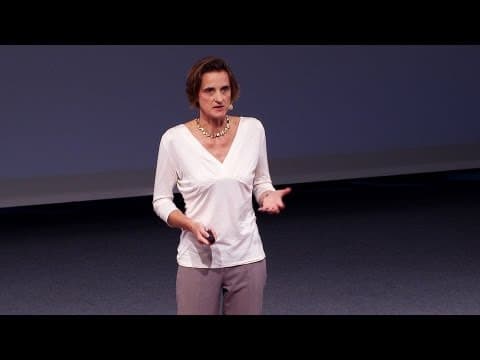
Thank you. It's really an honor and a privilege to be here spending my last day as a teenager. Today I want to talk to you about the future, but first I'm going to tell you a bit about the past. My story starts way before I was born. My grandmother was on a train to Auschwitz, the death camp. And she was going along the tracks, and the tracks split... Read More
Key Insights
- 🧬 The speaker's grandmother survived the Holocaust and her resilience has influenced the speaker's passion for scientific research.
- 📚 Reading a book about the Ebola virus sparked the speaker's interest in medicine and led to her pursuing a career in research.
- 🧪 The speaker's early research focused on the effects of heavy metals on the developing nervous system, leading her to study Alzheimer's disease.
- 💡 The speaker proposes a new approach to treating cancer, focusing on manipulation and differentiation of cancer cells rather than elimination.
- 🏋️ Skeletal muscle tissue appears to be resistant to cancer and metastases, prompting the speaker to investigate why and explore potential therapeutic applications.
- 🩺 The speaker suggests that cancer may be a repair response gone out of control and emphasizes the importance of understanding the body's intentions when addressing diseases.
- ✨ The speaker discusses the possibility of using cancer as a therapy in the future, potentially manipulating cancer cells to regenerate damaged tissues.
- 💭 The speaker acknowledges that some of her ideas may be far-fetched, but expresses the importance of presenting innovative ideas at TED.
Install to Summarize YouTube Videos and Get Transcripts
Explore YouTube Video Summarizer or Get YouTube Transcript Extractor
Questions & Answers
Q: What is the speaker's hypothesis on why cancer rarely occurs in skeletal muscle tissue?
The speaker suggests that the resistance of skeletal muscle to cancer could be due to the presence of anti-angiogenic factors or an angiogenic routing factor that controls the growth of blood vessels, making it difficult for tumors to receive nutrients and grow.
Q: How does the speaker propose using cancer as a therapy for repairing damaged tissues?
The speaker suggests that by understanding how cancer cells differentiate into different tissue types, it may be possible to use cancer as a tool to regenerate and restore damaged tissues, such as in the case of Alzheimer's where new brain cells could be created.
Q: What is the speaker's view on current cancer treatment methods?
The speaker criticizes current methods of eliminating cancer through chemotherapy and radiation, suggesting that a more effective approach would be to manipulate cancer cells for repair purposes rather than trying to kill them.
Q: How does the speaker connect the resistance of skeletal muscle to cancer with the body's natural repair responses?
The speaker believes that the resistance of skeletal muscle to cancer is linked to the body's inherent repair response. They propose that tumor cells may be disguised as skeletal muscle cells and contribute to the repair process, rather than causing harm.
Summary & Key Takeaways
-
The speaker shares their personal background, including the influence of their grandmother's survival during the Holocaust and their early interest in medicine sparked by reading a book on the Ebola virus.
-
They explain their research journey, starting with studying the effects of heavy metals on the nervous system and later focusing on Alzheimer's disease.
-
The speaker then explores the rarity of cancer in skeletal muscle tissue and presents hypotheses on why cancer does not seem to originate or metastasize to this type of tissue.
Read in Other Languages (beta)
Share This Summary 📚
Summarize YouTube Videos and Get Video Transcripts with 1-Click
Try YouTube Summary with ChatGPT & Claude or YouTube Transcript Generator
Explore More Summaries from TED 📚

Summarize YouTube Videos and Get Video Transcripts with 1-Click
Try YouTube Summary with ChatGPT & Claude or YouTube Transcript Generator