Earliest Deadline First Algorithm
TL;DR
EDF algorithm assigns priorities based on deadlines, optimizing CPU utilization theoretically, but faces practical challenges due to context switching.
Transcript
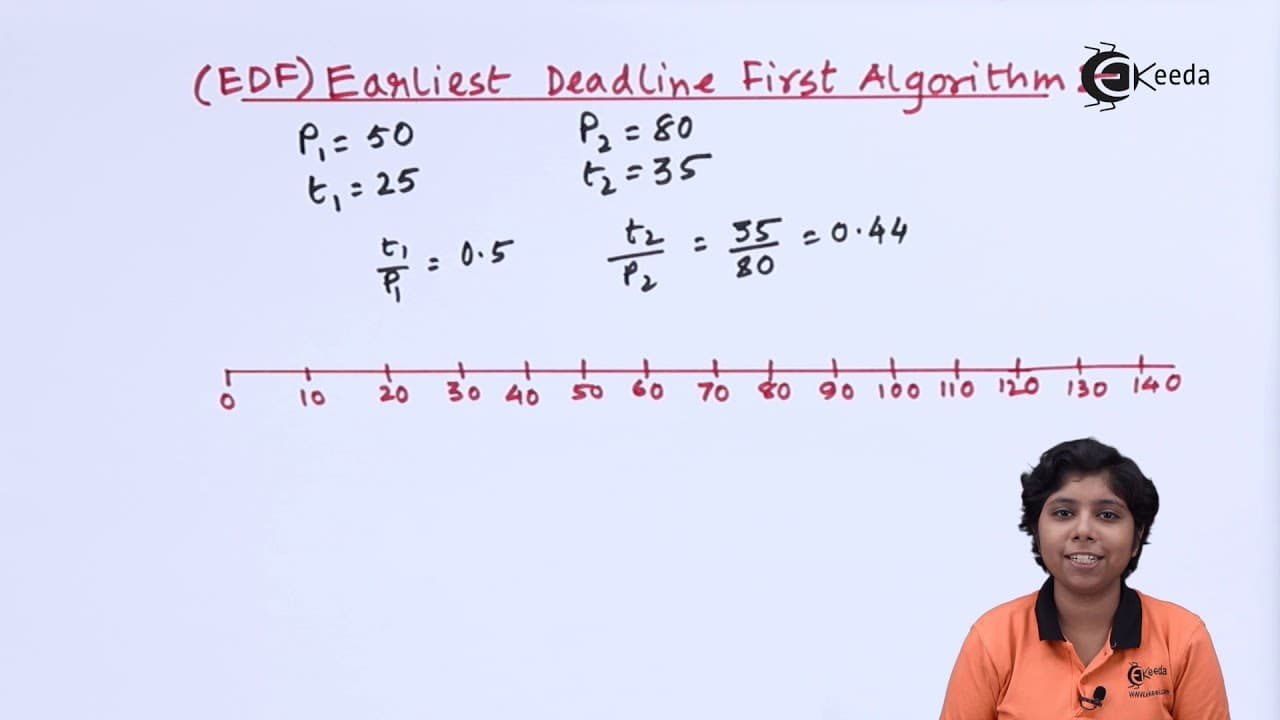
click the Bell icon to get latest videos from akira hello friends today we will discuss about a real-time CPU algorithm known as earlier deadline first or EDF algorithm we will see that how this differs from rate monotonic real-time CPU scheduling and how it could be acted as an optimal solution theoretically but practically due to the cost of cont... Read More
Key Insights
- ⚾ EDF algorithm dynamically assigns priorities based on deadlines for optimal CPU scheduling.
- 🇨🇷 Theoretical optimality of EDF is hindered in practice by context switching and interrupt handling costs.
- ☠️ EDF contrasts with rate monotonic algorithm by prioritizing based on deadlines, not fixed priorities.
- 👻 EDF allows for flexible process scheduling without requiring periodicity or constant processing times.
- 🍰 To achieve optimal scheduling with EDF, processes must announce deadlines and prioritize based on shortest deadlines.
- 🇨🇷 Context switching and interrupt handling costs in EDF algorithm prevent achieving 100% CPU utilization in practice.
- ❓ Despite practical limitations, EDF remains a theoretical optimal solution for CPU scheduling.
Install to Summarize YouTube Videos and Get Transcripts
Explore YouTube Video Summarizer or Get YouTube Transcript Extractor
Questions & Answers
Q: What is the main difference between EDF and rate monotonic real-time CPU scheduling?
EDF assigns priorities dynamically based on deadlines, while rate monotonic uses fixed priorities regardless of deadlines, affecting process scheduling.
Q: How does EDF optimize CPU utilization theoretically?
EDF schedules processes based on deadlines, prioritizing those with shorter deadlines, theoretically leading to maximum CPU utilization.
Q: Why is achieving 100% CPU utilization not practical with EDF algorithm?
Context switching and interrupt handling costs make achieving 100% CPU utilization impractical in real-world applications using the EDF algorithm.
Q: What are the key requirements for a process to be scheduled optimally under EDF?
Processes need to announce their deadlines beforehand and allow for dynamic priority adjustments based on deadlines for optimal scheduling under EDF.
Summary & Key Takeaways
-
EDF algorithm dynamically assigns priorities based on deadlines for optimal CPU scheduling.
-
Contrasts EDF with rate monotonic algorithm, which has fixed priorities for processes.
-
Theoretical optimality of EDF is hindered in practice due to context switching and interrupt handling costs.
Read in Other Languages (beta)
Share This Summary 📚
Summarize YouTube Videos and Get Video Transcripts with 1-Click
Try YouTube Summary with ChatGPT & Claude or YouTube Transcript Generator
Explore More Summaries from Ekeeda 📚


Summarize YouTube Videos and Get Video Transcripts with 1-Click
Try YouTube Summary with ChatGPT & Claude or YouTube Transcript Generator