Taxes and perfectly elastic demand | Microeconomics | Khan Academy
TL;DR
Taxes on products with elastic demand can significantly reduce the quantity demanded and burden the producer.
Transcript
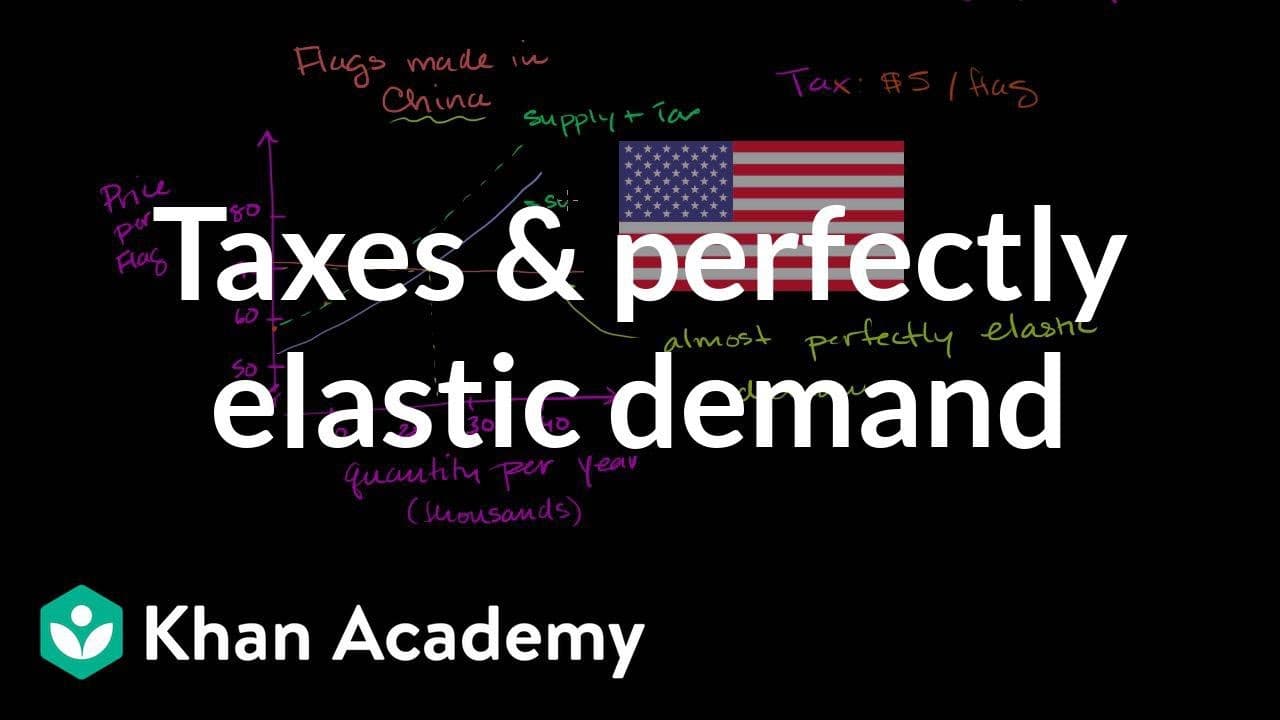
Let's think about how a tax on a product might affect it, if the demand for it is very, very, very elastic. So what I've done here -- We're going to think about flags -- the market for a certain type of flag that's made in China. And to think about this flag -- think about it this way. If the price -- the price right now -- the equilibrium price b... Read More
Key Insights
- 💱 Products with elastic demand experience significant changes in quantity demanded when the price changes.
- 🥺 Taxes on products with elastic demand can lead consumers to switch to substitutes.
- 🍂 The burden of taxes on products with elastic demand falls on the producer, reducing their surplus.
Install to Summarize YouTube Videos and Get Transcripts
Explore YouTube Video Summarizer or Get YouTube Transcript Extractor
Questions & Answers
Q: How does elastic demand affect the impact of taxes on a product?
Elastic demand means that even a small change in price will lead to a large change in quantity demanded. Therefore, taxes on products with elastic demand can have a significant impact on reducing the quantity demanded.
Q: What can happen if the price of a product with elastic demand increases slightly?
If the price of a product with elastic demand increases slightly, consumers may choose to buy substitutes instead. This will lead to a much lower quantity demanded for the original product.
Q: What happens when taxes are imposed on flags made in China?
Imposing taxes on flags made in China will increase the price of these flags. As a result, the quantity demanded will decrease, and the burden of the tax will fall on the producer.
Q: What is the impact of taxes on producer surplus?
Taxes on products with elastic demand significantly reduce producer surplus. The burden of the tax is borne by the producer, leading to a decrease in their surplus.
Summary & Key Takeaways
-
Elastic demand refers to a situation where a small change in price leads to a significant change in quantity demanded.
-
Taxes on products with elastic demand can cause consumers to switch to substitutes, leading to a decrease in quantity demanded.
-
In the case of a tax on flags made in China, the producer bears the burden of the tax, resulting in a decrease in quantity demanded and a reduction in producer surplus.
Read in Other Languages (beta)
Share This Summary 📚
Summarize YouTube Videos and Get Video Transcripts with 1-Click
Try YouTube Summary with ChatGPT & Claude or YouTube Transcript Generator
Explore More Summaries from Khan Academy 📚



Summarize YouTube Videos and Get Video Transcripts with 1-Click
Try YouTube Summary with ChatGPT & Claude or YouTube Transcript Generator