Limitless Growth Is Possible If We Run Our Economies Correctly | Economics Explained
TL;DR
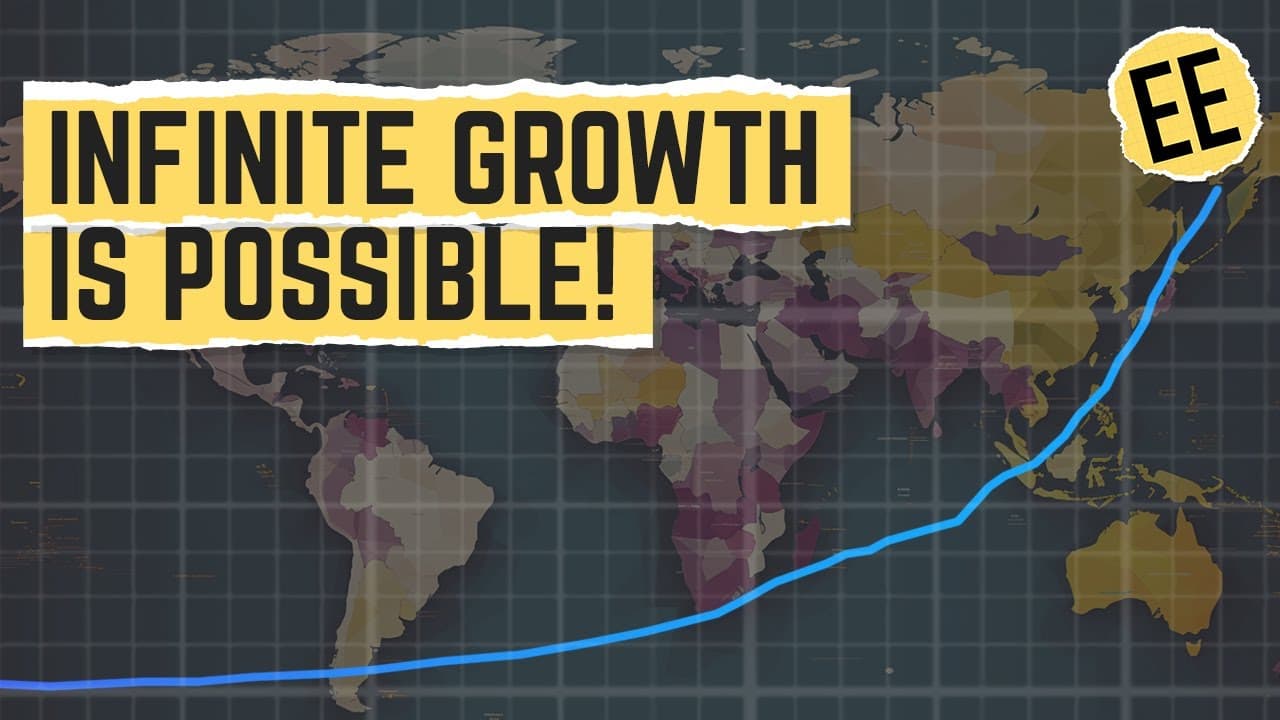
Endless growth is possible if economies focus on quality and sustainability.
Transcript
- Economics is a social science built around solving one simple problem. We as humans have unlimited desires, but limited means in which to fulfill those desires. Which inevitably means that we will go without some of the things that we really want. This problem is, for the most part, unsolvable. But we can try and get the best possible results by ... Read More
Key Insights
- Economics aims to solve the problem of unlimited desires and limited resources by determining what, how, and for whom to produce.
- Capitalism and socialism answer economic questions differently, focusing on market demand and government needs, respectively.
- Economic growth improves living standards and simplifies economic decisions but poses environmental and resource depletion challenges.
- Developing nations need economic growth to improve living standards, but this growth can harm the environment.
- The digital economy provides value with minimal resource use, offering a path to sustainable growth.
- Focusing on producing quality goods over quantity can reduce resource strain and promote sustainable growth.
- Material productivity, or GDP per resource, is a crucial metric for sustainable economic policies.
- Endless growth is achievable by prioritizing digital economy expansion and improving material productivity.
Install to Summarize YouTube Videos and Get Transcripts
Explore YouTube Video Summarizer or Get YouTube Transcript Extractor
Questions & Answers
Q: What is the central problem that economics aims to solve?
Economics seeks to address the issue of unlimited human desires with limited resources. It involves determining what goods and services should be produced, how much should be produced, how they should be produced, and for whom they should be produced. Different economic systems provide varied approaches to these questions, aiming for the most optimal outcomes.
Q: How do capitalism and socialism differ in addressing economic questions?
Capitalism and socialism approach economic questions differently. Capitalism focuses on producing what is demanded by the market, in a way deemed optimal by investors and managers, for those who can afford it. Socialism, on the other hand, produces what is demanded by the people, in a manner deemed optimal by the government, for those in need of the goods or services.
Q: Why is economic growth important, and what challenges does it face?
Economic growth is important because it improves living standards and simplifies economic decision-making. However, it faces challenges such as resource depletion and environmental damage. Sustainable growth requires balancing the need for economic development with the limitations of finite resources and environmental concerns.
Q: What role does the digital economy play in sustainable growth?
The digital economy plays a significant role in sustainable growth by providing value with minimal resource use. Digital products and services can be scaled almost endlessly without depleting finite resources, offering a path to sustainable economic growth. This shift towards digital solutions can help alleviate the pressure on physical resources.
Q: How can economies achieve growth without depleting resources?
Economies can achieve growth without depleting resources by focusing on producing higher quality goods rather than simply increasing quantity. This approach reduces resource strain and promotes sustainability. Additionally, prioritizing the expansion of the digital economy, which requires minimal physical resources, can contribute to sustainable growth.
Q: What is material productivity, and why is it important?
Material productivity, or GDP per resource, measures the efficiency of resource use in economic production. It is important because it provides insight into how well an economy is using its resources to generate economic output. Improving material productivity is crucial for achieving sustainable growth and reducing the environmental impact of economic activities.
Q: What are the potential consequences of a zero-growth policy?
A zero-growth policy could lead to increased social inequality and instability. In a zero-sum game, wealth disparity becomes more apparent, potentially leading to social unrest. Additionally, human nature's drive for improvement and better living standards makes a zero-growth policy unsustainable in the long term, as it contradicts the fundamental goals of economics.
Q: How can economies balance growth with environmental sustainability?
Economies can balance growth with environmental sustainability by investing in renewable energy, improving resource efficiency, and promoting the digital economy. Policies that encourage material productivity and discourage wasteful practices, like fast fashion, can also contribute to sustainable growth. By focusing on these areas, economies can continue to grow while minimizing environmental impact.
Summary & Key Takeaways
-
Economics is about addressing the issue of unlimited desires and limited resources by determining what and how much to produce, how to produce it, and for whom. Different economic systems, like capitalism and socialism, offer varied solutions to these questions, aiming for optimal outcomes.
-
Economic growth is crucial for improving living standards and simplifying economic decisions. However, it faces challenges due to finite resources and environmental concerns. The digital economy and a focus on quality over quantity can help achieve sustainable growth.
-
Developing nations need growth to improve living standards, but this can exacerbate environmental damage. By focusing on the digital economy and improving material productivity, economies can achieve sustainable growth without depleting resources.
Read in Other Languages (beta)
Share This Summary 📚
Summarize YouTube Videos and Get Video Transcripts with 1-Click
Try YouTube Summary with ChatGPT & Claude or YouTube Transcript Generator
Explore More Summaries from Economics Explained 📚



Summarize YouTube Videos and Get Video Transcripts with 1-Click
Try YouTube Summary with ChatGPT & Claude or YouTube Transcript Generator