Why the US has so many Filipino nurses
TL;DR
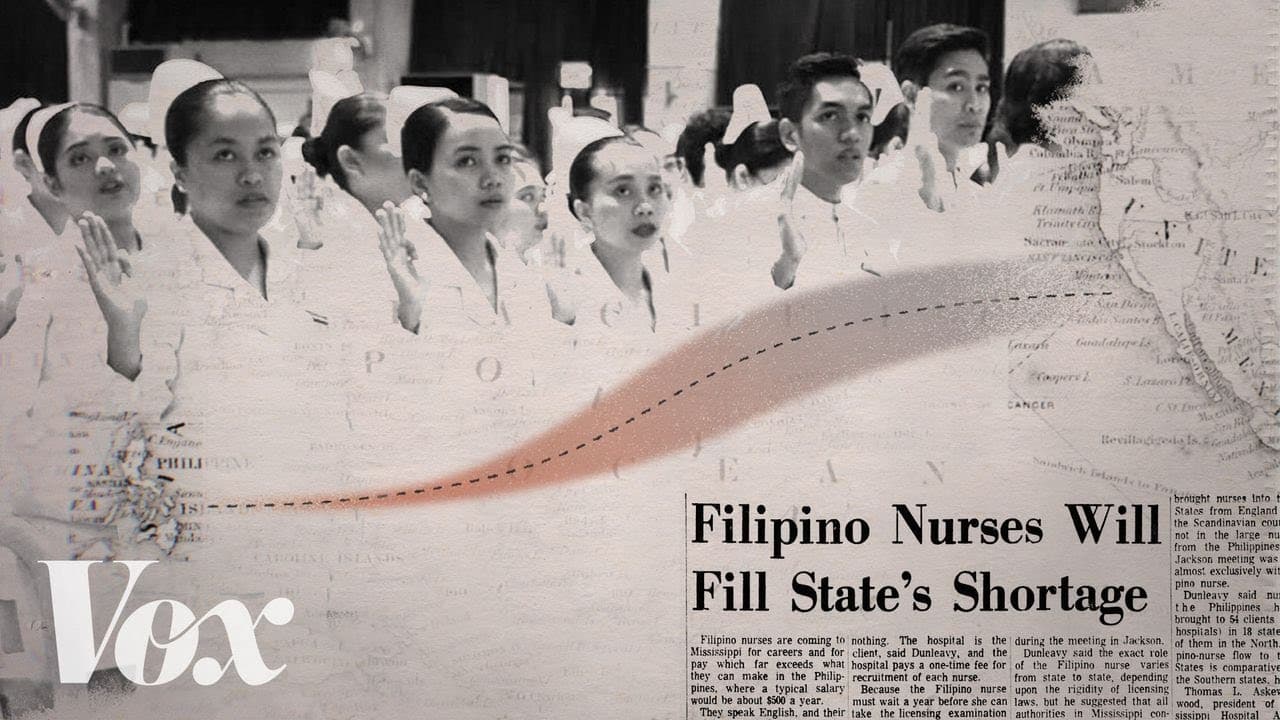
US colonization led to a pipeline of Filipino nurses.
Transcript
The Philippines has a problem. On top of fighting the spread of coronavirus, hospitals are facing another crisis. They are more than 20,000 nurses short. But the thing is tens of thousands of nurses graduate every year in the Philippines. This 2010 oath-taking ceremony included more than 35,000 graduating nurses. And this is a graduating class from... Read More
Key Insights
- The US colonization of the Philippines initiated the development of a nursing workforce trained in American practices, inadvertently preparing them for work in the US.
- The post-WWII nurse shortage in the US led to the recruitment of Filipino nurses through the Exchange Visitor Program, exploiting their Americanized training.
- Economic instability and low wages in the Philippines pushed many nurses to seek better opportunities abroad, primarily in the US.
- The 1965 Immigration and Nationality Act facilitated Filipino nurse migration, transforming a temporary pathway into a permanent migration route.
- Despite forming strong communities in the US, Filipino nurses faced discrimination and were often relegated to underpaid positions.
- The Philippine government promoted labor export as a solution to economic challenges, making it the largest exporter of nurses worldwide.
- Filipino nurses have been integral to the US healthcare system, particularly during crises like the COVID-19 pandemic.
- The dual forces of US recruitment and Philippine government promotion have created a longstanding migration phenomenon for Filipino nurses.
Install to Summarize YouTube Videos and Get Transcripts
Explore YouTube Video Summarizer or Get YouTube Transcript Extractor
Questions & Answers
Q: Why did the US initially start recruiting Filipino nurses?
The US began recruiting Filipino nurses to address the nursing shortages post-WWII. American hospitals faced vacancies as many nurses enlisted to treat soldiers during the war. Filipino nurses, trained in Americanized practices during US colonization, were seen as a suitable solution to fill these gaps.
Q: How did the 1965 Immigration and Nationality Act affect Filipino nurse migration?
The 1965 Immigration and Nationality Act significantly impacted Filipino nurse migration by allowing people from around the world to apply for immigrant visas. This change facilitated a more permanent migration route for Filipino nurses to the US, further integrating them into the American healthcare system.
Q: What role did the Philippine government play in the migration of nurses?
The Philippine government actively promoted the export of labor, including nurses, as a solution to economic challenges. By encouraging overseas work, they aimed to boost remittances, which became a significant source of income for the country, making the Philippines the largest exporter of nurses globally.
Q: How have Filipino nurses been affected by the COVID-19 pandemic in the US?
Filipino nurses have been disproportionately affected by the COVID-19 pandemic due to their significant presence in the US healthcare system. Many have been on the frontlines, providing critical care and facing high risks, with a notable number of them succumbing to the virus compared to other groups.
Q: What challenges did Filipino nurses face upon arriving in the US?
Filipino nurses often faced discrimination and were subjected to underpaid positions upon arriving in the US. Despite their qualifications, they encountered licensing requirements designed to limit their entry and were frequently placed in strenuous and lower-paying jobs within the healthcare system.
Q: Why did Filipino nurses choose to migrate despite the challenges?
Filipino nurses chose to migrate due to economic instability and low wages in the Philippines. Despite the challenges and discrimination faced abroad, the opportunity for better financial prospects and the ability to support their families back home were significant motivating factors.
Q: How did historical events influence the migration of Filipino nurses?
Historical events like US colonization, WWII, and changes in immigration policy significantly influenced Filipino nurse migration. The Americanized training during colonization, post-war nurse shortages, and the 1965 Immigration and Nationality Act collectively created a pathway for Filipino nurses to migrate to the US.
Q: What is the current status of Filipino nurses in the US healthcare system?
Filipino nurses remain a vital part of the US healthcare system, making up a significant portion of foreign-born nurses. They continue to face challenges such as discrimination and concentration in critical care roles but have also organized to fight for better working conditions and recognition.
Summary & Key Takeaways
-
The video explores the historical context of why the US has a significant number of Filipino nurses, tracing back to the American colonization of the Philippines. It highlights how US policies and economic conditions in the Philippines have driven this migration.
-
Filipino nurses have played a crucial role in the US healthcare system, especially during shortages. Despite facing discrimination and low wages, they have formed strong communities and continue to be a vital part of the workforce.
-
The Philippine government's promotion of labor export has made it the largest exporter of nurses globally, with many ending up in the US. This migration phenomenon is deeply rooted in both historical and economic factors.
Read in Other Languages (beta)
Share This Summary 📚
Summarize YouTube Videos and Get Video Transcripts with 1-Click
Try YouTube Summary with ChatGPT & Claude or YouTube Transcript Generator
Explore More Summaries from Vox 📚




Summarize YouTube Videos and Get Video Transcripts with 1-Click
Try YouTube Summary with ChatGPT & Claude or YouTube Transcript Generator