Types of Cooling Systems
TL;DR
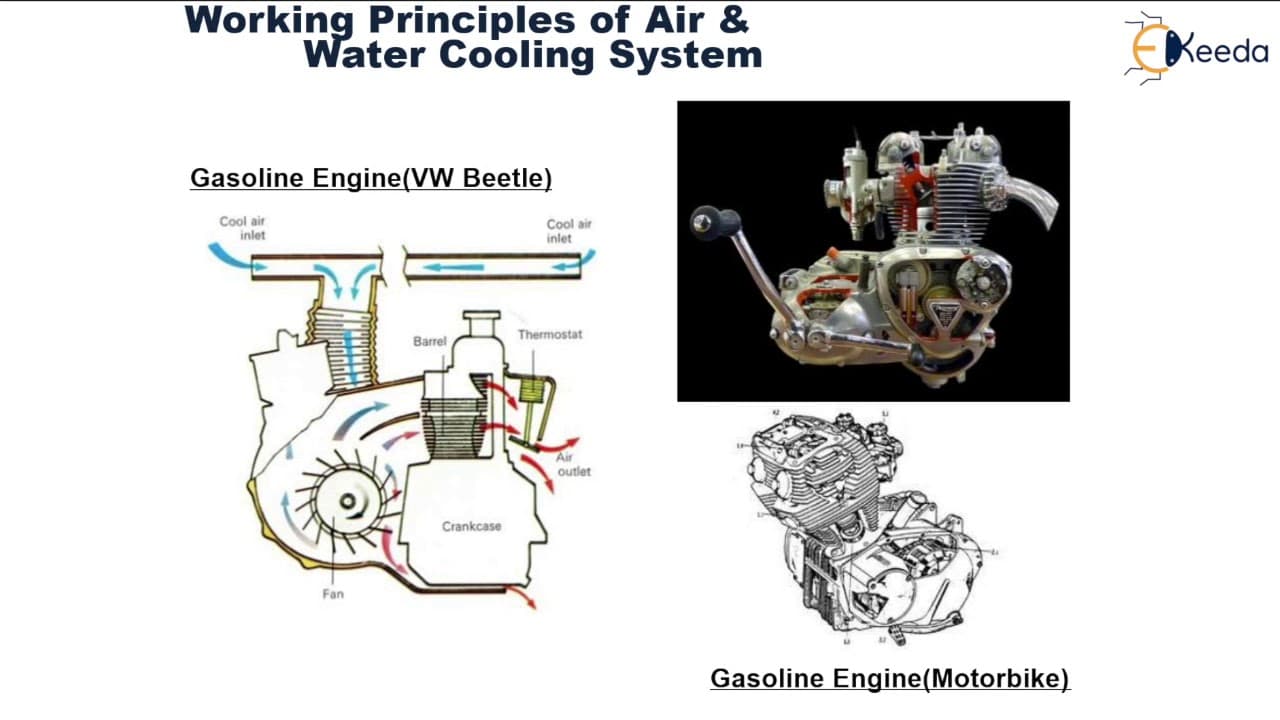
Air-cooled engines rely on air flow for heat dissipation, while liquid-cooled engines use coolant circulation for efficient cooling.
Transcript
hello everyone in this lecture we are going to see the two major types of cooling systems that are currently being used in IC engines broadly speaking they are and liquid okay now in air-cooled method heat is carried away by the air directly which is flowing over the cylinder ahead and around the cylinder walls this type of a cooling system is main... Read More
Key Insights
- 😎 Air-cooled engines rely on natural air flow for heat dissipation without additional cooling components.
- 😒 Liquid-cooled engines use a coolant circulation system with radiators, water pumps, and thermostats for efficient heat transfer.
- 😎 Maintenance of cooling systems is crucial to prevent overheating and ensure optimal engine performance.
- 😎 High temperatures generated in engine components necessitate proper cooling methods to maintain operational efficiency.
- 🥵 Air-cooled engines offer simplicity in design and operation but may face challenges with noise and uniform heat distribution.
- 🥵 Liquid-cooled engines provide better heat transfer efficiency but require regular maintenance and additional components.
- 😎 Components like freeze plugs, pressure caps, and radiator cooling fans play crucial roles in liquid-cooled engine cooling systems.
Install to Summarize YouTube Videos and Get Transcripts
Explore YouTube Video Summarizer or Get YouTube Transcript Extractor
Questions & Answers
Q: What are the main differences between air-cooled and liquid-cooled engines in terms of cooling mechanisms?
Air-cooled engines use airflow directly over the combustion chamber for heat dissipation, while liquid-cooled engines circulate coolant to carry away heat more efficiently.
Q: How does the design of an air-cooled engine differ from a liquid-cooled engine?
Air-cooled engines have simpler designs with no additional cooling components, while liquid-cooled engines require radiators, water pumps, and other cooling system parts.
Q: What are the benefits of using an air-cooled engine in terms of maintenance and operation?
Air-cooled engines have simpler maintenance due to fewer components like cooling pipes and radiators, eliminating risks of coolant leaks or freezing issues.
Q: Why is it important to regularly inspect and maintain a liquid-cooled engine cooling system?
Regular maintenance, such as checking pressure levels in the radiator, testing the thermostat, and conducting leak tests, ensures the engine operates efficiently and prevents damage from overheating.
Summary & Key Takeaways
-
Air-cooled engines use air to dissipate heat from the combustion chamber, commonly found in motorcycles and auto rickshaws.
-
Liquid-cooled engines utilize coolant circulation to carry away heat, with components like radiators, water pumps, and thermostats.
-
Each cooling method has advantages and disadvantages in terms of simplicity, maintenance, and uniform heat distribution.
Read in Other Languages (beta)
Share This Summary 📚
Summarize YouTube Videos and Get Video Transcripts with 1-Click
Try YouTube Summary with ChatGPT & Claude or YouTube Transcript Generator
Explore More Summaries from Ekeeda 📚




Summarize YouTube Videos and Get Video Transcripts with 1-Click
Try YouTube Summary with ChatGPT & Claude or YouTube Transcript Generator