Alternative minimum tax | Taxes | Finance & Capital Markets | Khan Academy
TL;DR
The Alternative Minimum Tax (AMT) is a separate tax calculation for individuals with higher incomes and multiple deductions to ensure they pay some taxes.
Transcript
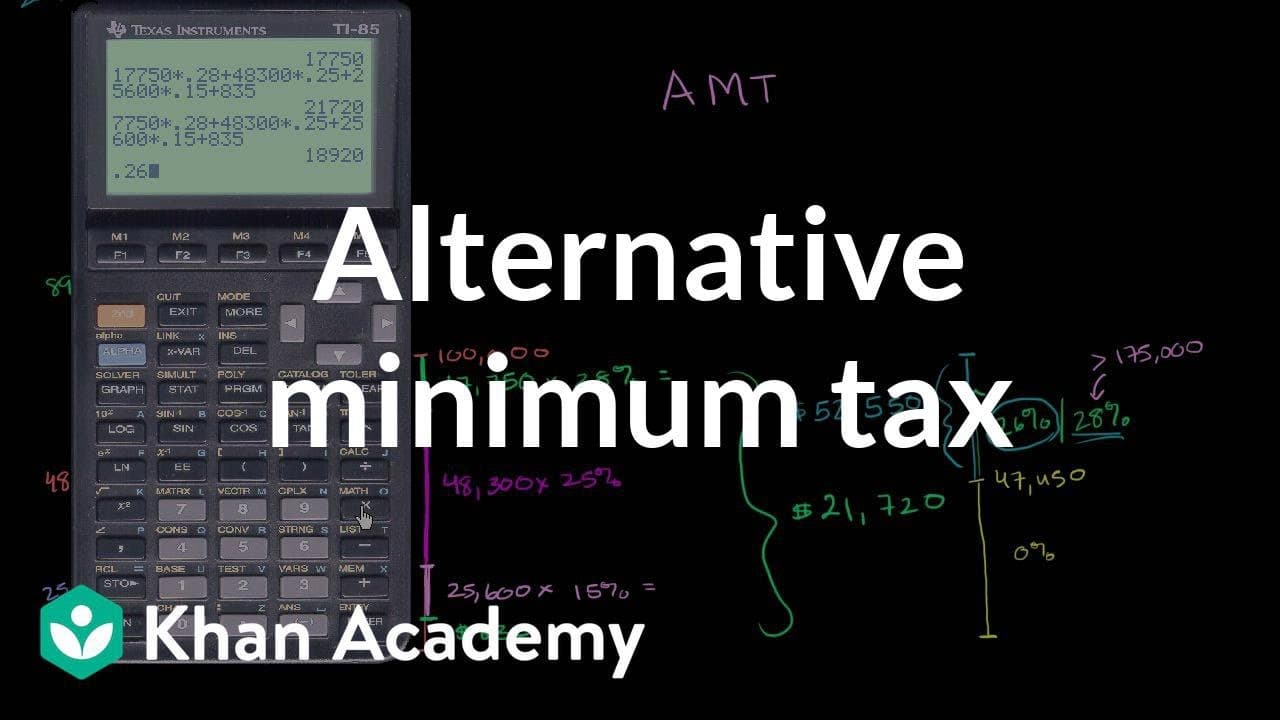
Let's see if we can shed some light on the Alternative Minimum Tax, which is also one of the most confusing aspects of taxation in the U.S., but hopefully this video will clarify things a little bit. So let's go back to that example from the first video of the person making $100,000 and what I'm going to do is I'm going to calculate the AMT, the Al... Read More
Key Insights
- ✋ The AMT is designed to prevent individuals with high incomes and deductions from avoiding taxes completely.
- ☠️ The AMT calculation applies a flat rate (26% or 28%) to the income exceeding the exemption.
- ✋ The regular taxes and the AMT are compared, and only the higher of the two is paid.
- 🌥️ The AMT can become significant for individuals with large deductions that reduce their reported income below the exemption level.
- ☠️ The AMT exemptions and rates are subject to change based on tax laws and income levels.
- 🚕 The AMT can complicate tax calculations, but it aims to ensure fairness in the tax system.
- 😚 Individuals making over $300,000 have a higher AMT rate and lose the exemption.
Install to Summarize YouTube Videos and Get Transcripts
Explore YouTube Video Summarizer or Get YouTube Transcript Extractor
Questions & Answers
Q: What is the Alternative Minimum Tax (AMT)?
The AMT is a separate tax calculation for individuals with higher incomes and multiple deductions to ensure they pay some taxes, even if they can reduce their reported income through deductions.
Q: How is the AMT calculated for someone making $100,000?
For someone making $100,000, the AMT calculation starts with the income above the exemption ($47,450). The excess income is multiplied by the flat rate of 26% to determine the AMT owed.
Q: Do individuals have to pay both the regular taxes and the AMT?
No, individuals have to pay the higher of the two amounts calculated - the regular taxes or the AMT. If the regular taxes are higher, they do not need to pay the AMT.
Q: When does the AMT come into play?
The AMT becomes relevant for individuals with high incomes or significant deductions that lower their reported income. If deductions bring the reported income below the exemption, the AMT may result in a higher tax liability.
Summary & Key Takeaways
-
The AMT is a confusing aspect of U.S. taxation and is calculated based on income and deductions.
-
For individuals making less than $300,000 annually, the first $47,000 is exempt from the AMT calculation.
-
The AMT is a flat percentage (26% or 28%) applied to the income exceeding the exemption, depending on the income level.
Read in Other Languages (beta)
Share This Summary 📚
Summarize YouTube Videos and Get Video Transcripts with 1-Click
Try YouTube Summary with ChatGPT & Claude or YouTube Transcript Generator
Explore More Summaries from Khan Academy 📚



Summarize YouTube Videos and Get Video Transcripts with 1-Click
Try YouTube Summary with ChatGPT & Claude or YouTube Transcript Generator