Why the Daily Show had to change
TL;DR
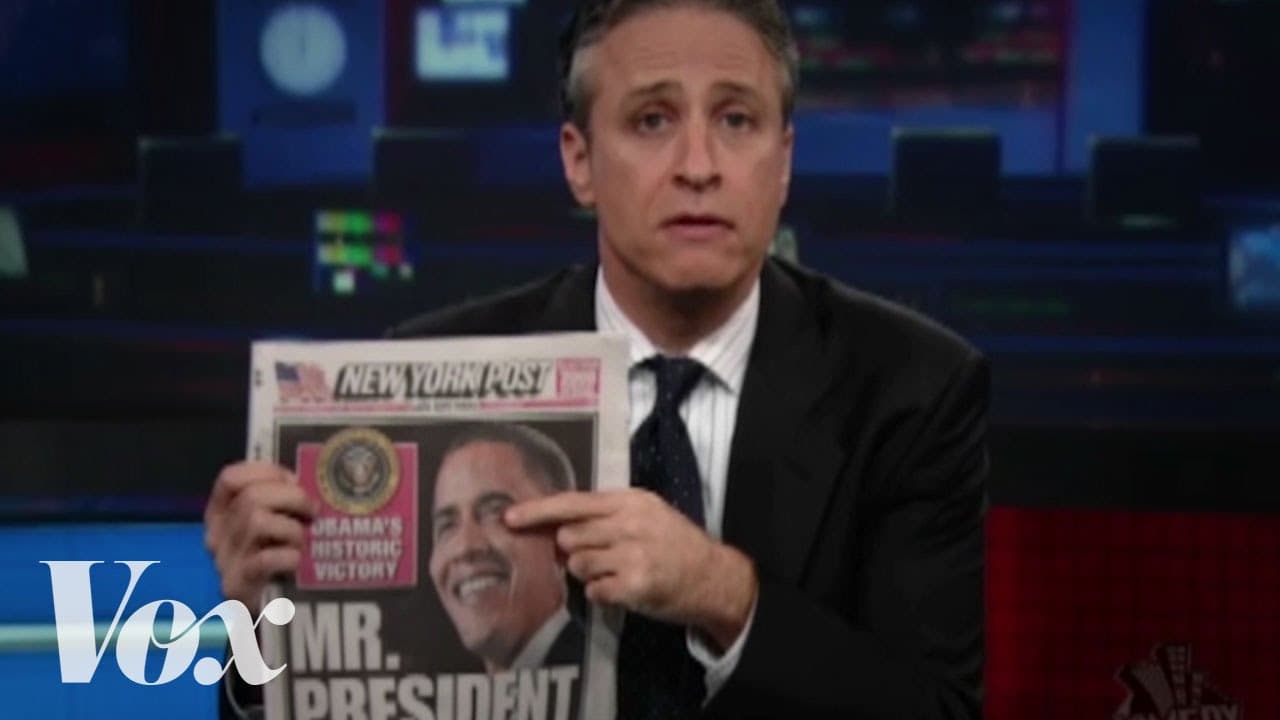
The Daily Show adapted to changing political landscapes post-Obama.
Transcript
So the Daily Show and the Colbert Report were both responses to the Bush years. They were about this alienation liberals felt from their country at a moment when Fox News seemed the authentic expression of the American psyche and George W. Bush kept winning elections. But then what happened is that liberals began winning elections. "Did you guys he... Read More
Key Insights
- The Daily Show and Colbert Report initially thrived during the Bush era, responding to liberal alienation and the rise of Fox News.
- As liberals began winning elections, the shows faced challenges as their satire targeted the now-dominant political coalition.
- Trevor Noah and Larry Wilmore brought new perspectives, focusing on America's complex racial politics, reflecting shifts in societal discourse.
- Obama's presidency highlighted the racial dynamics in American politics, influencing media narratives and public perception.
- Michael Tesler's research shows increased racial polarization in political opinions, a trend reflected in media coverage and public debates.
- The transition of The Daily Show signifies an acknowledgment of race as a central theme in contemporary political discourse.
- Racial attitudes have increasingly influenced political behavior, as seen in reactions to events like the Zimmerman verdict and media portrayals.
- The evolution of these shows mirrors broader societal changes, particularly in how race and politics intersect in the public sphere.
Install to Summarize YouTube Videos and Get Transcripts
Explore YouTube Video Summarizer or Get YouTube Transcript Extractor
Questions & Answers
Q: Why did The Daily Show and Colbert Report initially succeed?
The Daily Show and Colbert Report gained popularity during the Bush years by resonating with liberals who felt alienated in a political climate dominated by conservative narratives, particularly as Fox News became a prominent voice. The shows offered a satirical critique of the political landscape, providing a platform for liberal dissent and humor.
Q: How did the political landscape change during Obama's presidency?
During Obama's presidency, the political landscape shifted as liberals began to win elections, altering the dynamics that initially fueled The Daily Show and Colbert Report. This change presented a challenge for these shows, as their satire now targeted the dominant political coalition, requiring a reevaluation of their approach to remain effective and relevant.
Q: What new focus did Trevor Noah and Larry Wilmore bring to The Daily Show?
Trevor Noah and Larry Wilmore introduced a new focus on America's complex racial politics, reflecting the broader societal shifts occurring during and after Obama's presidency. Their comedic approach highlighted racial issues as central to contemporary political discourse, acknowledging the continued importance of race in shaping public opinion and political behavior.
Q: What does Michael Tesler's research reveal about racial polarization?
Michael Tesler's research reveals a significant increase in racial polarization in political opinions, particularly evident in reactions to racially charged events and controversies. His findings indicate that racial attitudes have become a more pronounced factor in political behavior, influencing how individuals align with political parties and perceive political narratives.
Q: How did racial issues become more prominent in political discourse?
Racial issues gained prominence in political discourse as Obama's presidency underscored the persistent impact of race on American politics. Events like the Zimmerman verdict and debates over films like 12 Years a Slave highlighted the growing partisan divide on racial matters, necessitating a media focus on these critical societal challenges.
Q: Why was the transition of The Daily Show significant?
The transition of The Daily Show to new hosts like Trevor Noah was significant as it represented an acknowledgment of race as a central theme in contemporary political discourse. This shift mirrored broader societal changes, emphasizing the need for media to adapt to evolving political landscapes and address the complexities of race in America.
Q: How did Obama's presidency influence media narratives?
Obama's presidency influenced media narratives by bringing racial dynamics to the forefront of political discussions. The increased racial polarization observed during his tenure prompted media outlets to address these issues more explicitly, shaping how political events and controversies were covered and understood by the public.
Q: What broader societal changes are reflected in The Daily Show's evolution?
The evolution of The Daily Show reflects broader societal changes, particularly the intersection of race and politics in public discourse. As racial issues became more prominent, the show adapted to address these topics, aligning with the shifting priorities and concerns of its audience in a rapidly changing political environment.
Summary & Key Takeaways
-
The Daily Show and Colbert Report were initially responses to the political climate during the Bush administration, capturing liberal discontent with conservative dominance. As political dynamics shifted with Obama's presidency, the shows faced new challenges, necessitating a change in focus and tone to remain relevant and impactful.
-
Trevor Noah and Larry Wilmore's appointments marked a significant shift in The Daily Show's approach, emphasizing the importance of race in American politics. This transition reflects broader societal changes, particularly the increased racial polarization and its impact on political discourse, as explored in Michael Tesler's research.
-
The evolution of The Daily Show highlights the ongoing relevance of race in political narratives, as evidenced by the divergence in public opinions on racial issues. This shift underscores the need for media to adapt to changing political landscapes, ensuring that discussions remain pertinent and reflective of contemporary societal challenges.
Read in Other Languages (beta)
Share This Summary 📚
Summarize YouTube Videos and Get Video Transcripts with 1-Click
Try YouTube Summary with ChatGPT & Claude or YouTube Transcript Generator
Explore More Summaries from Vox 📚

Summarize YouTube Videos and Get Video Transcripts with 1-Click
Try YouTube Summary with ChatGPT & Claude or YouTube Transcript Generator