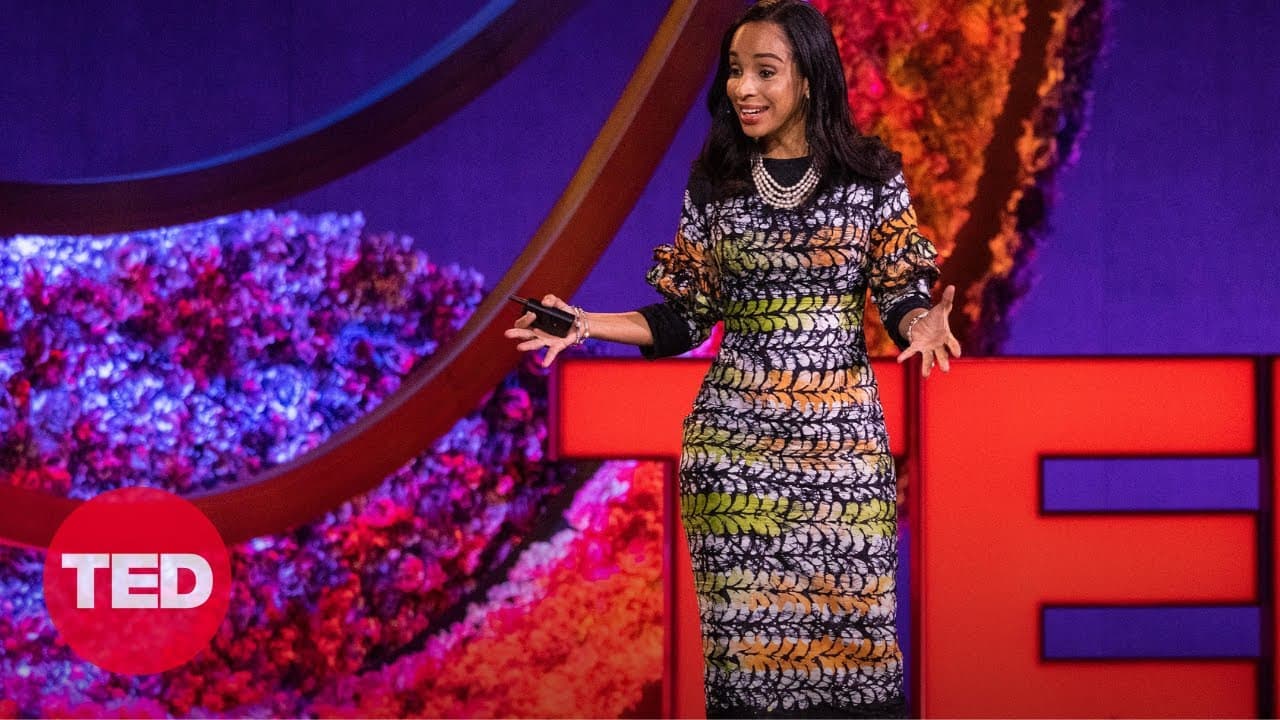
The Future of the Food Ecosystem -- and the Power of Your Plate | Ndidi Okonkwo Nwuneli
TL;DR
Ndidi shares her journey from studying business to working in agriculture, emphasizing the urgent need for action to address the broken food ecosystem and promote sustainable practices.
Transcript
My name, Ndidi, means patience in Igbo. But I'm probably one of the most impatient people you've ever met. I was in such a rush to enter the world that I was born in the parking lot of the University of Nigeria Teaching Hospital. True story. Agriculture was my favorite subject in school. My mom remembers me squealing for joy when I ran home from sc... Read More
Key Insights
- 🌱 Agriculture and love for farming: The speaker's passion for agriculture and farming was evident from a young age, and despite studying business, she ended up back in the field of agriculture and consulting with entrepreneurs.
- 🌍 Broken food ecosystem: The speaker highlights that the current food ecosystem is broken, leading to high costs linked to health and climate. Urgent action is needed to address this problem.
- 🌳 Climate change: Agriculture and food waste contribute significantly to climate change, with deforestation for agriculture and methane emissions from rotting food in landfills. Technology and science can help address these issues, but they are not being fully utilized.
- 🚜 Impactful interventions: Examples from Africa, such as regenerative agriculture and zero-waste production, demonstrate how technology, science, and local research institutions can help farmers increase yields without harming the environment.
- 🍽️ Healthy and affordable food: Unhealthy food is a significant problem that leads to one in five deaths globally, but one-third of the world's population cannot afford a healthy diet. Learning from African communities and implementing policies and standards can help address this issue.
- 💼 Support for small- and medium-sized enterprises: SMEs are crucial in the food ecosystem, creating jobs and driving innovation. Their survival and success need to be supported, especially those led by women, to empower communities and ensure access to healthier food. ⏳ Impatience for change: The speaker emphasizes the urgency for change in the food ecosystem and motivates individuals to take action by reducing food waste and demanding sustainability policies in schools, companies, and civil society groups.
- 🌍 Transformation and accountability: Individuals have the privilege and responsibility to transform the food ecosystem by making informed choices about the food they consume. Future generations will hold us accountable for the actions we take today.
Install to Summarize YouTube Videos and Get Transcripts
Explore YouTube Video Summarizer or Get YouTube Transcript Extractor
Questions & Answers
Q: What is the significance of the speaker's name, Ndidi?
Ndidi means "patience" in Igbo, but the speaker admits that she is actually one of the most impatient people you've ever met. However, this anecdote about her name highlights her journey and passion for addressing the urgent issues in the broken food ecosystem.
Q: How does the speaker describe her interest in agriculture during her school days?
The speaker's favorite subject in school was agriculture. She recalls being joyful when she saw green beans ready for harvesting and selling a bag of avocados in the local market. Despite considering studying agriculture in school, she ended up studying business and working in corporate America, but her path eventually led her back to her true passion.
Q: What led to the speaker's impatience regarding the current state of the food ecosystem?
The speaker's impatience grew after witnessing the first world food crisis in 2007 and recognizing our deep interconnection. She saw how oil price shocks led to cereal price hikes, affecting bread prices worldwide, and the most vulnerable populations were the hardest hit. Fourteen years later, she emphasizes that our food ecosystem is even more broken and interconnected.
Q: What does the Rockefeller Foundation's research reveal about the true cost of food in the United States?
The Rockefeller Foundation's pioneering research indicates that while the annual food expenditure in the United States amounts to 1.1 trillion dollars, the true cost related to health and climate is 2.1 trillion dollars due to the broken food ecosystem. These statistics are not exclusive to the United States; they are replicated worldwide, as highlighted by the UN Food Systems Scientific Group. Urgent action is required from different perspectives: health, equity, and climate.
Q: How does the speaker propose addressing the climate challenges in the food ecosystem?
The speaker believes that modifying how we grow food and reducing food waste are essential steps to tackle climate change within the food ecosystem. Cutting down trees for more agricultural land and wasting food, which generates methane in landfills, contribute significantly to climate change. The good news is that technology and scientific knowledge already exist to grow enough food sustainably and combat food waste.
Q: What are some examples of impactful initiatives aimed at improving the food ecosystem?
The speaker highlights the Songhai Center in Benin Republic, which educates young Africans on regenerative agriculture and zero-waste total production. One entrepreneur from this center, through his company Bioloop, feeds waste like cassava peels and yam peels to black soldier fly larva, which becomes high-quality fish feed. The residue from this process also serves as soil supplements, and the entire production is powered by renewable energy. Additionally, Sahel Consulting demonstrates that farmers can double and triple yields without harming the environment by utilizing local research institutions' technology and science in Africa.
Q: How does the speaker suggest individuals can contribute to transforming the food ecosystem?
The speaker calls on individuals to reduce food waste in their own homes and encourage their schools, companies, and civil society groups to adopt sustainability and food waste policies. Instead of telling children to finish their dinner due to hungry children elsewhere, she advises framing it as a way to protect the environment and prioritize healthy food. Each person has the power to make a difference within their spheres of influence.
Q: What challenges exist in ensuring healthy food is affordable and accessible for all?
The speaker acknowledges that unhealthy food takes a toll on health and that one-fifth of deaths are linked to it. However, one-third of the global population cannot afford a healthy diet. The COVID-19 pandemic exacerbated this issue as food price increases and supply chain disruptions forced the most vulnerable to shift from healthy diets to unhealthy ones because they were more affordable. Learning from indigenous communities like the Hadzabe people in Tanzania and urban social enterprises like mDoc, which promote traditional diets through digital technology, can provide valuable lessons for addressing this challenge. The speaker emphasizes the importance of setting standards for healthy food and holding private sector companies accountable for sugar and salt content. Additionally, prioritizing healthy food in school feeding programs and public procurement schemes is crucial.
Q: What role do small- and medium-sized enterprises play in the food ecosystem, and how can they be supported?
Small- and medium-sized enterprises (SMEs) are fundamental to the food ecosystem as they drive job creation, innovation, and agility. Unfortunately, SMEs have been severely affected by shocks, as evidenced during the pandemic. The speaker's own company, AACE Foods, which sources from over 10,000 farmers and empowers women, demonstrates the ripple effect that empowering SMEs can have on communities. The speaker also mentions Twiga, a social enterprise connecting farmers to urban retailers using mobile money and cell phones. Supporting SMEs requires creating an enabling environment, providing catalytic financing, focusing on women-owned businesses, and ensuring their access to resources and opportunities.
Q: How does the speaker inspire change in the food ecosystem?
The speaker believes that impatience is a virtue for dreamers and urges everyone to be courageous and bold in transforming the food ecosystem. She emphasizes the importance of becoming mindful consumers by asking questions about the origins, production, and waste generated by their meals. Being privileged with choices, individuals should demand solutions that prioritize the well-being of people and the planet. The speaker encourages collective action to create a food ecosystem that benefits both present and future generations.
Summary & Key Takeaways
-
The speaker, Ndidi Nwuneli, shares her impatience and passion for transforming the broken food ecosystem and highlights the need for urgent action.
-
She emphasizes the importance of sustainable agriculture, reducing food waste, and utilizing technology and science to improve food production and address climate change.
-
Ndidi calls for affordable and accessible healthy food, the accountability of private sector companies, and support for small- and medium-sized enterprises, especially those run by women, to create positive change in the food ecosystem.
Read in Other Languages (beta)
Share This Summary 📚
Summarize YouTube Videos and Get Video Transcripts with 1-Click
Try YouTube Summary with ChatGPT & Claude or YouTube Transcript Generator
Explore More Summaries from TED 📚






Summarize YouTube Videos and Get Video Transcripts with 1-Click
Try YouTube Summary with ChatGPT & Claude or YouTube Transcript Generator