Are Buy One Get One Free Deals Actually Worth It?
TL;DR
Buy one get one free (BOGO) deals often lead consumers to overspend instead of saving money. Retailers sometimes inflate original prices to make these promotions seem more appealing, while the allure of 'free' can cloud judgment and encourage impulsive purchases. For most shoppers, waiting for a single item to go on sale is usually a better option.
Transcript
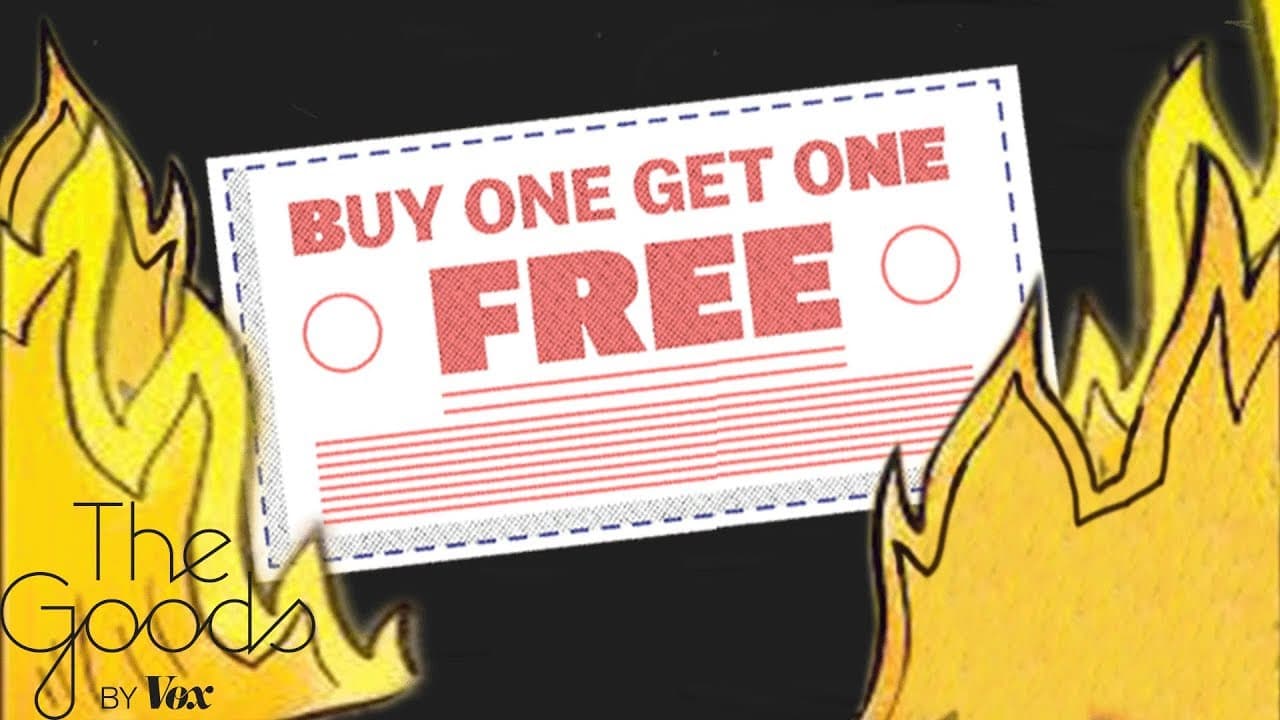
This is a coupon for Burger King's Croissan'wich, and it's promoting a buy one get one deal. Buy one breakfast sandwich at full price get a second. But one customer found that something was off about the deal: when she was charged two different prices for the sandwich. When she ordered a single sandwich, the price was $2.16. But when she ordered tw... Read More
Key Insights
- BOGO deals, while seemingly attractive, often lead consumers to spend more money than they initially intended, rather than saving.
- Retailers may inflate the original price of items to make BOGO deals appear more beneficial than they actually are.
- Consumers are often misled by the appeal of the word 'free', which can cloud their judgment and lead to impulsive purchases.
- In many cases, the supposed discount from a BOGO deal is equivalent to a smaller percentage discount when calculated, making it less advantageous.
- BOGO deals can be misleading when the 'free' item is of lesser value, resulting in consumers paying more for the higher-priced item.
- Consumers often fail to do the necessary calculations to determine the true value of a BOGO deal, leading to overspending.
- For those not intending to buy in bulk, waiting for a single item to go on sale is often more cost-effective than participating in a BOGO deal.
- The psychological appeal of getting something for 'free' is a major driver behind the popularity of BOGO deals, despite their often deceptive nature.
Install to Summarize YouTube Videos and Get Transcripts
Explore YouTube Video Summarizer or Get YouTube Transcript Extractor
Questions & Answers
Q: How do BOGO deals affect consumer spending?
BOGO deals often lead consumers to spend more money than they initially planned. The allure of receiving an additional item for free or at a reduced price can encourage consumers to purchase more items than they originally intended, resulting in higher overall spending.
Q: What tactics do retailers use to make BOGO deals seem more appealing?
Retailers may inflate the original price of items to make BOGO deals appear more beneficial. By increasing the listed price, the discount or free item seems more valuable, misleading consumers into thinking they are getting a better deal than they actually are.
Q: Why do consumers find BOGO deals so attractive?
The word 'free' is a powerful motivator that can cloud consumer judgment. The idea of receiving something for nothing is appealing, leading consumers to make impulsive purchases without fully considering whether the deal is genuinely advantageous.
Q: Are BOGO deals always a better option than traditional discounts?
Not necessarily. In many cases, the discount from a BOGO deal is equivalent to a smaller percentage discount when calculated, making it less advantageous. Consumers may end up spending more money overall, especially if they did not initially plan to buy multiple items.
Q: How can consumers determine if a BOGO deal is worthwhile?
Consumers should do the math to calculate the true value of a BOGO deal. By comparing the total cost of the deal to the cost of purchasing a single item at a discount, they can determine if the deal is genuinely beneficial or if they are better off waiting for a sale on the specific item they want.
Q: What is a common misconception about BOGO deals?
A common misconception is that BOGO deals always result in savings. However, unless consumers already intended to buy multiple items, these deals often lead to increased spending. The perceived value of getting something for free can overshadow the actual cost implications.
Q: How do BOGO deals impact consumers who are not buying in bulk?
For consumers not buying in bulk, BOGO deals may not be the most cost-effective option. These deals often encourage the purchase of additional items, leading to higher spending. Waiting for a single item to go on sale can be a more economical choice for these shoppers.
Q: What psychological factors contribute to the popularity of BOGO deals?
The psychological appeal of getting something for 'free' is a major driver behind the popularity of BOGO deals. This appeal can lead consumers to overlook the actual cost implications and make impulsive purchasing decisions, thinking they are getting a better deal than they truly are.
Summary & Key Takeaways
-
BOGO deals are designed to encourage consumers to purchase more items by offering a second item for free or at a discount. However, these deals often result in consumers spending more money than they would have with a single-item purchase.
-
Retailers sometimes manipulate the original price of items to make BOGO deals appear more attractive, misleading consumers into thinking they are getting a better deal than they actually are.
-
The allure of the word 'free' can lead consumers to make impulsive purchases without fully understanding the financial implications, often resulting in overspending rather than saving.
Read in Other Languages (beta)
Share This Summary 📚
Summarize YouTube Videos and Get Video Transcripts with 1-Click
Try YouTube Summary with ChatGPT & Claude or YouTube Transcript Generator
Explore More Summaries from Vox 📚


Summarize YouTube Videos and Get Video Transcripts with 1-Click
Try YouTube Summary with ChatGPT & Claude or YouTube Transcript Generator