What Is Sampling and Why Is It Important?
TL;DR
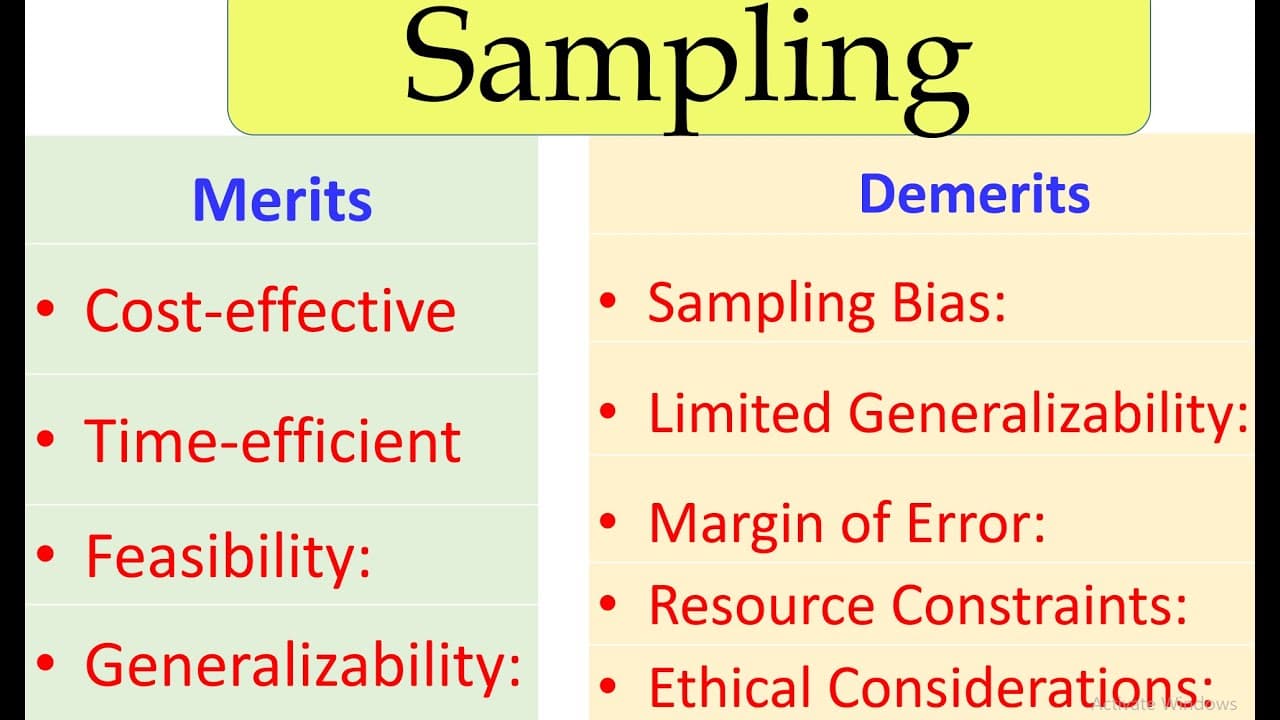
Sampling is the process of selecting subsets from a larger population to draw conclusions about its characteristics. Although it is cost-effective and time-efficient, improper sampling can result in biases and limit the generalizability of findings. Understanding proper sampling design is crucial for accurate research outcomes.
Transcript
hello everybody and welcome back to research methodology lesson 7 sampling in this lesson we will cover the three-pointer sampling males of sampling and demerits of sampling to start from the definitions of sampling that is a sample is just a relatively small subsets of the population a small subset of manageable populations so the population is a ... Read More
Key Insights
- ❓ Sampling involves selecting subsets of a population for study to draw conclusions about the entire population.
- 🎨 Proper sampling design is crucial for accurate generalization and avoiding biases.
- ⌛ Sampling offers benefits like cost and time efficiency but poses challenges in representativeness and margin of error.
- 🥺 Sampling can lead to sampling biases, limited generalizability, margin of error, resource constraints, and ethical considerations.
- 🌥️ Conducting a census eliminates margin of error but can be impractical for large populations.
- 👨🔬 Different sampling methods should be chosen based on the research objectives and population size.
- 👨🔬 Ethical considerations must be prioritized when collecting data from respondents in research studies.
Install to Summarize YouTube Videos and Get Transcripts
Explore YouTube Video Summarizer or Get YouTube Transcript Extractor
Questions & Answers
Q: What is sampling in research methodology?
Sampling is the process of selecting subsets of a larger population for study to draw conclusions about the whole population based on the characteristics of the sample.
Q: Why is proper sampling design important?
Proper sampling design ensures that the sample chosen is representative of the population, allowing for accurate generalization and conclusions about the entire population.
Q: What are the advantages of sampling over conducting a census?
Sampling is cost-effective, time-efficient, and feasible when dealing with large populations, making it a practical and manageable approach for research studies.
Q: What are the disadvantages or demerits of sampling?
Sampling can lead to sampling biases, limited generalizability, margin of error, resource constraints, and ethical considerations when collecting data from respondents.
Summary & Key Takeaways
-
Sampling involves selecting subsets from a population to draw conclusions.
-
Proper sampling design is essential for accurate generalization about the population.
-
Sampling offers benefits like cost and time efficiency but can lead to biases and limited generalizability.
Read in Other Languages (beta)
Share This Summary 📚
Summarize YouTube Videos and Get Video Transcripts with 1-Click
Try YouTube Summary with ChatGPT & Claude or YouTube Transcript Generator
Explore More Summaries from Solomon Getachew 📚





Summarize YouTube Videos and Get Video Transcripts with 1-Click
Try YouTube Summary with ChatGPT & Claude or YouTube Transcript Generator