Products
Features
YouTube Video Summarizer
Summarize YouTube videos
Web & PDF Highlighter
Highlight web pages & PDFs
Chat with PDF
Ask any PDF questions with AI
Ask AI Clone
Chat with your highlights & memories
Audio Transcriber
Transcribe audio files to text
Glasp Reader
Read and highlight articles
Kindle Highlight Export
Export your Kindle highlights
Idea Hatch
Hatch ideas from your highlights
Integrations
Obsidian Plugin
Notion Integration
Pocket Integration
Instapaper Integration
Medium Integration
Readwise Integration
Snipd Integration
Hypothesis Integration
Apps & Extensions
Chrome Extension
Safari Extension
Edge Add-ons
Firefox Add-ons
iOS App
Android App
Discover
Discover
Ideas
Discover new ideas and insights
Articles
Curated articles and insights
Books
Book recommendations by great minds
Posts
Essays and notes from readers
Quotes
Inspiring quotes collection
Videos
Curated videos and summaries
Explore Glasp
Glasp Newsletter
Weekly insights and updates
Glasp Talk
Interview series with great minds
Glasp Blog
Latest news and articles
Glasp Use Cases
Learn how others use Glasp
Build & Support
Glasp API
Access Glasp's API for developers
MCP Connector
Connect Glasp to Claude & ChatGPT
Community
Glasp Reddit Community
Students
Student discount and benefits
FAQs
Frequently Asked Questions
AboutPricing
DashboardLog inSign up

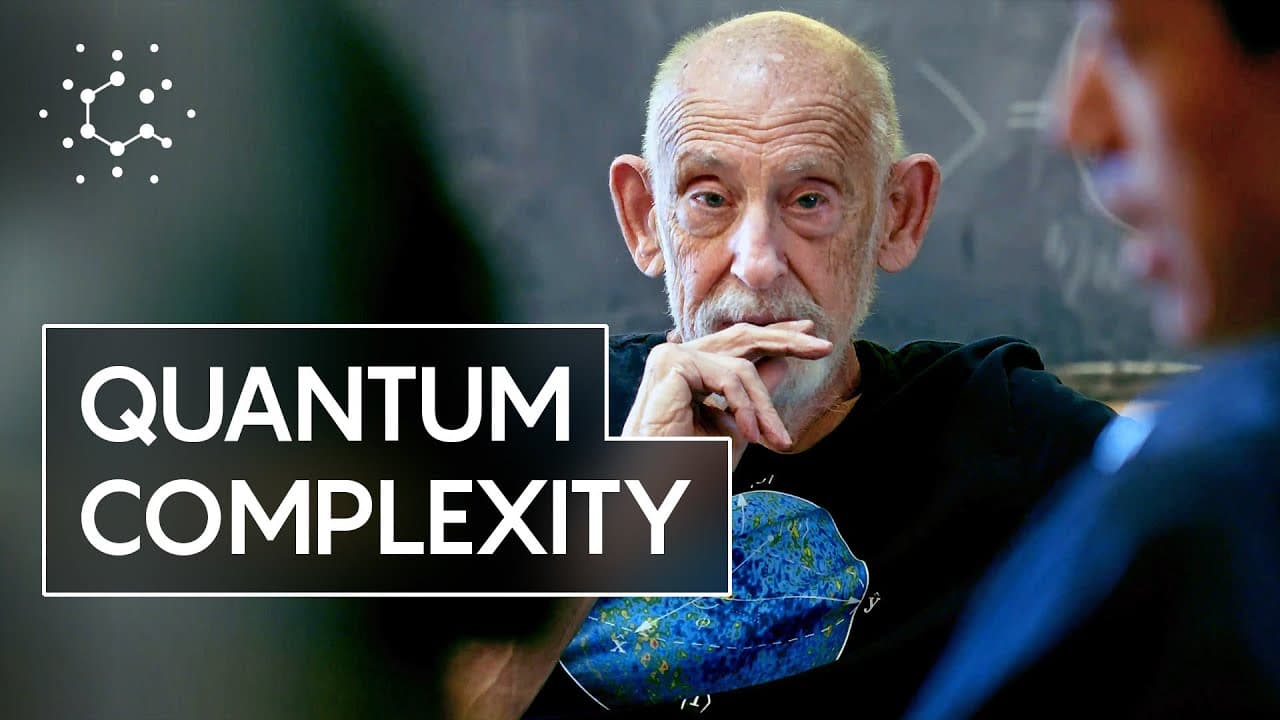
Can a New Law of Physics Explain a Black Hole Paradox?
760.4K views
•
June 6, 2023
by
Quanta Magazine
YouTube video player
Can a New Law of Physics Explain a Black Hole Paradox?

TL;DR

Black holes continue to evolve and grow due to the increasing complexity of their quantum states, challenging the idea of a heat death in the universe.

Transcript

If the universe is as we think it might be, a sort of closed system surrounded by a horizon, and that that horizon behaves roughly like the horizon of a black hole. Any self-contained system, if it satisfies any kind of version of the standard laws of physics, entropy will increase until it comes to thermal equilibrium. Once it comes to thermal equ... Read More

Key Insights

  • 🖤 The complexity of quantum states inside black holes explains their continued growth and evolution past thermal equilibrium.
  • 🖤 Quantum circuit complexity, a concept from computer science, offers a mathematical framework to understand black hole evolution.
  • 🤗 Complexity growth challenges the idea of a heat death in the universe, opening up new possibilities for the future.

Install to Summarize YouTube Videos and Get Transcripts

Explore YouTube Video Summarizer or Get YouTube Transcript Extractor

Questions & Answers

Q: Why do black holes continue to grow and evolve past thermal equilibrium?

Black holes defy the traditional laws of entropy because their complexity, measured in terms of their quantum states, continues to increase even after entropy reaches maximum values.

Q: How does quantum circuit complexity relate to black holes?

Quantum circuit complexity provides a mathematical language to describe the evolution of black holes, drawing parallels between the complexity of quantum states and the growth of black hole interiors.

Q: Can the second law of quantum complexity be considered a fundamental law of the universe?

The second law of quantum complexity is a conjecture proposed by physicists, based on the strong analogy with the second law of thermodynamics. Its application to the entire universe is still uncertain.

Q: What are the implications of complexity growth for the universe's evolution?

The implications are still unexplored, but it challenges the notion of a final heat death of the universe, suggesting the possibility of new beginnings and cycles after complexity reaches its maximum value.

Summary & Key Takeaways

  • The traditional understanding of entropy and thermal equilibrium fails to explain the continued growth and evolution of black holes.

  • Quantum entanglement and the complexity of quantum states offer a new explanation for the expansion of black hole interiors.

  • The concept of quantum circuit complexity, borrowed from computer science, provides a mathematical framework for understanding the evolution of black holes.


Read in Other Languages (beta)

English

Share This Summary 📚

Summarize YouTube Videos and Get Video Transcripts with 1-Click

Download browser extensions on:

Try YouTube Summary with ChatGPT & Claude or YouTube Transcript Generator

Explore More Summaries from Quanta Magazine 📚
2025's Biggest Breakthroughs in Physics thumbnail
2025's Biggest Breakthroughs in Physics
Quanta Magazine
When Computers Write Proofs, What's the Point of Mathematicians? thumbnail
When Computers Write Proofs, What's the Point of Mathematicians?
Quanta Magazine
How Vector Addition Keeps Your Computer from Crashing: The Reachability Problem thumbnail
How Vector Addition Keeps Your Computer from Crashing: The Reachability Problem
Quanta Magazine
How AI Cracked the Protein Folding Code and Won a Nobel Prize thumbnail
How AI Cracked the Protein Folding Code and Won a Nobel Prize
Quanta Magazine
Math - 2023's Biggest Breakthroughs thumbnail
Math - 2023's Biggest Breakthroughs
Quanta Magazine
Computer Science - 2023's Biggest Breakthroughs thumbnail
Computer Science - 2023's Biggest Breakthroughs
Quanta Magazine

Summarize YouTube Videos and Get Video Transcripts with 1-Click

Download browser extensions on:

Try YouTube Summary with ChatGPT & Claude or YouTube Transcript Generator

Apps & Extensions

  • Chrome Extension
  • Safari Extension
  • Edge Add-ons
  • Firefox Add-ons
  • iOS App
  • Android App

Key Features

  • YouTube Video Summarizer
  • Web & PDF Summarizer
  • Web & PDF Highlighter
  • Chat with PDF
  • Ask AI Clone
  • Audio Transcriber
  • Glasp Reader
  • Kindle Highlight Export
  • Idea Hatch

Integrations

  • Obsidian Plugin
  • Notion Integration
  • Pocket Integration
  • Instapaper Integration
  • Medium Integration
  • Readwise Integration
  • Snipd Integration
  • Hypothesis Integration

More Features

  • APIs
  • MCP Connector
  • Blog & Post
  • Embed Links
  • Image Highlight
  • Personality Test
  • Quote Shots

Company

  • About us
  • Blog
  • Community
  • FAQs
  • Job Board
  • Newsletter
  • Pricing
Terms

•

Privacy

•

Guidelines

© 2026 Glasp Inc. All rights reserved.