Can brain anatomy and function account for psychiatric conditions?
TL;DR
Delving into consciousness, questioning materialism vs. idealism, and reevaluating scientific methods.
Transcript
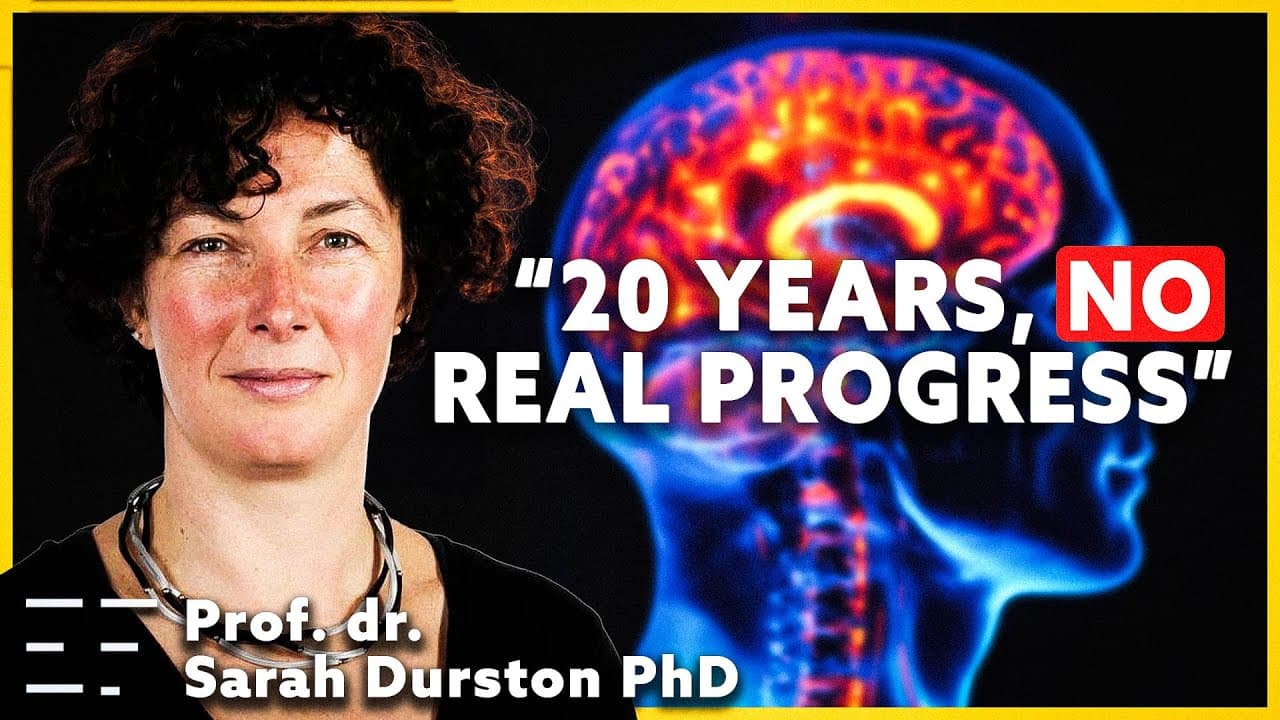
foreign my research on ADHD but also an Autism and other developmental disorders was really focused on trying to find what happens in the brain that leads to development going away leading to symptoms of such disorders one of the big problems we had and still have in Psychiatry is that the biology doesn't matter very well onto the symptoms so my wh... Read More
Key Insights
- 🥺 Limitations in understanding neurological disorders beyond symptoms led to a focus on consciousness.
- 🧠 Consciousness research challenges conventional neuroscientific paradigms and reveals the complexity of brain-symptom alignment.
- 🤗 The speaker advocates for open-minded scientific exploration and interdisciplinary approaches to address the limitations of materialism and reductionism.
Install to Summarize YouTube Videos and Get Transcripts
Explore YouTube Video Summarizer or Get YouTube Transcript Extractor
Questions & Answers
Q: How did the research on ADHD transition to a focus on consciousness?
The research initially aimed to map brain systems to cognitive symptoms, leading to biological subtypes. As symptoms didn't align with subtypes, the exploration shifted towards understanding consciousness and human experience.
Q: Why did the speaker become interested in consciousness research?
Overcoming limitations in neuroscientific approaches, the complexities of brain-symptom alignment, and the role of consciousness in psychological experience led to a reevaluation and sparking interest in investigating consciousness.
Q: What insights did the speaker gain regarding materialism, reductionism, and consciousness?
The speaker discovered that materialism and reductionism alone couldn't provide answers to understanding consciousness and human experience, emphasizing the need for open-mindedness and exploring diverse metaphysical frameworks.
Q: How can individuals studying science benefit from philosophical reflections on scientific methods?
Philosophical reflections can help scientists understand the assumptions and limitations of the scientific method, encouraging them to explore interdisciplinary approaches, question established paradigms, and consider the broader implications of their research.
Summary & Key Takeaways
-
Research on ADHD and autism focused on brain development and symptoms mapping.
-
Transitioned from biological subtypes to consciousness due to limitations in understanding diagnoses.
-
Investigating consciousness in the context of neurological disorders and societal scientific progress.
Read in Other Languages (beta)
Share This Summary 📚
Summarize YouTube Videos and Get Video Transcripts with 1-Click
Try YouTube Summary with ChatGPT & Claude or YouTube Transcript Generator
Explore More Summaries from Essentia Foundation 📚





Summarize YouTube Videos and Get Video Transcripts with 1-Click
Try YouTube Summary with ChatGPT & Claude or YouTube Transcript Generator