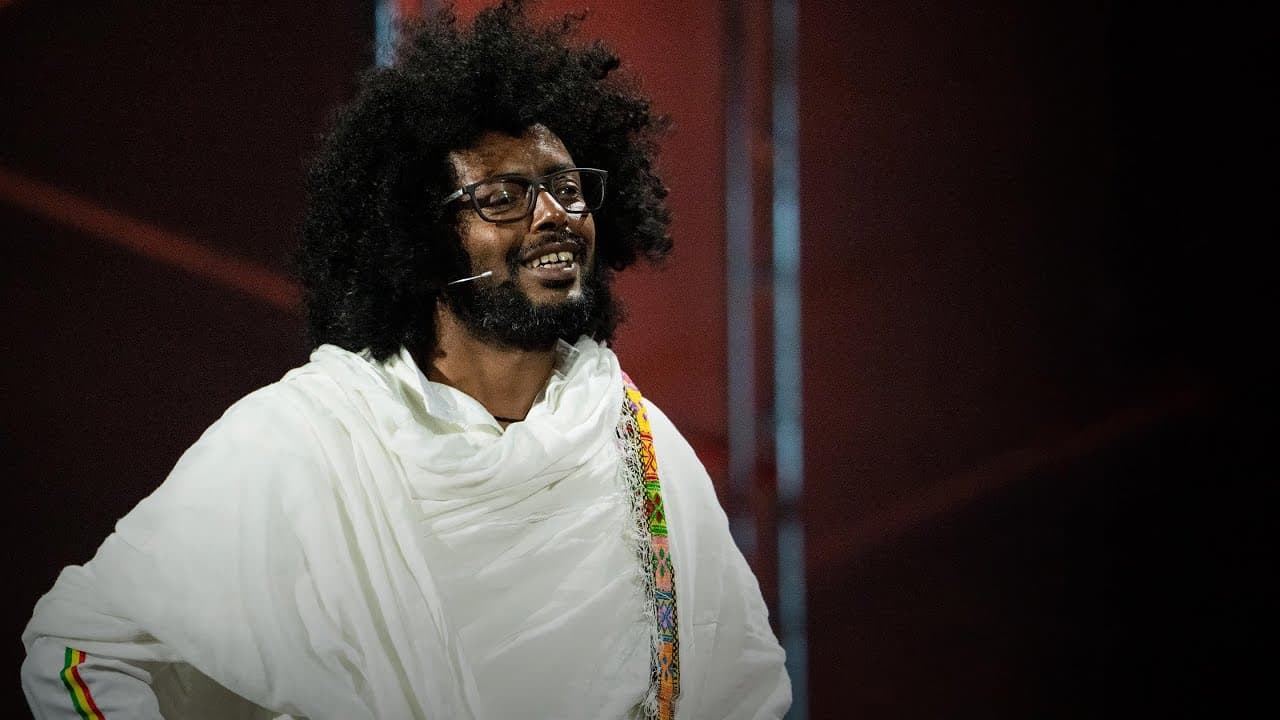
The Ecstasy of Eskista, an Ancient Ethiopian Dance | Melaku Belay | TED
TL;DR
Melaku Belay introduces Mehret Mandefro as she discusses the significance of Eskista, a traditional Ethiopian dance, and its connection to preserving cultural heritage.
Transcript
(Percussion music) (Applause) Melaku Belay: (Speaking in Amharic) Mehret Mandefro: The dance you just saw is my version of Eskista, a traditional dance from Ethiopia. MB: (Speaking in Amharic) MM: Eskista is deeply embedded in our way of life. Even though it's an ancient dance form, it can still tell contemporary stories of today. MB: (Speaking in ... Read More
Key Insights
- 🎶 Eskista, a traditional dance from Ethiopia, can tell contemporary stories and is deeply embedded in Ethiopian culture.
- 🛒 Mercato, an open-air market in Addis Ababa, is a vibrant hub of trade and creativity, offering a wide array of goods and experiences.
- 🔨 The soundscape of Mercato includes the rhythmic pounding of workers shaping recycled metal into useful objects, showcasing the resilience and resourcefulness of the community.
- 🏙️ Heritage places like Mercato are under threat due to modern infrastructure projects, risking the loss of cultural dignity, local economy, and societal well-being.
- 💃 Dance, particularly Eskista, is a powerful form of protest and a way to express contemporary issues, such as the endangerment of Indigenous spaces in the name of development.
- 🐍 Eskista originated from an improvisational moment and got its name from a folklore story about a young woman hypnotizing a snake through mimicking its movements and sounds, symbolizing beauty born out of survival.
- 🌍 The rich music and dance traditions of Ethiopia challenge the single narrative of hunger and war, expressing freedom, pride, and the country's history of never being colonized.
- 🎷 Jazz music resonates with Ethiopia and Eskista, as it represents an African diasporic tradition and a feeling of freedom, providing a deep connection with the Ethiopian spirit and a sense of homecoming.
Install to Summarize YouTube Videos and Get Transcripts
Explore YouTube Video Summarizer or Get YouTube Transcript Extractor
Questions & Answers
Q: What is Eskista and why is it important in Ethiopian culture?
Eskista is a traditional dance from Ethiopia that is deeply embedded in Ethiopian way of life. Despite being an ancient dance form, it has the ability to convey contemporary stories.
Q: What is the significance of the soundscape in the dance performance?
The soundscape in the dance performance transports the audience to the bustling Mercato, an open-air market in Addis Ababa. It captures the sounds of workers pounding recycled metal into useful objects, representing the vibrant atmosphere and diverse activities of the market.
Q: Why does the dancer express her admiration for the workers in Mercato?
In a time when many tend to overlook or ignore the workers in Mercato, the dancer expresses her love for dancing with them. By doing so, she honors their contribution and rejects the prevailing societal disregard for their labor.
Q: What is the current threat facing Mercato and other heritage places in Ethiopia?
The government in Ethiopia plans to demolish Mercato and other heritage places in the name of modern infrastructure development. This poses a significant threat to the traditional community spaces that hold Indigenous knowledge, memories, and the essence of Ethiopian culture.
Q: How does dance serve as a form of protest for the dancer?
For the dancer, dance serves as her protest, with Eskista being its contemporary expression. Through her dance, she aims to draw attention to the endangerment of Mercato and other Indigenous spaces due to development projects in Ethiopia.
Summary & Key Takeaways
-
The speaker performs a traditional Ethiopian dance called Eskista, which she considers deeply embedded in their way of life and capable of telling contemporary stories.
-
She describes the soundscape of her dance, which is inspired by the workers pounding recycled metal in the Mercato market in Addis Ababa.
-
The speaker highlights the importance of preserving traditional community spaces, like Mercato, as they hold Indigenous knowledge and memories crucial for cultural dignity and societal well-being. She sees dance, especially Eskista, as a form of protest and a way to honor previous generations.
Read in Other Languages (beta)
Share This Summary 📚
Summarize YouTube Videos and Get Video Transcripts with 1-Click
Try YouTube Summary with ChatGPT & Claude or YouTube Transcript Generator
Explore More Summaries from TED 📚




Summarize YouTube Videos and Get Video Transcripts with 1-Click
Try YouTube Summary with ChatGPT & Claude or YouTube Transcript Generator