Water in the shadows
TL;DR
Scientists explore lunar water resources and Ceres ice findings to understand potential for human habitation.
Transcript
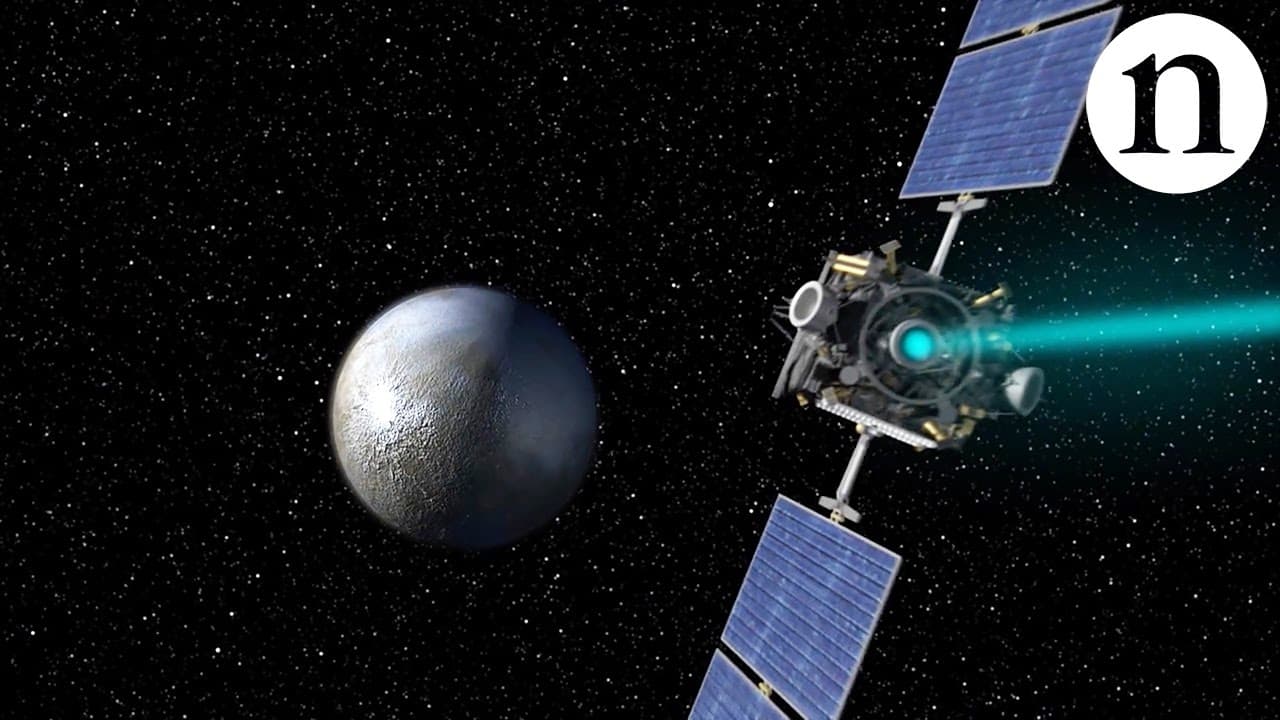
this is what scientists imagine a moon village would look like it would be built from the moon's own resources its metals minerals and water ice access to water would be essential for those living on the moon scientists think there is frozen water trapped in craters at the moon's South Pole but there are many unanswered questions about it recently ... Read More
Key Insights
- 🎑 A sustainable moon village would depend on utilizing local resources, particularly water ice, to support human life.
- 🥶 The presence of water ice in cold, dark regions of Ceres can inform scientists about similar deposits on the moon.
- 🤽 Cryovolcanoes and asteroid impacts may play roles in distributing water ice, shaping future exploration strategies.
- 🥶 Detection of water ice across different planetary bodies emphasizes a commonality that could inform resource location strategies in space.
- 💨 Understanding lunar resources may pave the way for successful long-term human presence on the moon.
- 🥶 The cold craters on Ceres are among the coldest locations in the solar system, essential for preserving water ice.
- 🥺 Research into the regions of Ceres could lead to breakthroughs in understanding extraterrestrial water sources.
Install to Summarize YouTube Videos and Get Transcripts
Explore YouTube Video Summarizer or Get YouTube Transcript Extractor
Questions & Answers
Q: What resources are essential for building a moon village?
A moon village would primarily rely on the moon's own resources, such as metals, minerals, and especially water ice. Access to water is crucial for sustaining life, as it would support drinking, agriculture, and possibly even fuel for energy. Frozen water in craters, particularly at the moon's South Pole, is seen as a significant asset for future lunar exploration and habitation.
Q: How did NASA's Dawn spacecraft contribute to our understanding of water on Ceres and the moon?
The Dawn spacecraft has been orbiting Ceres since March 2015, capturing detailed images and revealing water ice presence in Ceres' cold northern polar region. By analyzing these images, scientists discerned the ice from the surrounding dusty surface, providing insights into how water ice could accumulate in cold craters, leading to a better understanding of similar conditions on the moon.
Q: What are the implications of finding water ice on multiple planetary bodies?
The discovery of water ice on Ceres, the moon, and even Mercury indicates that certain geological processes may be common across these airless bodies, suggesting more widespread availability of water resources in the solar system. This understanding could guide future explorations and be vital in identifying potential locations for habitation beyond Earth.
Q: Why haven't scientists seen bright spots indicating water on the moon like those discovered on Ceres?
While the Lunar Reconnaissance Orbiter has detected hydrogen, indicating the presence of water, bright spots like those on Ceres have not been observed on the moon. This may be because the water could be mixed with frozen soil, preventing it from reflecting sunlight in the same way as the visible ice on Ceres.
Summary & Key Takeaways
-
Scientists believe a future moon village could utilize the moon’s local resources, including metals, minerals, and water ice, crucial for sustaining life.
-
NASA's Dawn spacecraft discovered water ice in the cold northern craters of Ceres, revealing similarities between it and the moon regarding potential icy deposits.
-
The research emphasizes the presence of water in various airless bodies in our solar system and the need for further exploration to uncover these vital resources.
Read in Other Languages (beta)
Share This Summary 📚
Summarize YouTube Videos and Get Video Transcripts with 1-Click
Try YouTube Summary with ChatGPT & Claude or YouTube Transcript Generator
Explore More Summaries from nature video 📚


Summarize YouTube Videos and Get Video Transcripts with 1-Click
Try YouTube Summary with ChatGPT & Claude or YouTube Transcript Generator