Why the dyslexic brain is misunderstood
TL;DR
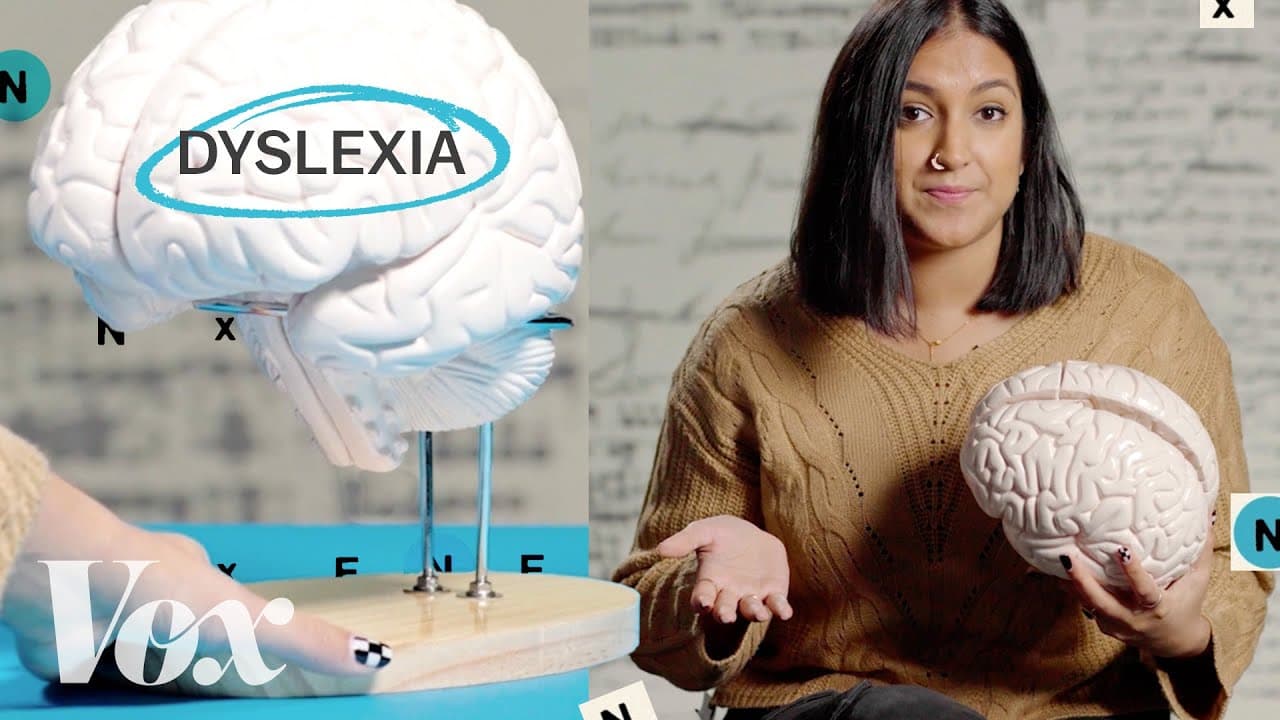
Dyslexia involves unique brain wiring, offering both challenges and cognitive strengths.
Transcript
Take a look at this impossible figure. Much like the work of the artist M.C. Escher this shows an object that seems to be three dimensional but cannot actually exist off the screen. On the other hand, this is a possible object. It could exist in real life. In 2001, researchers performed a unique experiment with images like this. They asked pe... Read More
Key Insights
- Dyslexic individuals often excel in global visual spatial abilities, allowing them to process entire images more quickly than non-dyslexics.
- Dyslexia affects around 20% of the U.S. population, with challenges primarily in reading and writing due to different brain structures.
- The dyslexic brain shows less activation in the left hemisphere's reading areas, leading to difficulties in phonological processing and word recognition.
- Dyslexic individuals often compensate for reading difficulties with heightened activity in the right hemisphere, enhancing skills like spatial processing and creativity.
- Despite reading challenges, dyslexic individuals frequently demonstrate strengths in problem-solving, episodic memory, and high-level reasoning.
- Dyslexia is considered a hereditary neurobiological learning disability, but it does not impact an individual's intelligence.
- Research supports that explicit instruction in phonology, syntax, and spelling can help dyslexic learners succeed.
- Embracing neurodiversity and understanding dyslexia's unique strengths can lead to better educational strategies and reduce stigma.
Install to Summarize YouTube Videos and Get Transcripts
Explore YouTube Video Summarizer or Get YouTube Transcript Extractor
Questions & Answers
Q: How does dyslexia affect reading abilities?
Dyslexia affects reading abilities by altering the brain's structure, particularly in the left hemisphere, which is responsible for phonological processing and word recognition. This leads to difficulties in mapping sounds to letters and decoding words, making reading a more laborious process for dyslexic individuals.
Q: What are some cognitive strengths associated with dyslexia?
Dyslexic individuals often exhibit cognitive strengths such as enhanced spatial processing, creativity, high-level reasoning, problem-solving, and episodic memory. These strengths are linked to increased activity in the brain's right hemisphere, which compensates for reading challenges and allows for unique ways of thinking and processing information.
Q: How prevalent is dyslexia in the population?
Dyslexia affects approximately 20% of the U.S. population. It is a hereditary neurobiological learning disability that varies in severity among individuals. Despite its prevalence, dyslexia does not impact intelligence, and many dyslexic individuals possess unique cognitive strengths that can be advantageous in various fields.
Q: What role does neurodiversity play in understanding dyslexia?
Neurodiversity emphasizes that brains are wired differently, and these variations do not imply deficits. Understanding dyslexia through the lens of neurodiversity highlights the unique strengths of dyslexic individuals and promotes educational strategies that cater to diverse cognitive styles, ultimately reducing stigma and fostering inclusion.
Q: How can educators support dyslexic learners?
Educators can support dyslexic learners by providing explicit instruction in areas like phonology, syntax, and spelling. Understanding the unique cognitive strengths of dyslexic students, such as spatial processing and problem-solving, can also help educators tailor their teaching methods to harness these abilities and promote academic success.
Q: What are some misconceptions about dyslexia?
Common misconceptions about dyslexia include the belief that it is linked to low intelligence or laziness. In reality, dyslexia is a hereditary neurobiological learning disability that affects reading and writing due to different brain structures. Dyslexic individuals often possess unique cognitive strengths that are overlooked due to these misconceptions.
Q: How does the dyslexic brain differ from a typical brain in terms of reading?
The dyslexic brain differs from a typical brain in that it shows less activation in the left hemisphere regions responsible for reading. This leads to disruptions in phonological processing and word recognition pathways. However, the dyslexic brain compensates with increased right hemisphere activity, enhancing skills like spatial processing and creativity.
Q: What impact does embracing neurodiversity have on dyslexic individuals?
Embracing neurodiversity positively impacts dyslexic individuals by recognizing their unique cognitive strengths and reducing stigma associated with dyslexia. It encourages educational and workplace environments to adapt to diverse cognitive styles, fostering inclusion and allowing dyslexic individuals to thrive by leveraging their strengths in problem-solving and creativity.
Summary & Key Takeaways
-
Dyslexia is linked to unique brain structures that create specific challenges in reading and writing but also offer cognitive strengths in areas like spatial processing and creativity. Understanding these differences can help reduce stigma and improve educational approaches.
-
The dyslexic brain shows less activation in areas responsible for phonological processing and word recognition, leading to reading difficulties. However, dyslexic individuals often compensate with enhanced right hemisphere activity, improving skills like spatial abilities and visual imagery.
-
Research suggests that dyslexic individuals excel in global visual spatial abilities, problem-solving, and episodic memory. Embracing neurodiversity and understanding these strengths can empower dyslexic learners and foster collaboration between different cognitive styles.
Read in Other Languages (beta)
Share This Summary 📚
Summarize YouTube Videos and Get Video Transcripts with 1-Click
Try YouTube Summary with ChatGPT & Claude or YouTube Transcript Generator
Explore More Summaries from Vox 📚




Summarize YouTube Videos and Get Video Transcripts with 1-Click
Try YouTube Summary with ChatGPT & Claude or YouTube Transcript Generator