How to Balance Chemical Equations Step-by-Step
TL;DR
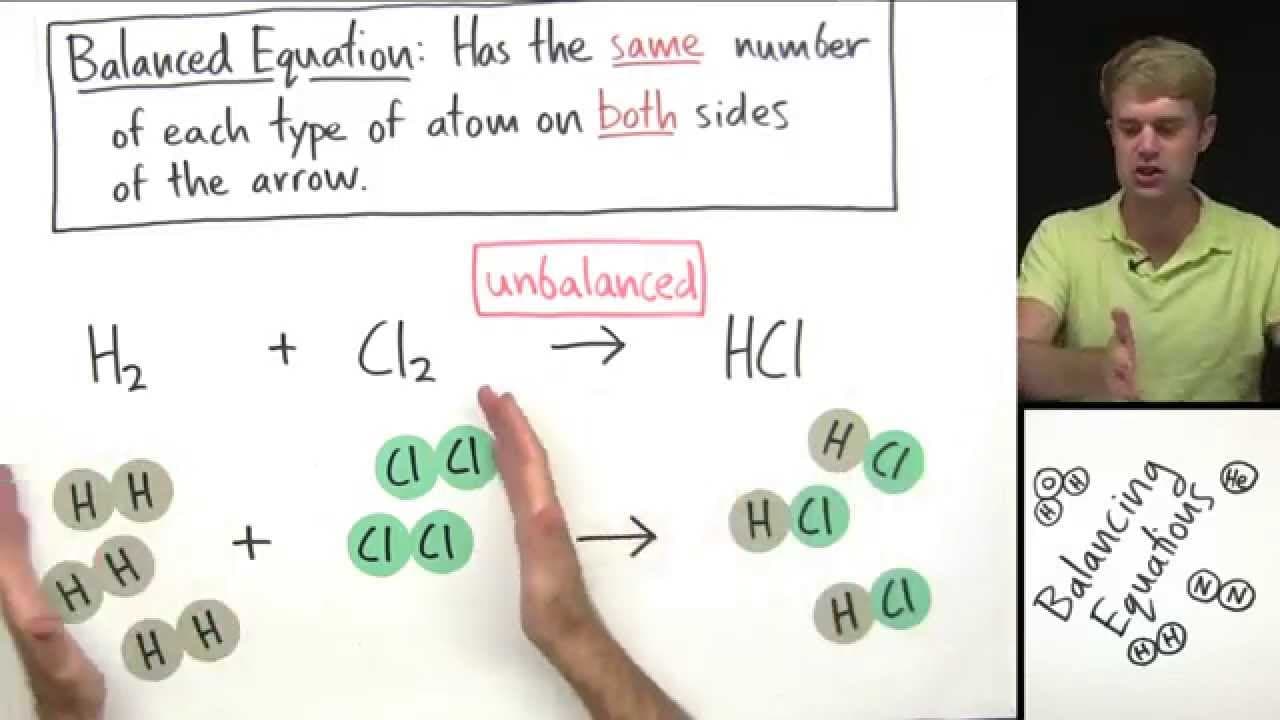
To balance chemical equations, adjust the coefficients before the compounds to ensure an equal number of each type of atom on both sides. Avoid changing the subscripts in chemical formulas, as this alters the compounds' identities. Using visual representations and charts can help simplify the process, making it easier to achieve balanced equations.
Transcript
this is an introduction to balancing chemical equations we're going to talk about what it means for an equation to be unbalanced or balanced and then we'll learn the process that you go through to balance a chemical equation I want to start with a few examples that show the concepts behind balancing equations so you can really understand what's goi... Read More
Key Insights
- 🙃 Balanced chemical equations have an equal number of each type of atom on both sides of the reaction arrow.
- 🫀 Visual representations of atoms and molecules help in understanding the concept of balancing chemical equations.
- #️⃣ Adjusting molecule numbers is the key to balancing chemical equations accurately.
- 💳 Subscripts in chemical formulas must remain unchanged when balancing equations.
- 🙃 Using charts to track the number of atoms on both sides of the equation simplifies the balancing process.
- ⚖️ Practice is essential to mastering the skill of balancing chemical equations effectively.
- 👻 Balancing equations ensures the proper representation of chemical reactions, allowing for accurate calculations.
Install to Summarize YouTube Videos and Get Transcripts
Explore YouTube Video Summarizer or Get YouTube Transcript Extractor
Questions & Answers
Q: What defines a balanced chemical equation?
A balanced equation has the same number of each atom on both sides of the arrow, ensuring conservation of mass and atoms in the reaction.
Q: Why is it essential to ensure a chemical equation is balanced?
Balancing equations is crucial for accurate calculations and problem-solving in chemistry, ensuring the integrity and accuracy of the reaction representation.
Q: What common mistake should be avoided when balancing chemical equations?
Changing subscripts in compounds is a common mistake to avoid, as altering these numbers alters the chemical compounds being represented in the equation.
Q: How can visual representations aid in understanding the balancing of chemical equations?
Visualizing atoms and molecules helps in grasping how they combine and react, aiding in the understanding of the adjustments needed to balance chemical equations.
Summary & Key Takeaways
-
Understanding the concept of balanced vs. unbalanced chemical equations.
-
Visual representation of atoms and molecules in chemical reactions.
-
Process of balancing equations by adjusting molecule numbers for equal atoms.
Read in Other Languages (beta)
Share This Summary 📚
Summarize YouTube Videos and Get Video Transcripts with 1-Click
Try YouTube Summary with ChatGPT & Claude or YouTube Transcript Generator
Explore More Summaries from Tyler DeWitt 📚

Summarize YouTube Videos and Get Video Transcripts with 1-Click
Try YouTube Summary with ChatGPT & Claude or YouTube Transcript Generator