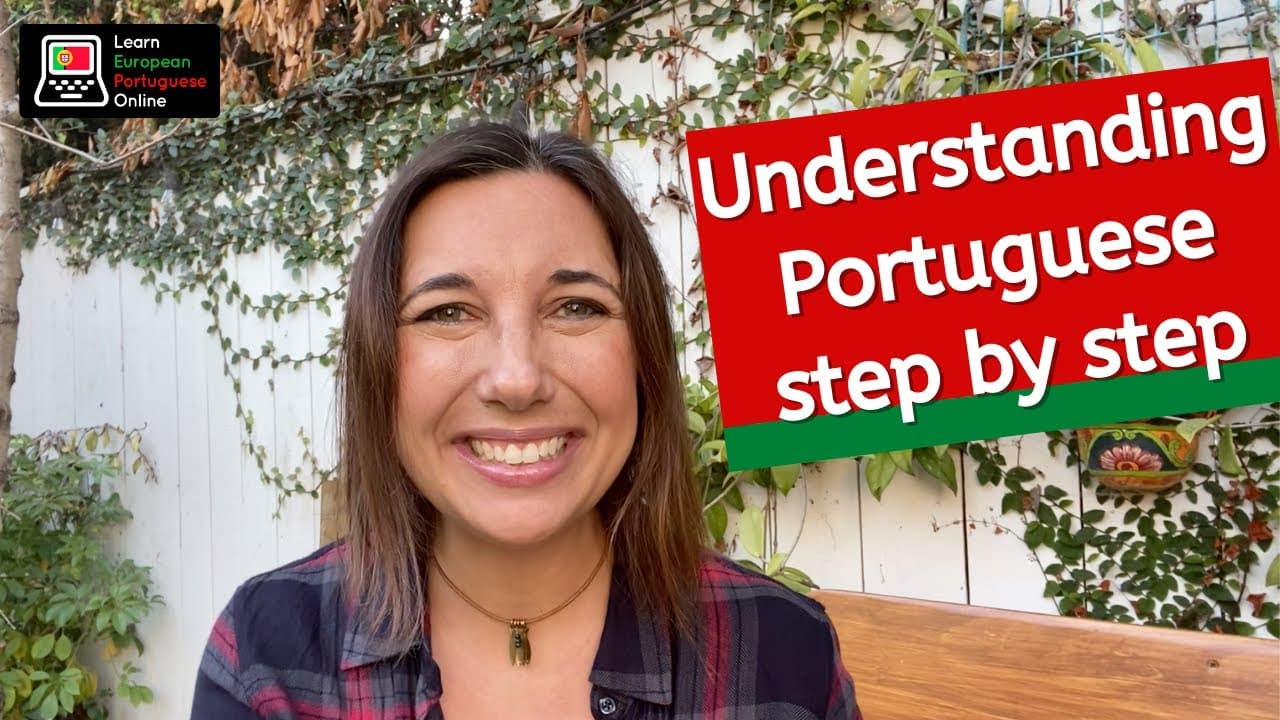
TIPS to UNDERSTAND EUROPEAN PORTUGUESE Frequency Words!
TL;DR
Learn common Portuguese words and improve listening skills.
Transcript
o Olá Todos vai abrir um ano ele desse viria um ano a cantina e o céu que o understand better the European portuguese I understand that hard Sports World em português Candy Country and we speak too fast and Resistance são like One Big world the Truth is the more you Once we have the Battery Will get a isso Justin Sword português tv rádio podcast as... Read More
Key Insights
- Learning European Portuguese involves understanding frequently used words like 'que', 'porque', and 'estar', which are essential in daily conversations.
- The video emphasizes practicing listening skills through various media like TV, radio, and podcasts to enhance language comprehension.
- There is a call to action for more European Portuguese content with subtitles on platforms like RTP to aid language learners.
- The importance of exposure to Portuguese culture through media is highlighted as a method to learn the language effectively.
- The video provides tips and resources for learners to practice and improve their Portuguese language skills outside of formal classes.
- The speaker suggests writing to RTP's Ombudsman to request more subtitled content, emphasizing the need for accessible learning materials.
- Understanding the nuances of words like 'pelo', 'pela', 'pelos', and 'pelas' is crucial for mastering European Portuguese.
- The video encourages viewers to engage with Portuguese content creators and communities to further their language learning journey.
Install to Summarize YouTube Videos and Get Transcripts
Explore YouTube Video Summarizer or Get YouTube Transcript Extractor
Questions & Answers
Q: What is the main focus of the video?
The main focus of the video is to help learners understand and practice using high-frequency words in European Portuguese. It provides strategies for improving listening comprehension by engaging with Portuguese media like TV, radio, and podcasts, and emphasizes the importance of exposure to the language in various contexts.
Q: Why does the speaker encourage writing to RTP's Ombudsman?
The speaker encourages writing to RTP's Ombudsman to request more European Portuguese content with subtitles. This initiative aims to make learning materials more accessible for students of Portuguese as a foreign language, allowing them to practice and improve their language skills more effectively outside of classroom settings.
Q: What are some of the key words discussed in the video?
The video discusses several key high-frequency words in European Portuguese, including 'que', 'porque', 'estar', and variations of 'pelo', 'pela', 'pelos', and 'pelas'. Understanding these words is crucial for learners as they are commonly used in everyday conversations and essential for mastering the language.
Q: How does the video suggest improving listening skills in Portuguese?
The video suggests improving listening skills in Portuguese by engaging with various forms of media, such as TV, radio, and podcasts. This exposure helps learners familiarize themselves with the natural flow and context of the language, making it easier to understand and use in real-life situations.
Q: What role does culture play in learning Portuguese according to the video?
According to the video, culture plays a significant role in learning Portuguese as it provides context and depth to the language. By engaging with Portuguese media and cultural content, learners can gain a better understanding of the language's nuances and improve their comprehension and communication skills.
Q: What resources does the video provide for language learners?
The video provides several resources for language learners, including links to additional content on YouTube, a template for writing to RTP's Ombudsman, and suggestions for engaging with Portuguese media. These resources aim to support learners in their journey to mastering European Portuguese by offering practical tools and strategies.
Q: Why is it important to understand high-frequency words in Portuguese?
Understanding high-frequency words in Portuguese is important because they form the foundation of everyday communication. Mastering these words allows learners to engage in basic conversations and comprehend spoken language more easily, which is essential for effective communication and language acquisition.
Q: How does the video motivate learners to continue their language journey?
The video motivates learners by providing practical tips and resources that make learning Portuguese more accessible and enjoyable. It encourages engagement with the language through media and cultural content, highlighting the benefits of consistent practice and exposure in achieving language proficiency.
Summary & Key Takeaways
-
The video focuses on helping learners understand and use high-frequency words in European Portuguese. It offers practical tips for improving listening skills by engaging with different media forms like TV and podcasts.
-
There is a strong emphasis on the need for more accessible European Portuguese content with subtitles. The speaker encourages viewers to contact RTP to advocate for this change.
-
By providing examples and resources, the video aims to make learning Portuguese more approachable and enjoyable. It also highlights the cultural aspects of the language to enrich the learning experience.
Read in Other Languages (beta)
Share This Summary 📚
Summarize YouTube Videos and Get Video Transcripts with 1-Click
Try YouTube Summary with ChatGPT & Claude or YouTube Transcript Generator
Explore More Summaries from Learn European Portuguese Online 📚

Summarize YouTube Videos and Get Video Transcripts with 1-Click
Try YouTube Summary with ChatGPT & Claude or YouTube Transcript Generator