Introduction to Mortgage Loans | Housing | Finance & Capital Markets | Khan Academy
TL;DR
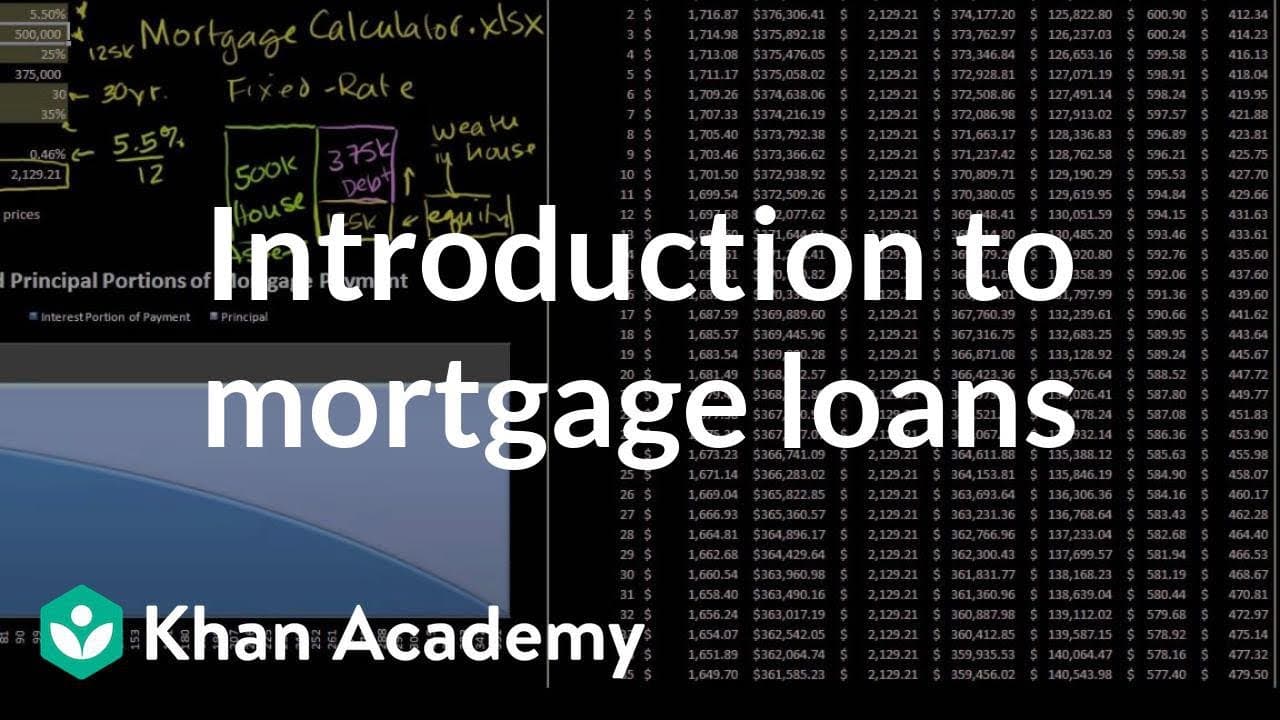
This video explains the concept of a mortgage, how it works, and the components of a mortgage payment.
Transcript
- [Voiceover] What I want to do in this video is explain what a mortgage is. I think most of us have at least a general sense of it, but even better than that, actually go into the numbers and understand a little bit of what you are actually doing when you're paying a mortgage, what it's made up of and how much of it is interest versus how much of ... Read More
Key Insights
- 🏘️ A mortgage is a loan used to purchase a house, where the house serves as collateral for the loan.
- 🇨🇷 Mortgage payments consist of both principal (the loan amount) and interest (the cost of borrowing).
- 🤩 The transfer of the title is a key aspect of the mortgage process, with the title being held by the bank until the loan is paid off.
- 🚕 The interest portion of a mortgage payment is tax-deductible, providing potential tax advantages for homeowners.
- 🤪 The allocation of payments towards principal and interest changes over time, with a larger portion going towards principal as the loan is paid down.
- ☠️ The mortgage payment calculation involves various factors such as the loan amount, interest rate, down payment, and loan term.
- 🏘️ The equity in a house is the difference between its value and the remaining mortgage debt, representing the owner's true wealth in the property.
Install to Summarize YouTube Videos and Get Transcripts
Explore YouTube Video Summarizer or Get YouTube Transcript Extractor
Questions & Answers
Q: What is a mortgage?
A mortgage is a loan obtained from a bank to purchase a house, where the house is used as collateral for the loan. The borrower makes monthly payments to the bank until the loan is paid off.
Q: What is the difference between principal and interest in a mortgage payment?
Principal is the loan amount that you are paying off, while interest is the cost of borrowing the money. Initially, a larger portion of the payment goes towards interest, but this decreases over time as more of the loan is paid off.
Q: How does the transfer of title work in a mortgage?
When a mortgage is obtained, the title of the house is transferred to the bank as security for the loan. Once the loan is fully paid off, the title is transferred back to the homeowner.
Q: Does a mortgage offer any tax advantages?
Yes, the interest portion of the mortgage payment is tax-deductible. However, it is important to understand that this deduction reduces your taxable income, not your actual taxes owed.
Summary & Key Takeaways
-
A mortgage is a loan obtained from a bank to purchase a house, where the house is used as collateral for the loan. The loan amount is typically a portion of the house price, with the remaining amount paid as a down payment.
-
The seller of the house transfers the title, or ownership, to the bank until the loan is paid off. The loan is used to buy the house, and the homeowner makes monthly mortgage payments to the bank.
-
Mortgage payments consist of both principal (the loan amount) and interest (the cost of borrowing). Over time, the portion of the payment allocated to principal increases while the portion allocated to interest decreases.
Read in Other Languages (beta)
Share This Summary 📚
Summarize YouTube Videos and Get Video Transcripts with 1-Click
Try YouTube Summary with ChatGPT & Claude or YouTube Transcript Generator
Explore More Summaries from Khan Academy 📚



Summarize YouTube Videos and Get Video Transcripts with 1-Click
Try YouTube Summary with ChatGPT & Claude or YouTube Transcript Generator