What Are Populations, Communities, and Ecosystems?
TL;DR
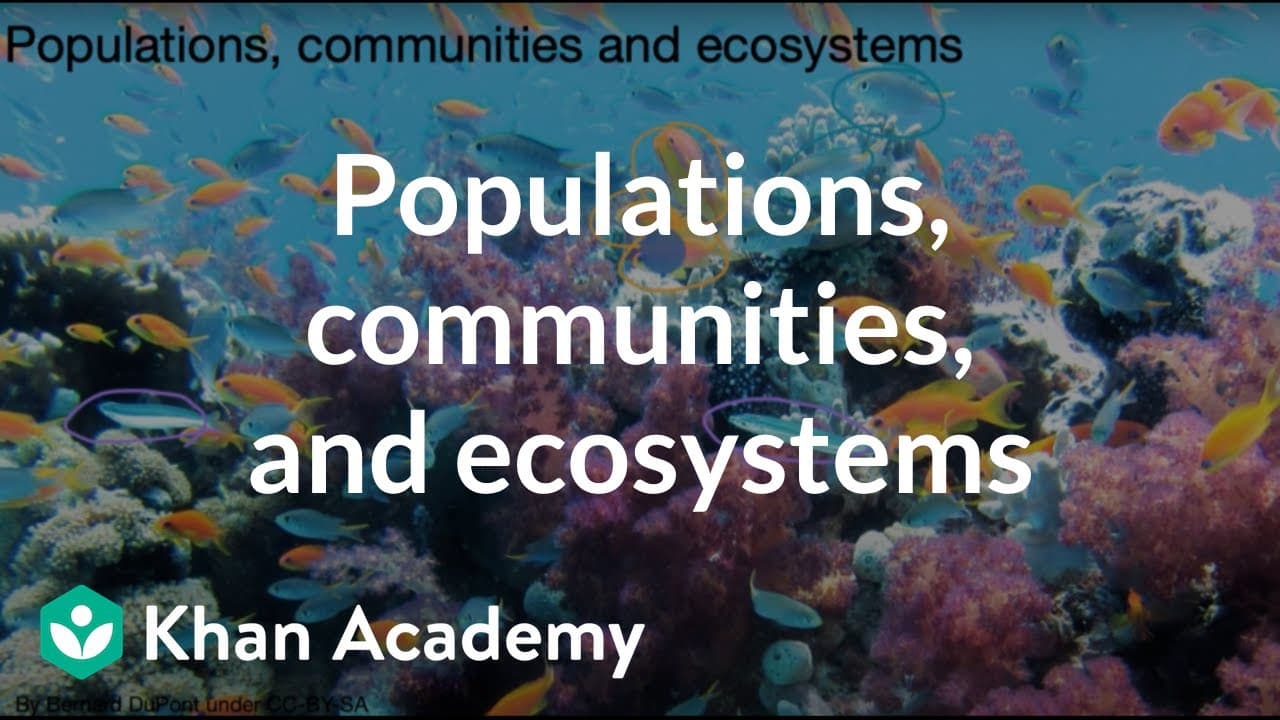
Populations consist of individuals of the same species in a given area, while communities include all the different species living together. Ecosystems encompass both these living organisms and their non-living surroundings, such as water and air, highlighting the complex interactions that sustain life.
Transcript
- [Instructor] In biology, it's useful to have some shared language so we can communicate and describe the world around us in ways that we can all understand together. So here, we're going to talk about populations, communities, and ecosystems. And as we will see, these are all related ideas. So first of all, a population is talking about the membe... Read More
Key Insights
- 🫒 Populations refer to a specific species in an area, communities involve multiple populations living together, and ecosystems include both living organisms and non-living elements of an environment.
- ❓ Communities consider the interactions between different species, including competition, predation, and mutualism.
- 🚱 Organisms within ecosystems interact with both living and non-living components for vital resources and survival.
- 🫒 The concept of populations, communities, and ecosystems provides a shared language for biologists to understand and communicate the dynamics of living organisms and their environment.
- 🌱 Populations, communities, and ecosystems can consist of various organisms, from large animals to microorganisms and plants.
- ♻️ Understanding the relationships between populations, communities, and ecosystems is essential in studying ecology and how organisms interact within their environments.
- ❓ Ecosystems are dynamic and are constantly influenced by the interactions between different populations and their physical surroundings.
Install to Summarize YouTube Videos and Get Transcripts
Explore YouTube Video Summarizer or Get YouTube Transcript Extractor
Questions & Answers
Q: What is the difference between a population and a community?
A population refers to a specific species in an area, while a community encompasses all living species in the same area. Populations are more species-specific, while communities consider the interactions between different species.
Q: What is included in an ecosystem?
An ecosystem consists of all living organisms, such as plants, animals, and microorganisms, as well as the non-living elements in their environment, like water, air, and soil. These components interact and influence each other within the ecosystem.
Q: How do organisms interact within communities?
Organisms within communities can interact in various ways. They may compete for resources, such as food and shelter, or they could mutually benefit one another through symbiotic relationships. Some may prey on other species, while others may have no significant impact on each other.
Q: How do populations, communities, and ecosystems relate to each other?
Populations are the building blocks of communities, as they are groups of individuals of the same species. Communities, on the other hand, consist of different populations living together in the same area. Ecosystems encompass both communities and the non-living elements of the environment.
Summary & Key Takeaways
-
Populations are groups of individual organisms of the same species in a particular area.
-
Communities are composed of populations of different species that live in the same area.
-
Ecosystems include all living organisms and non-living elements, such as water, air, and soil, and how they interact with each other.
Read in Other Languages (beta)
Share This Summary 📚
Summarize YouTube Videos and Get Video Transcripts with 1-Click
Try YouTube Summary with ChatGPT & Claude or YouTube Transcript Generator
Explore More Summaries from Khan Academy 📚



Summarize YouTube Videos and Get Video Transcripts with 1-Click
Try YouTube Summary with ChatGPT & Claude or YouTube Transcript Generator