Percentage tax on hamburgers | Microeconomics | Khan Academy
TL;DR
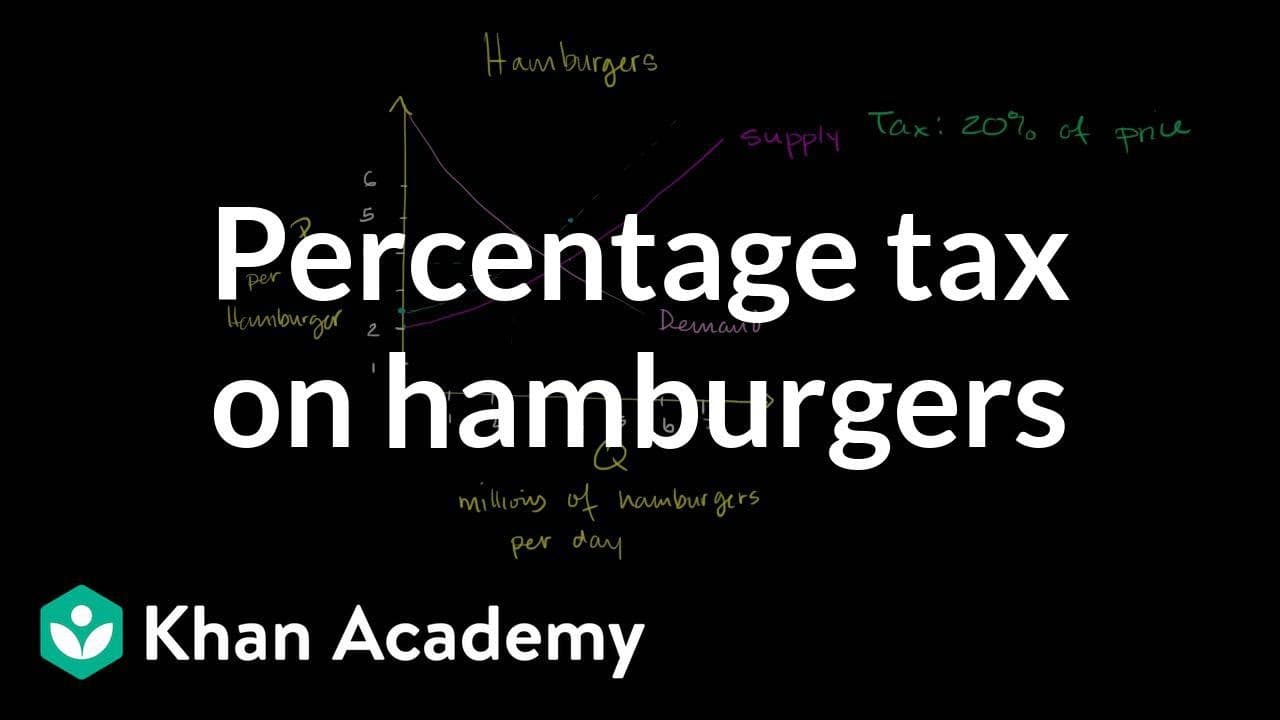
Applying a percentage tax on hamburgers shifts the supply curve upwards, resulting in reduced equilibrium quantity and a loss of surplus for consumers, producers, and the government.
Transcript
Voiceover: In the last video on taxing hamburgers, I did a somewhat artificial thing where I taxed hamburgers with an absolute dollar amount. Typically, consumption taxes are a percentage of the actual price of the goods. For example, sales taxes might be 8% or 9% of whatever you are buying. Let's think about how the supply curve, as perceived by t... Read More
Key Insights
- ❓ Percentage taxes, like sales taxes, increase the perceived price for consumers.
- 😀 Producers require higher prices to cover their opportunity cost when faced with a percentage tax.
- 📈 The supply curve shifts upwards by 20% with each increase in quantity and price due to taxation.
- 🚕 The equilibrium quantity decreases as a result of the tax.
- 🌸 Taxation creates deadweight loss, reducing consumer and producer surplus.
- 🚕 Tax revenue for the government is determined by the height and width of the supply curve shift.
- 😚 Producers and consumers lose surplus due to the tax.
Install to Summarize YouTube Videos and Get Transcripts
Explore YouTube Video Summarizer or Get YouTube Transcript Extractor
Questions & Answers
Q: How does a percentage tax on hamburgers affect the supply curve?
A percentage tax on hamburgers shifts the supply curve upwards, causing producers to demand a higher price per hamburger to cover their opportunity cost.
Q: How does the price increase affect consumers?
Consumers will have to pay the increased price plus the percentage tax, resulting in a higher cost per hamburger.
Q: What happens to the equilibrium quantity with a percentage tax?
The equilibrium quantity decreases due to the higher prices and reduced consumer demand caused by the tax.
Q: Why is taxation considered inefficient?
Taxation leads to a loss of surplus for consumers, producers, and the government, known as deadweight loss, as it reduces economic activity and restricts the benefits that were present before taxation.
Summary & Key Takeaways
-
Percentage taxes on goods, like sales taxes, affect the supply curve as perceived by consumers by increasing the price of the product.
-
Producers will demand a higher price for each hamburger to cover their opportunity cost, and consumers will have to pay the increased price plus the percentage tax.
-
The supply curve shifts 20% upwards with each increase in quantity and price, leading to a reduction in equilibrium quantity, loss of surplus, and deadweight loss.
Read in Other Languages (beta)
Share This Summary 📚
Summarize YouTube Videos and Get Video Transcripts with 1-Click
Try YouTube Summary with ChatGPT & Claude or YouTube Transcript Generator
Explore More Summaries from Khan Academy 📚



Summarize YouTube Videos and Get Video Transcripts with 1-Click
Try YouTube Summary with ChatGPT & Claude or YouTube Transcript Generator