Methods of controlling emissions Catalytic convertors particulate traps Exhaust Gas Recirculation
TL;DR
Learn about thermal and catalytic converters, exhaust gas recirculation, evaporative control, and positive crankcase ventilation for emission control.
Transcript
hello everyone in this lecture we are going to see certain certain methods which are found to be useful for controlling the exhaust emissions and in certain cases which are specific for the removal of certain harmful exhaust emission components the first one that we consider over here are thermal converters thermal converters they are nothing but h... Read More
Key Insights
- ✋ Thermal converters and catalytic converters are effective in reducing harmful engine emissions through oxidation reactions at high temperatures.
- 🫢 Exhaust gas recirculation helps in minimizing oxides of nitrogen emissions, but it can impact the engine's thermal efficiency.
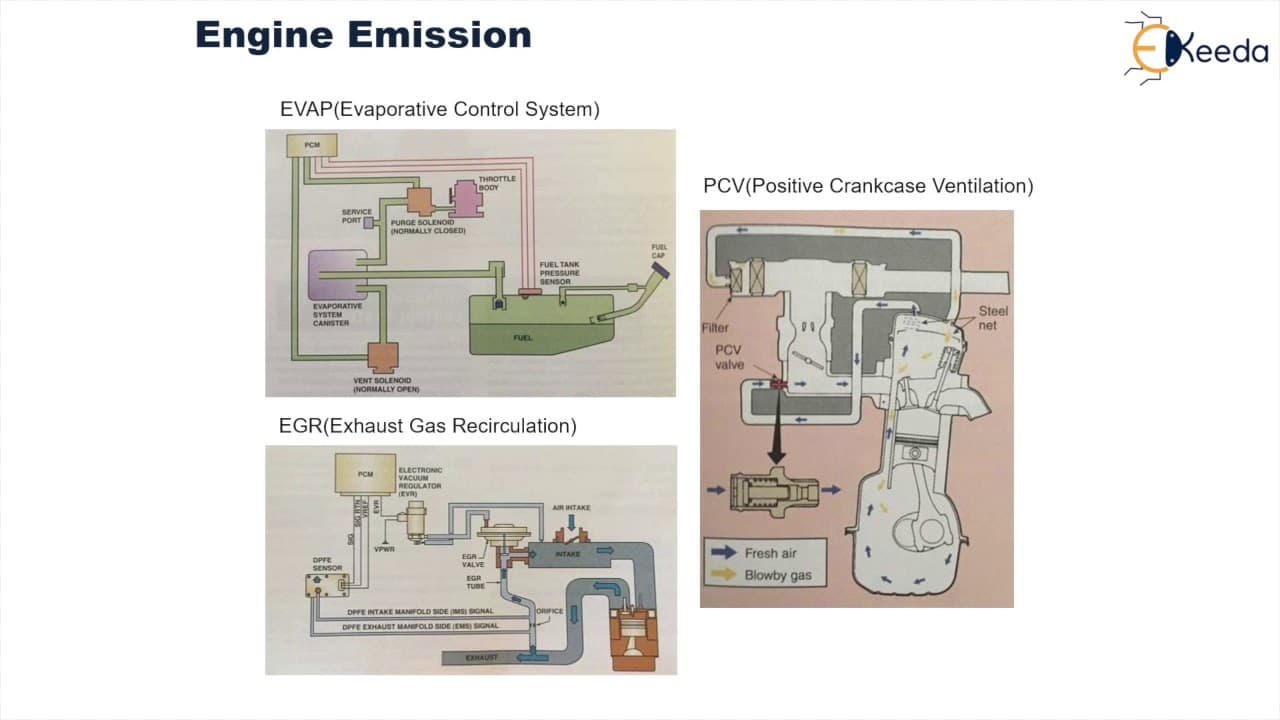
- ⛽ Evaporative control systems manage fuel vapors by separating them from liquid fuel and storing them within a canister.
Install to Summarize YouTube Videos and Get Transcripts
Explore YouTube Video Summarizer or Get YouTube Transcript Extractor
Questions & Answers
Q: What is the primary function of thermal converters in controlling engine emissions?
Thermal converters aim to promote oxidation of carbon monoxide and hydrocarbons present in exhaust gases by creating high-temperature chambers where these reactions can occur. The goal is to convert harmful emissions into less harmful compounds like carbon dioxide.
Q: How do catalytic converters differ from thermal converters in reducing engine emissions?
Catalytic converters utilize a catalyst to increase the rate of chemical reactions that convert carbon monoxide and hydrocarbons into carbon dioxide and water. Unlike thermal converters, catalytic converters can operate at lower temperatures, making them more efficient.
Q: What is the purpose of exhaust gas recirculation in emission control systems?
Exhaust gas recirculation is designed to reduce emissions of oxides of nitrogen by recirculating a portion of the exhaust gas back into the intake manifold. However, this method can lead to a decrease in the engine's thermal efficiency.
Q: How does the evaporative control system contribute to controlling engine emissions?
The evaporative control system includes a vapor liquid-filled separator attached to the fuel tank, which separates fuel vapors and sends liquid fuel back to the tank. This helps prevent harmful fuel vapors from being released into the environment.
Summary & Key Takeaways
-
Thermal converters and catalytic converters help in converting harmful engine emissions into less harmful compounds through high-temperature reactions.
-
Exhaust gas recirculation reduces oxides of nitrogen emissions but can lower the engine's thermal efficiency.
-
Evaporative control systems and positive crankcase ventilation systems are used to manage fuel vapors and gases to reduce emissions.
Read in Other Languages (beta)
Share This Summary 📚
Summarize YouTube Videos and Get Video Transcripts with 1-Click
Try YouTube Summary with ChatGPT & Claude or YouTube Transcript Generator
Explore More Summaries from Ekeeda 📚






Summarize YouTube Videos and Get Video Transcripts with 1-Click
Try YouTube Summary with ChatGPT & Claude or YouTube Transcript Generator